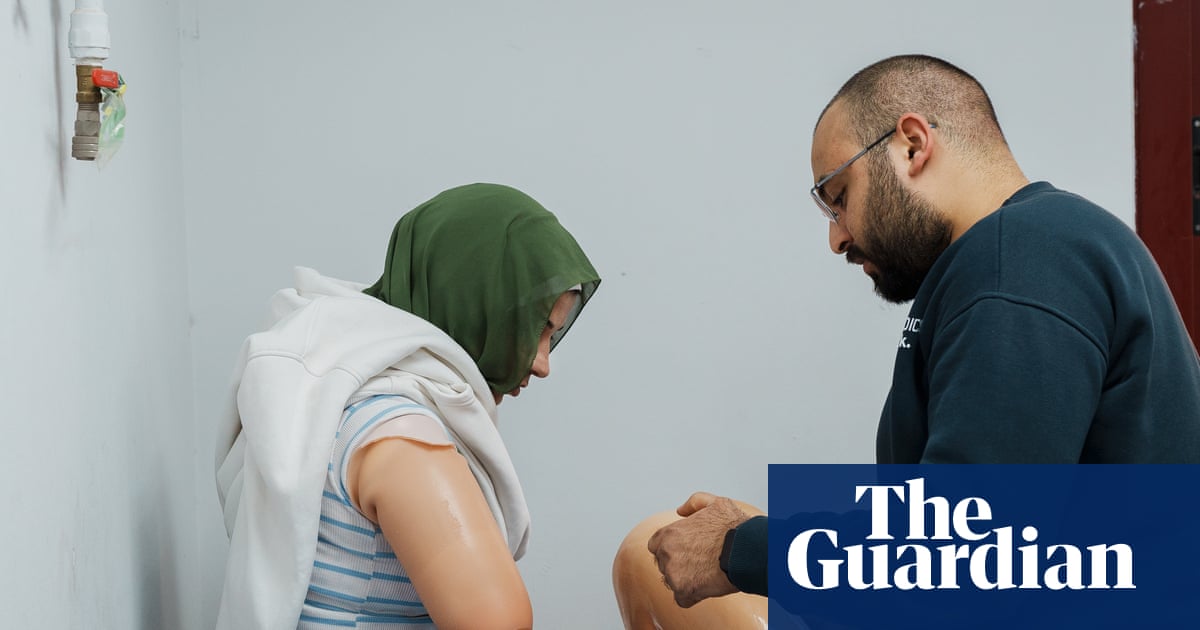

In November 2023, Ola Jamal, a 36-year-old mother, was nursing her two-month-old son, Zain, when a missile struck the al-Nasr hospital in Gaza. The explosion caused shrapnel to pierce through Jamal’s arm while she held her baby close.
“We fled to the hospital seeking refuge,” she recounted at a prosthetic clinic in Cairo, Egypt. “We believed it would be safe there since it was a children’s facility.”
In the aftermath of the strike, the scene was chaotic. “The hospital was filled with screams. My blood was smeared all over Zain’s face, and my other three children were right beside me,” she explained.
Jamal waited for an hour for an ambulance to take her to al-Shifa hospital, where she ultimately had to undergo an amputation of her arm. During this time, she was separated from her children, who were placed in the care of another family.
After a month, Jamal traveled to Egypt with her mother for additional medical treatment, joining thousands of other Palestinians who are coping with severe injuries. According to the World Health Organization and the Palestinian Ministry of Health, more than 6,000 people have faced amputations since the conflict escalated in October 2023, with reports indicating that ten children were losing limbs daily at the height of the violence.
Shadi Sharif Ayesh al-Sous, a father of two from Gaza, is another survivor. He was fitted with a prosthetic limb in Cairo after losing his leg during a missile strike on December 3, 2023, while gathering firewood.
Shadi recounted his experience, saying, “We were living in a tent camp in the al-Zahra area. When the missile hit, I was out with relatives collecting firewood, and that’s when I lost my leg.” He initially sought treatment locally but, after realizing the extent of his injuries, traveled to Egypt, where he ultimately had to have his leg amputated above the knee due to the spread of gangrene. He expressed a desire to return to Gaza to reunite with his daughters, stating, “I have registered to go back. Once I receive permission, I will return to them.”
For many Palestinians seeking medical care in Egypt, their struggles extend beyond physical recovery. Egypt serves as the primary crossing point for individuals requiring treatment, yet most are left in a precarious legal situation without formal residency or refugee status. The UN has not assumed responsibility for the Palestinians in Egypt.
Due to their lack of legal documentation, many survivors find themselves confined to hostels or shared accommodations, unable to work and living under the stress of their temporary status. This situation complicates their access to advanced prosthetic care, which often requires support from non-governmental organizations (NGOs).
At a Cairo clinic, Omar Khaled, 24, shared his experiences of having his arm amputated in Gaza in 2013, highlighting ongoing challenges in receiving adequate support. “I’ve been experiencing pain in the amputated area, and I’m uncertain about its cause. It requires monitoring and follow-up,” he said.
Yousef El Deeb, a certified prosthetist at Orthomedics in Cairo, reported that his clinic has assisted around 300 Palestinian patients since October 2023, primarily through the aid of NGOs like the Turkish organization Sadakataşı. “Funding for prosthetics is not feasible for them, but these NGOs are making efforts to assist, which is beneficial,” he noted.
For individuals like Jamal, the physical loss they have endured is compounded by the psychological impact on their children. Zain, who was just a baby when the missile struck, is now over two years old, yet the trauma persists.