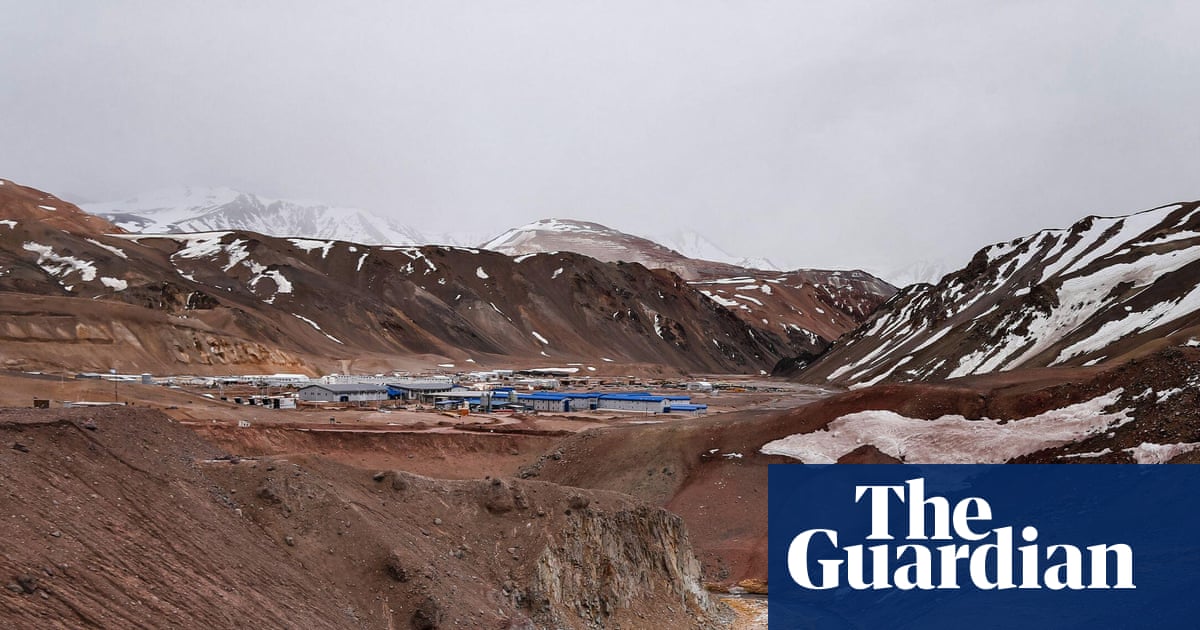

Saul Zeballos grew up in Jáchal, a small town nestled in the foothills of the Andes in Argentina, where he relied on the local river for drinking water. This situation changed in 2005 when the Veladero gold and silver mine commenced operations in the nearby San Juan province.
In 2015, a significant cyanide leak from the mine contaminated local rivers, raising concerns about potential downstream impacts on the Jáchal basin. Although subsequent studies indicated that cyanide concentrations remained within safe limits, two additional leaks were reported in 2016 and 2017, and these incidents are still under scrutiny.
Environmental advocates and residents like Zeballos, a 51-year-old accountant turned activist, have long contended that Veladero, owned by Canada’s Barrick Mining Corporation and China’s Shandong Gold, is operating unlawfully in regions deemed off-limits by Argentina’s glacier protection law, known as the Ley de Glaciares.
A recent amendment to this law, initiated by the far-right administration of Javier Milei, aims to ease restrictions, thus allowing for mining activities in high-altitude regions that are covered with ice and snow, which serve as vital water sources.
The modification, which passed with a vote of 137 in favor and 111 against, along with three abstentions, will empower provincial authorities to determine which glaciers will be safeguarded and which can be exploited based on their significance for water resources.
For Milei, this reform is a pivotal strategy to draw more international investment and bolster Argentina’s role as a key exporter of essential minerals amid rising global demand linked to the energy transition.
On Thursday, Milei expressed satisfaction over what he termed the removal of “ideological distortions and artificial barriers that hinder progress.” He criticized the original law as “confusing,” arguing it led to “absurd interpretations” that prohibited mining even in areas devoid of environmental value.
However, activists warn that these changes undermine a crucial principle in Argentina: maintaining a baseline environmental standard applicable throughout the nation.
The reform has ignited widespread protests, including a demonstration by Greenpeace activists at the National Congress, resulting in the detention of several individuals, including a TV camera operator, on the day the reform was passed by the Senate with a vote of 40 to 31, and subsequently approved by the Chamber of Deputies.
“The stakes involve the safeguarding of vital water reserves in Argentina,” stated Andrés Nápolis, a lawyer and executive director of the Foundation of Environment and Natural Resources (Farn), an NGO focused on environmental and human rights issues. “Claiming that we must destroy glaciers to ensure an energy transition is paradoxical.”
Approximately 7 million people, or 16% of Argentina’s population, reside in areas reliant on glaciers, according to environmental groups. Glaciers not only replenish rivers but also support delicate ecosystems that are increasingly threatened by climate change. In northwestern Argentina, scientists report a 17% reduction in glacier size over the past decade.
Since its implementation in 2010, Argentina’s glacier law has been the first of its kind in Latin America to provide glacier protection, often causing disputes between mining companies and provincial governments.
The law strictly prohibits any activities that could impact the “natural condition” of a glacier or its surrounding periglacial land, including construction that is not for scientific purposes and any industrial endeavors. Mining companies, including Barrick, have previously challenged the law’s constitutionality, but the Supreme Court has rejected these attempts.
Barrick has chosen not to comment on the recent developments, although it has previously asserted compliance with Argentina’s glacier protection legislation. A lawsuit filed in 2017 against Argentine officials concerning the 2015 spill claimed negligence in documenting glaciers in a national inventory, thereby permitting the mine’s operation. This case is still pending trial.
Shandong Gold has not yet provided a statement on the matter.
Meanwhile, governors from provinces rich in copper and lithium continue to advocate for modifications to the glacier law, arguing that its broad scope hinders significant economic investments in regions lacking essential water reserves.
“It is a fallacy to oppose mining to environmental concerns; this misconception must be corrected in public discourse,” remarked Luis Lucero, Argentina’s mining secretary, during a December committee hearing.
Milei’s administration has introduced tax incentives and other measures to attract substantial mining and energy investments. In February, Vicuña Corp, a collaboration between Australian BHP and Canadian Lundin Mining, announced an unprecedented $18 billion investment in two projects involving gold, copper, and silver in San Juan province.
In March, Vicuña’s CEO, Ron Hochstein, expressed support for the reforms from an industry standpoint, while clarifying that these changes are not a prerequisite for project advancement.
“These reforms will empower regulatory authorities at the provincial level, making them key players in decisions impacting water sources, glaciers, and investment,” he noted.
According to company representatives, the Vicuña project will not interfere with the periglacial region known as GE-110, nor will it involve any equipment intervention in that area. The company is currently conducting a water study in the region.
Alfredo Vitaller, a geologist and member of the Chamber of Mining Companies, emphasized that Argentina possesses a “unique window of opportunity” due to its abundant deposits of minerals critical for the energy transition.
Lucas Ruiz, a glaciologist at Argentina’s National Scientific and Technical Research Council, echoed the sentiment, underscoring the significance of these natural resources in the context of global environmental challenges.