
Mohammed Suleman, who identifies as a straightforward Geordie, has never been particularly fond of politics. As a taxi driver and entrepreneur, his primary focus is on community development. However, he made the decision to vote Labour, viewing it as the lesser of two undesirable options.
Then the conflict in Gaza erupted.
About a month into the hostilities—later characterized as a genocide by a UN committee—Suleman and members of his local mosque initiated a petition urging their Labour MP for Newcastle upon Tyne Central and West, Chi Onwurah, to support a ceasefire. Although he recognized the petition’s largely symbolic nature, it held significant meaning for him: the plight of Palestinian children, who resemble his own and share his faith, mattered deeply.
“And the best she could do was abstain,” Suleman expressed. “That’s when I lost my temper.”
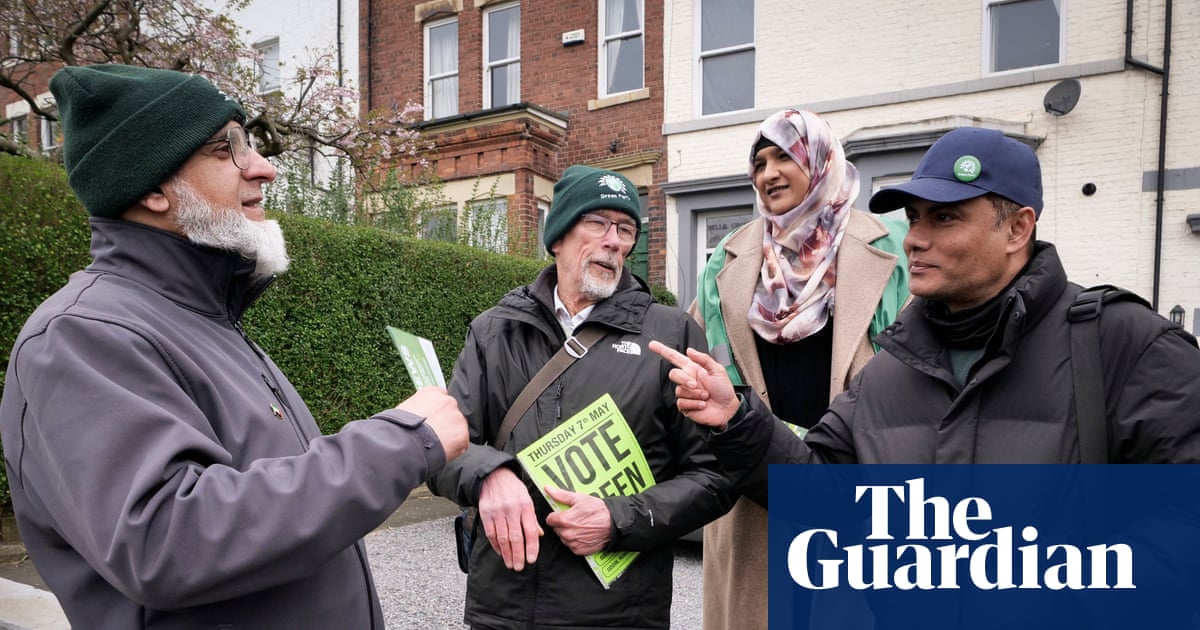
As he prepared to canvas in the Arthur’s Hill neighborhood, located west of Newcastle, Suleman reflected on the city’s often-described segregation: an east side primarily composed of a white working-class population and a more diverse west side, both historically vital to Labour’s support. While Labour has dedicated considerable effort to courting “hero voters” in the east, it has been slower to address the significant shifts occurring among Muslim voters.
In recent discussions, Suleman and a group of other Muslim activists and voters from across Newcastle articulated a strong feeling that Labour has neglected communities like theirs. Despite the party’s long-standing control over the local council, voters cite evidence such as graffiti-marked, boarded-up shops, reduced local services, and a tepid response from Labour leadership to the rise of far-right sentiments, as indications that the party no longer represents their interests.
This trend is not confined to Newcastle. From Gorton and Denton, where Hannah Spencer achieved the Greens’ first byelection victory, to contests in Birmingham, Leicester, and east London, Labour is experiencing a significant decline in support among Muslim voters. The situation has become so alarming that Health Secretary Wes Streeting, who narrowly retained his seat in Ilford North by only 500 votes, has expressed concern over the potential vulnerability of previously secure council wards. The results of the upcoming local elections will reveal whether this trend reflects a mere protest or indicates a more profound, lasting change.
For Suleman, Onwurah’s abstention was a pivotal moment, but it also symbolizes a lengthy process of disillusionment. The rise of far-right extremism spurred him to transition from apathy towards politics to actively campaigning as a Green councillor. The summer riots in 2024, which saw attacks on mosques, destruction of asylum hotels, assaults on hijab-wearing women, and violent mob actions, brought back painful memories of his school days.
“They had designated days to target people like me, calling it ‘Paki bashing’,” he recounted, expressing his anger at witnessing the same “poison” infiltrating their communities amidst the escalating cost of living crisis.
Why the Greens? Suleman argues it is the party best equipped to combat the far right. He also credits Khaled Musharraf, who unexpectedly won a seat as a Green councillor in his ward in 2024, as a motivating factor for joining the party. Like Spencer, Musharraf is a well-known local figure recognized for his relentless advocacy for the community.
Originally from Bangladesh, Musharraf has voted Green for a decade and recalls childhood experiences of devastating floods that disrupted daily life in his home country. He noted that many Muslims hail from nations most affected by climate change, emphasizing that the community’s interest in the Greens is often misrepresented as solely motivated by the situation in Gaza. Increasingly, mosques are addressing climate issues in sermons, as a new generation of British Muslim activists embraces environmental advocacy.
Polling conducted by More in Common UK indicates that Muslim voters prioritize fundamental issues such as the cost of living, crime, and local services. Luke Tryl, the organization’s executive director, compared the impact of the Gaza conflict on Muslim voters to the effect of Brexit on Labour’s traditional strongholds. “It crystallized a much deeper sense of being taken for granted and neglected, which has led to a significant fracture,” he stated.
Sharmen Rahman, the Green Party’s national spokesperson for equality and diversity, highlighted findings from the Labour Muslim Network that illustrate a long-term trend. In 2020, 46.8% of respondents felt that Labour did not effectively represent the Muslim community; by 2022, that number had increased to 63%.
Suleman gathered with his “dream team” of councillors, friends, and family at an Italian café in the Elswick ward of Newcastle’s West End before heading out to canvass. Among them was Halimah Begum, who was inspired to run for office due to her background in counselling and youth services. She left Labour after witnessing an interview in which Keir Starmer discussed immigration, suggesting that individuals could be “sent back” to Bangladesh.
Begum felt that this remark unfairly portrayed all British-Bangladeshis as illegal immigrants. “I identify as Bangladeshi, British, and Muslim, and all these aspects coexist within me,” she explained. “Hearing that was quite difficult.”
Begum’s experience is not isolated. Tryl remarked that a prevailing sentiment that racism has been “legitimized” following the riots, combined with frustration over the Prime Minister’s insufficient response, has significantly contributed to Labour’s estrangement from Muslim voters since 2024.
“Our interactions with young Muslims have been particularly disheartening,” he noted. “They shared that it’s becoming increasingly challenging to feel proud of their British identity due to the racism they encounter.”
As support for the Greens among Muslim voters rises nationwide, so too does skepticism. Following the Greens’ victory in the Gorton and Denton byelection, media attention turned to allegations of “family voting,” suggesting that Muslim women faced pressure from their husbands to vote Green. A police inquiry found no evidence to support these claims.
Rahman, who campaigned in Gorton, dismissed the allegations as racially motivated nonsense. “In households where voters were divided between Green and Labour, it was…”