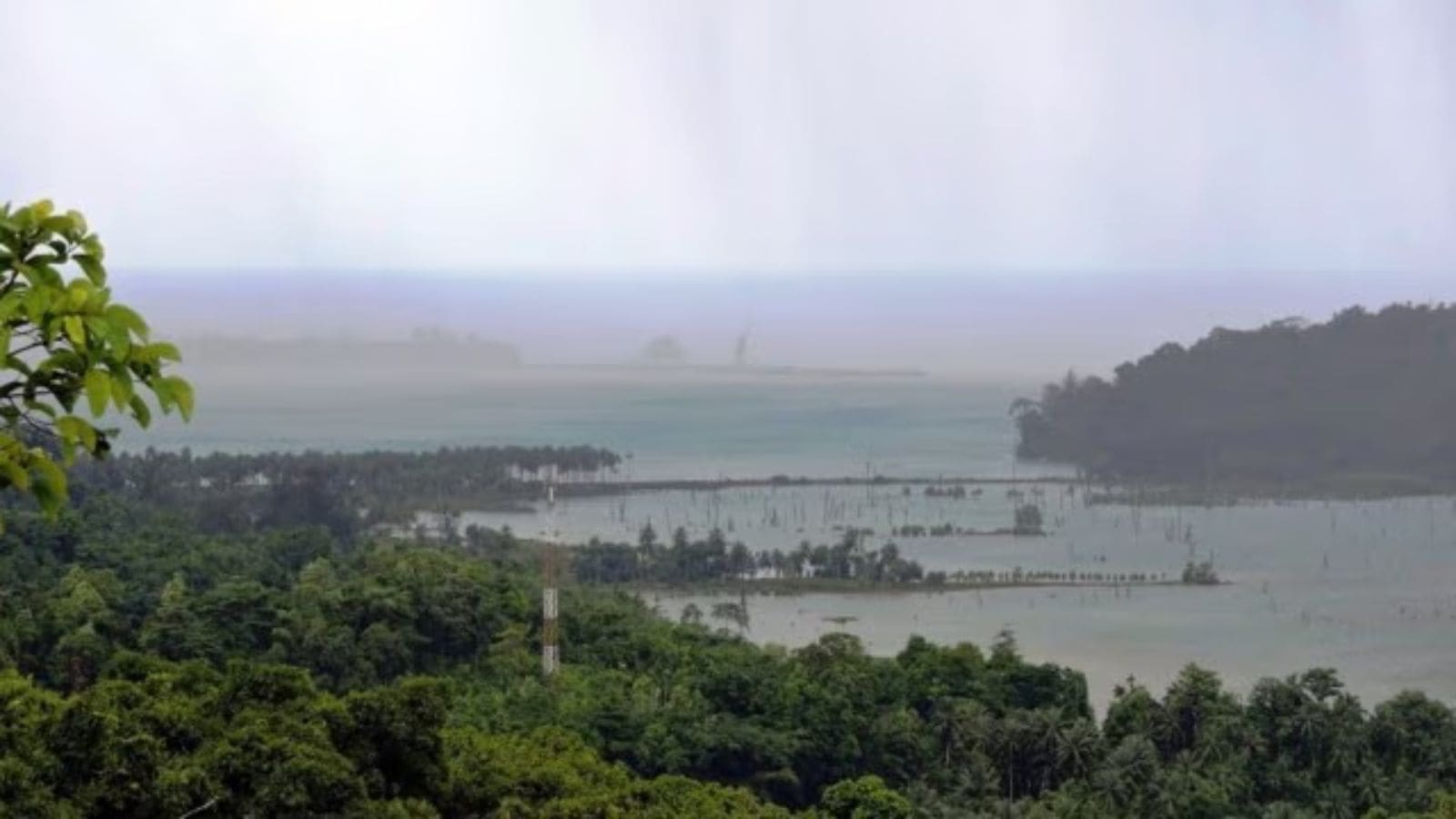

The administration of the Andaman and Nicobar Islands has identified tourism as the essential foundation for the development of Great Nicobar Island and its economic future. As part of this vision, plans have been set forth for the establishment of a new coastal city centered around critical infrastructures such as an airport, a transshipment port, and a tourism and entertainment zone, along with supporting industries.
The Public Works Department has invited feedback on the ‘draft master plan for Great Nicobar Island Development Area – 2047’, with local notifications regarding this request already issued. The specific agency responsible for drafting this plan has not been disclosed.
This draft plan emphasizes the integrated township aspect of the ambitious Rs 81,000-crore Great Nicobar Island mega infrastructure initiative. Key elements of the project include the construction of an international airport, a transshipment port at Galathea Bay, a gas and solar power facility, along with defense-related initiatives aimed at transforming the island into a hub for both economic and defense activities. Additionally, a linear urban corridor approximately 35 kilometers long is proposed along the eastern coastline, stretching from Campbell Bay to Indira Point to facilitate urban growth.
Out of the total area of 166 square kilometers required for the GNI project, the new coastal city will occupy the largest portion. This area will allocate 9.51 square kilometers for mixed-use developments such as hotels, retail spaces, and offices; 8.68 square kilometers for parks and recreational areas; 5.95 square kilometers for residential development; and 1.12 square kilometers for industrial purposes. Furthermore, 3.46 square kilometers of agricultural land will be preserved, allowing for eco-resorts and farm stays alongside traditional cultivation of coconut and areca nut.
A significant area of 66.53 square kilometers will be designated as a no-felling zone, adhering to the guidelines set by the Environment Ministry for environmental clearances.
The land will be organized into four distinct development clusters and two special reservation zones along the north-south corridor. These clusters include a tourism and entertainment zone, a processing area for agricultural and seafood products, and an administrative and institutional cluster. The special reservation zones will cater to defense activities in the southwestern region adjacent to Galathea Bay and a future development zone to be activated later.
The western, northern, and southwestern sections of the development area largely consist of converted forest land, whereas the eastern part is primarily occupied by revenue villages.
The population of the islands, estimated to be between 8,000 and 8,500, is distributed across seven revenue villages: Campbell Bay, Govind Nagar, Joginder Nagar, Vijay Nagar, Laxmi Nagar, Gandhi Nagar, and Shastri Nagar, located along the eastern coast. Plans for road infrastructure include the introduction of a new trunk road.
To stimulate economic development, the proposal includes a tourism and entertainment hub, a finance center linked to the port, a wellness zone focused on yoga, naturopathy, and Ayurveda, as well as a knowledge center. Cities like Singapore, Busan, Dubai, and Hong Kong have been cited as models for the planned finance hub, which is intended to support port-related activities and address the financial service needs of the projected population influx.
Tourist arrivals are expected to increase significantly, from 98,000 in 2029 to approximately 735,000 by 2047, and surpassing one million by 2055. The draft plan suggests the development of resort clusters and beachfront properties across six beaches, including a continuous six-kilometer stretch near the proposed airport. Additionally, plans include a gaming and entertainment center, wellness retreats, eco-tourism trails, and community-managed homestays.
Nikhil Ghanekar, an accomplished journalist with 14 years of experience, serves as the Assistant Editor at the National Bureau of The Indian Express in New Delhi. His expertise lies in environmental policy, where he monitors significant decisions and operations within the Ministry of Environment, Forest and Climate Change. He also reports on the National Green Tribunal’s activities and explores the effects of environmental policies on wildlife conservation, forestry, and climate change.
Having joined The Indian Express in 2024, Nikhil hails from Mumbai and has contributed to various publications, including Tehelka, Hindustan Times, DNA Newspaper, News18, and Indiaspend. Over his career, he has covered a diverse array of topics ranging from sports and current events to civic issues and central government policies.
Stay informed with the latest updates – Follow us on Instagram.