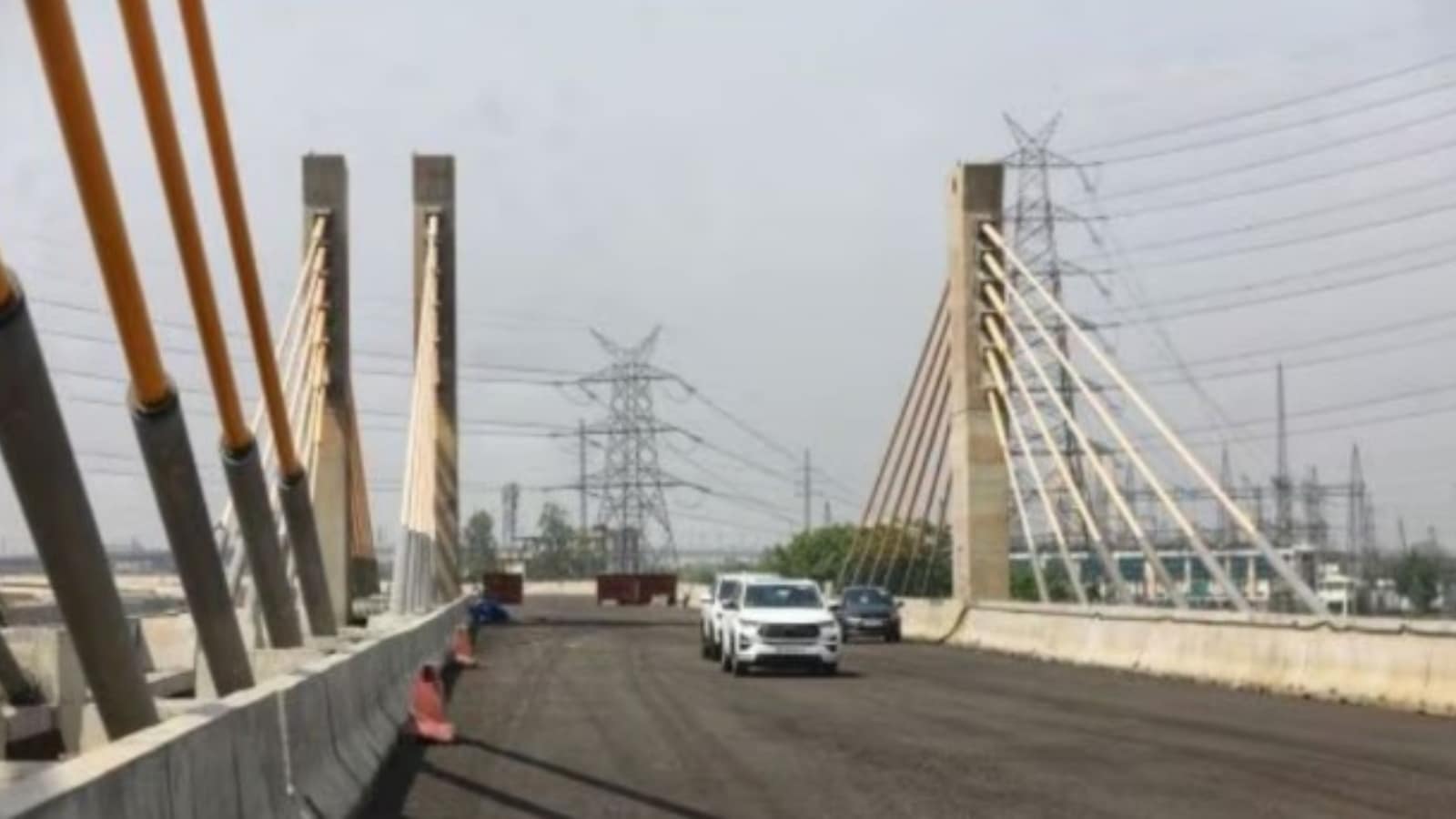

Recent reports indicate that road construction and repair projects managed by the Public Works Department (PWD) have experienced a slowdown, primarily due to rising costs of petroleum-based materials, including bitumen. This price surge has been attributed to the ongoing conflict in West Asia, as reported by The Indian Express. PWD officials noted that the pace of several significant road projects in Delhi has decreased over the past month.
A PWD official involved in the Barapullah Phase III project stated, “The laying of bitumen had nearly come to a halt. While conditions have improved, a consistent supply of bitumen has not yet been restored. We are currently receiving deliveries sporadically, only once or twice weekly, based on our requirements.”
Bitumen, which is a byproduct of crude oil, serves as a crucial binder in road construction, effectively combining materials such as sand, gravel, and crushed stone to create asphalt. Its waterproof, adhesive, and flexible properties make it essential for ensuring that roads can endure traffic loads and varying weather conditions.
A senior PWD official expressed optimism that the supply issues would be resolved within the next three to four months, stating, “The war has concluded, but its ramifications will be felt for a while longer.” Regarding the Barapullah Phase III project, another official mentioned that they had received a delivery of 20 tonnes of bitumen, which was utilized immediately. However, work will only continue once the next shipment arrives. “Fifteen days ago, operations had to be completely halted due to a lack of bitumen,” the official added.
Efforts are ongoing to complete the project within the original timeframe, but the official acknowledged that if the consistent supply of bitumen does not resume, there could be delays in meeting the project deadline. The 3.5-kilometer extension of the existing Barapullah Phase I and II was initially scheduled for completion in 2017 but has faced multiple delays, including those caused by the COVID-19 pandemic, land acquisition issues, and tree-felling permissions. The project saw a revival last year following intervention from the BJP government in Delhi. Although 90% of the work is done, the rising costs of bitumen may lead to further budget overruns, with the original project cost of Rs 1,260.63 crore now escalating to Rs 1,635.03 crore.
Additionally, other significant PWD projects have been adversely affected by the increase in bitumen prices, including the strengthening of 153 road stretches across 400 kilometers and repairs to 128 stretches. Some of the impacted routes include Bipin Chadrapal Marg to CR Park police station, Outer Ring Road to Ringh, Africa Avenue Marg, Mathura Road, Ashram, and areas near ISBT Kashmere Gate.
Contractor Sudeer Nimesh, who is engaged in road strengthening projects in the Trans-Yamuna area, remarked that “80% of the work has slowed down.” He noted that the deadline for completing repairs was set for March 31, but the steep rise in bitumen prices hindered progress. Another contractor indicated that the price of bitumen had increased from Rs 40 to Rs 65 per kilogram since March.
Out of the 400 kilometers planned for road strengthening and repairs, only 60 kilometers have been completed. An official revealed that the remaining 340 kilometers, initially slated for completion by March 31, will now have a revised deadline of July 31, with a proposal for this extension submitted to the Cabinet for approval.
Contractors have expressed growing difficulties, particularly those involved in road maintenance and repairs. The government recently removed the arbitration clause from contracts for road projects to mitigate losses and curb cost escalations. “The government has set a consumer price index for construction materials, which has created additional challenges for contractors,” one remarked.
Stay informed with the latest updates – follow us on Instagram.