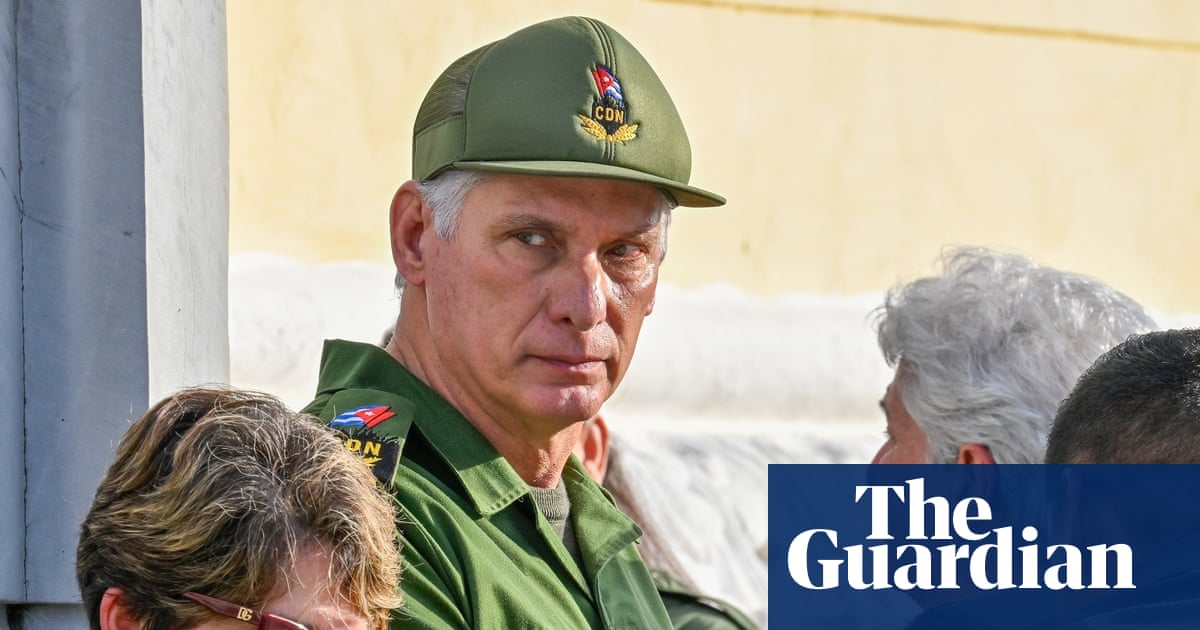

In a recent televised interview with NBC News, Cuban President Miguel Diaz-Canel firmly stated that he would not resign in response to pressure from the United States. He asserted that Cuba is a sovereign nation, emphasizing its right to self-determination and independence, and rejected any notion that the country could be influenced by U.S. policies.
Diaz-Canel, 65, criticized the U.S. government for its hostile stance towards Cuba, claiming it lacks the moral authority to issue demands. He remarked, “The idea of revolutionaries capitulating or resigning is not part of our language.” His comments came amid ongoing tensions between Cuba and the United States, which has enacted a de facto oil embargo against the island by threatening tariffs on nations that supply it with oil.
The energy crisis in Cuba has intensified since January when the nation’s primary oil supply from Venezuela was disrupted following U.S. actions against Venezuelan leader Nicolás Maduro. Former President Trump has previously suggested a more aggressive stance towards Cuba, labeling its leadership as a national security threat to the United States.
Amid these escalating tensions, Russian Deputy Foreign Minister Sergei Ryabkov visited Cuba and met with Diaz-Canel. Ryabkov reaffirmed Russia’s commitment to its alliance with Cuba, stating that Moscow would not abandon its interests in the region, regardless of U.S. pressures. He emphasized that Russia’s support would extend beyond a recent shipment of oil and that discussions would continue to address the difficulties arising from the U.S. blockade.
Ryabkov declared, “We cannot betray Cuba. That is simply not an option.” He added that while it is premature to outline specific future actions, Russia would maintain its assistance and would not limit its support to the recent oil shipment from the tanker Anatoly Kolodkin, which delivered 730,000 barrels of crude oil to Cuba in late March after a three-month hiatus in deliveries.
Despite the U.S. administration’s threats against nations that trade with Cuba, the tanker was allowed to dock, demonstrating a level of inconsistency in policy. Trump had previously stated, “Cuba’s finished,” indicating a belief that the regime’s issues would persist regardless of oil supplies, especially as Cuba only produces about 40% of its fuel needs and has been cut off from crucial Venezuelan shipments since the U.S. intervention in January.
Sources for this report include Reuters, Agence France-Presse, and the Associated Press.