
In a recent announcement, Pakistan’s Prime Minister, Shehbaz Sharif, indicated that the United States and Iran, along with their respective allies, had reached an agreement for an immediate ceasefire, effective from Tuesday night. He specified that this ceasefire was applicable “everywhere, including Lebanon.” However, the Israeli government quickly clarified that this agreement did not extend to its military operations in Lebanon, which has become a critical battleground in the ongoing regional conflict triggered by the US-Israeli offensive against Iran.
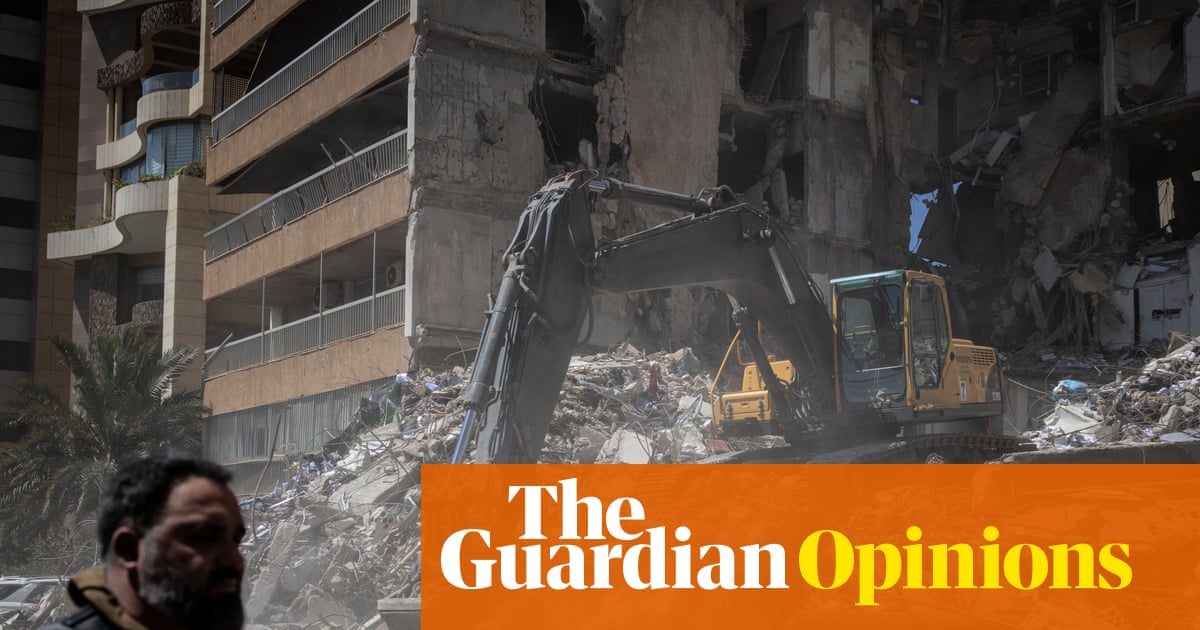
By Wednesday afternoon, Israel executed its most significant and devastating assault on Lebanon in several years, resulting in the deaths of at least 300 individuals and injuries to over 1,100 others. Within a span of just ten minutes, dozens of Israeli aircraft targeted 100 locations throughout Lebanon, with the Israeli military asserting that the objective was to strike Hezbollah “command centers” in an operation named “Eternal Darkness.” However, this bombardment led to the destruction of numerous buildings within densely populated neighborhoods in Beirut, inciting widespread panic and overwhelming local hospitals with casualties. Additionally, Israel continued its aerial bombardments on Lebanon’s infrastructure, including the demolition of the last bridge connecting southern Lebanon to the rest of the nation.
The intensification of Israeli assaults on Lebanon poses a threat to the two-week ceasefire that is already precarious, even before anticipated discussions between the US and Iran set to commence on Saturday in Islamabad. Iranian officials have accused the US of failing to uphold the ceasefire and have warned that they might withdraw from it unless the US exerts control over its ally. “The U.S. must decide – ceasefire or ongoing conflict through Israel. It cannot have both,” tweeted Iran’s Foreign Minister, Abbas Araghchi, on Wednesday. “The world witnesses the atrocities in Lebanon. The responsibility lies with the U.S., and global attention is focused on whether it will honor its commitments.”
This situation is reminiscent of past instances where a US administration permitted Israeli Prime Minister Benjamin Netanyahu to undermine ceasefire negotiations, allowing him to extend conflicts that serve his political interests. Once again, it appears that Donald Trump is on the verge of jeopardizing a ceasefire beneficial to both US and global interests for the sake of an unreliable ally in Israel.
On Thursday, Netanyahu announced that his administration would initiate direct conversations with Lebanon regarding the disarmament of Hezbollah, yet he insisted that Israeli military actions would persist. “There is no ceasefire in Lebanon,” he stated in a recorded address to residents in northern Israel. Shortly after, the Israeli military commenced another series of air strikes.
Following the attacks in October 2023, Netanyahu consistently undermined ceasefire negotiations with Hamas in Gaza, complicating potential agreements by introducing new demands or altering his stance at the last moment. He even attempted to delay talks by targeting Hamas leaders involved in negotiations and orchestrated an audacious airstrike on Hamas officials in Qatar, a US ally, who were considering a ceasefire proposal put forth by Israel and Washington.
Despite Netanyahu’s resistance, Israel has continued to enjoy unwavering political backing and substantial military aid from the US, both under Joe Biden’s and Trump’s administrations. It is not surprising that Netanyahu perceives a lack of consequences for Israel’s military actions across the Middle East. By late 2025, Israel had engaged in military operations against Iran, Lebanon, Syria, Qatar, and Yemen that year without facing interruptions in US military assistance or political protection from the US at the United Nations and other international bodies. Furthermore, Israel’s aggressive campaign in Gaza resulted in the deaths of at least 70,000 Palestinians and triggered a famine, showcasing its disregard for international law.
With consistent US support from both Biden and Trump, Netanyahu evidently sees little reason to de-escalate tensions or avoid actions that could lead to a broader conflict in the Middle East. In fact, Netanyahu seems intent on expanding the conflict beyond Gaza, targeting Hezbollah in Lebanon, thereby consolidating his power and evading scrutiny over intelligence failures that contributed to the Hamas attacks in October 2023. He also fears that removal from office could result in a delayed trial concerning corruption allegations from his previous term as prime minister.
Hezbollah, too, misjudged its strategy in confronting Israel. The Iranian-backed group, which stands as the most formidable military and political entity in Lebanon, began launching rockets and drones into northern Israel on October 8, 2023, just a day after the Hamas attacks. Hezbollah’s leadership framed this as support for Palestinians while aiming to divert Israeli military resources from Gaza. However, Israel retaliated with lethal force, targeting Hezbollah members throughout Lebanon and conducting extensive airstrikes in predominantly Shia regions that form the group’s support base.
Hezbollah’s leaders maintained that their attacks would cease only when Israel halted its military operations against Gaza. For nearly eleven months, Hezbollah sought to calibrate its military responses to avoid provoking a full-scale conflict with Israel’s significantly more powerful military. By September 2024, Netanyahu escalated his threats, vowing to obliterate Hezbollah and facilitate the return of over 60,000 displaced residents of northern Israel. That same month, Israel executed a series of attacks that killed dozens and injured more than 3,000 individuals by detonating booby-trapped devices linked to Hezbollah members.
On September 23, 2024, Israel initiated one of the most extensive aerial bombardments in recent history, targeting nearly 1,600 locations across Lebanon and resulting in over 550 fatalities. This marked the onset of a large-scale conflict, with Israel employing tactics similar to those used in Gaza: relentless airstrikes that precipitated widespread displacement and chaos.