
By Middle East correspondent
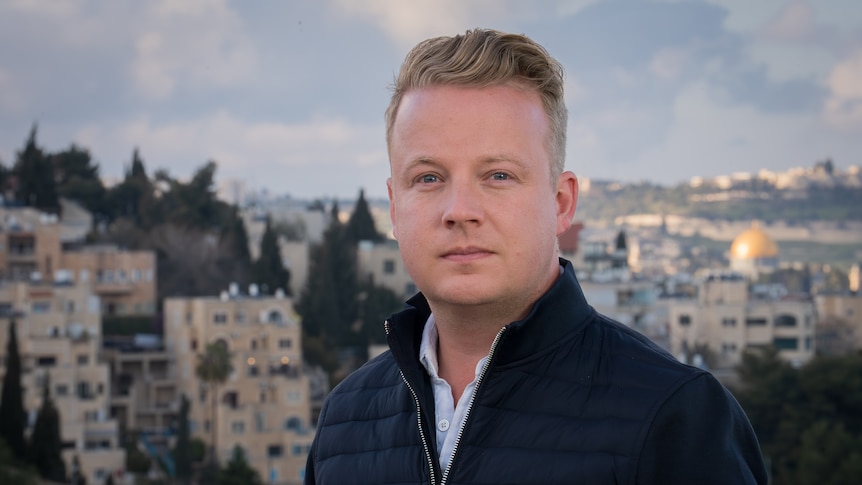
Hello, this is Matthew Doran, ABC’s Middle East correspondent reporting from Jerusalem.
Today marks the 41st day of the ongoing conflict in the region. While this day has seen less upheaval compared to recent days, the atmosphere remains highly charged.
For ongoing developments regarding the crisis in the Middle East, please refer to our live updates blog.
Key points for today include:
The Israeli Prime Minister expressed a willingness to engage in peace discussions with the Lebanese government, focusing on the disarmament of militant factions. Meanwhile, Israel maintains that its extensive bombardment of Lebanon does not violate the tenuous ceasefire, despite assertions from the intermediary party that facilitated the agreement. Search and rescue teams are continuing their efforts to locate survivors and recover bodies from the wreckage of buildings destroyed in Wednesday’s airstrikes.
Mohammad Bagher Ghalibaf, who is anticipated to head the Iranian delegation for peace talks scheduled in Pakistan this weekend, has issued a warning to Israel, stating that the nation must face significant repercussions for its military actions in Lebanon. He emphasized the need for “strong responses” to any violations of the ceasefire in a recent social media post.
The World Health Organization has reported that Lebanon’s already struggling healthcare system is under severe pressure, with some hospitals nearing depletion of essential supplies. The Lebanese civil defense authorities have reported that the fatalities from Wednesday’s airstrikes have exceeded 250, with many more individuals injured.
The situation remains largely stagnant, as Iran continues to exert control over maritime routes in a show of defiance against Israel’s actions in Lebanon.
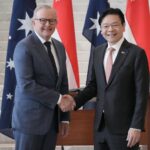
In Australia, Prime Minister Anthony Albanese is scheduled to meet with Singaporean Prime Minister Lawrence Wong on Friday, as Australia seeks assurances from its primary partners in the Asian region regarding energy supplies.
Analyzing the implications of the Israeli Prime Minister’s unexpected announcement about engaging with the Lebanese government for peace discussions raises questions about the timing of such a statement.
Just a day prior, Israel’s military had launched an unprecedented series of attacks across Lebanon, targeting 100 sites within a mere ten minutes. The resulting casualties were substantial, with the Israeli defense minister claiming that 200 “terrorists” were eliminated, although he did not disclose specific identities. Lebanese media outlets reported numerous civilian casualties, describing families devastated by the sudden strikes, many of which occurred without prior warning.
These military actions have pushed the entire Middle Eastern region to the brink of broader conflict. Iran’s deputy foreign minister indicated that the country was close to retaliating against Israel’s aggression until intervention from Pakistan, the broker of the fragile ceasefire, occurred.
Despite Israel’s claims, supported by the United States, that its operations in Lebanon fall outside the ceasefire agreement, the mediator in this conflict maintains that it does apply. Following this, Israel announced a reduction in its military actions. Subsequently, the Israeli Prime Minister declared his decision to pursue dialogue with the Lebanese government.
This development could be interpreted as an attempt, possibly under pressure from the United States, to maintain the ceasefire that has provided a semblance of stability in the region, at least until negotiations for a more enduring peace can take place in Islamabad.
The Israeli government has long criticized Lebanon’s leadership, accusing them of ineffectiveness in managing Hezbollah. The Lebanese administration, led by Nawaf Salam, had previously sought discussions with Israel, but those overtures were turned down.
While it may be too early to determine whether this represents a significant shift in dynamics, it could be more a matter of strategic positioning than a genuine breakthrough. Nonetheless, it offers a glimpse into the behind-the-scenes efforts to ensure relative calm in a volatile situation.
As for Australia, the Prime Minister’s international engagements, such as his trip to Singapore, are deemed crucial in securing energy resources. Observers note that, “when stock is low, alliances become essential.”
For ongoing updates on the situation in Iran and beyond, please stay tuned to our channels.
Thank you for following along. I will return with more updates at the same time tomorrow.