
“My request of humanity is substantial,” stated a northern bat to an assembly of reindeer, wolf lichen, bogs, and other entities. “It involves a transformation in awareness and the recognition that we are interconnected.”
This imaginative scene, reminiscent of a science fiction narrative depicting a revolt of non-human beings, actually took place at a recent “interspecies council” held in Oppdal, Norway, where various non-human entities were represented by human advocates to deliberate on the future of the area.
In the 1980s, environmental activists John Seed and Joanna Macy established the Council of All Beings, a practice allowing humans to embody and represent different species in a ceremonial format. Phoebe Tickell, a scientist and advocate for “moral imagination,” learned from Macy and envisioned incorporating this practice into formal governance systems. This led to the creation of the interspecies council, which Tickell describes as a “decision-making process that broadens the scope of representation and voice in governance beyond just humans.”
Interspecies councils focus on specific topics. Facilitators and ecologists identify various species stakeholders and then select human representatives, either randomly or based on their expertise. The councils generate outcomes, such as decisions or manifestos, and conclude with an assessment of their impact. The broader term “multispecies assembly” may also be used to include artistic adaptations of this concept.
This initiative is part of a rising global movement advocating for nature’s rights and the establishment of governance roles for ecological entities. In the UK, 13 councils have recognized the rights of rivers since 2023, and there is increasing support for legislation related to nature’s rights. A coalition of artists, ecologists, lawyers, scientists, urban planners, fishers, and policymakers are investigating the potential for interspecies biodiversity governance in the North Sea region. There is a growing trend in organizations to implement “nature-centric governance” practices, including nature charters and the inclusion of natural entities in decision-making boards.
Interspecies councils are also being integrated into policy frameworks. They have been utilized to reshape stewardship of London’s River Roding and to foster a multispecies discussion regarding governmental land use consultations. Now, this concept has gained international traction.
Oppdal, a picturesque village in Norway’s Drivdalen valley, lies nestled between the Dovrefjell and Trollheimen mountain ranges. The area is characterized by its unspoiled natural beauty, as described by Oppdal’s mayor, Elisabeth Hals, who notes that residents generally lead a more relaxed lifestyle.
During winter months, Oppdal’s population swells from 5,000 to over 30,000 as visitors flock to private cabins, or hytter, which resonate with Norway’s deep connection to nature and have seen a rise in popularity, particularly post-COVID. This spring, the municipality is also set to approve plans for additional apartments aimed at accommodating another 1,000 tourists by 2035, part of a strategy to position Oppdal as a year-round destination in response to changing climate conditions.
Amid a global environmental crisis, Oppdal’s transitional phase has sparked ongoing discussions regarding the delicate balance between economic growth and ecological sustainability. Margrete Vognild Blokhus, who facilitates stakeholder dialogues, indicates that the conversations are fueled by a shared commitment to stewardship rather than conflict. However, disagreements remain regarding land allocation for agriculture, tourism, and conservation.
Architect Katerine Chada is involved in Common Ground, a multidisciplinary research initiative focused on integrated land management in Oppdal. After attending a presentation by Tickell at the University of Cambridge in 2025, she proposed the idea of hosting an interspecies council in Oppdal. Initially met with skepticism by her colleagues regarding public engagement, they ultimately decided to explore the potential of giving nature a voice in hopes of fostering more ecologically sound decisions.
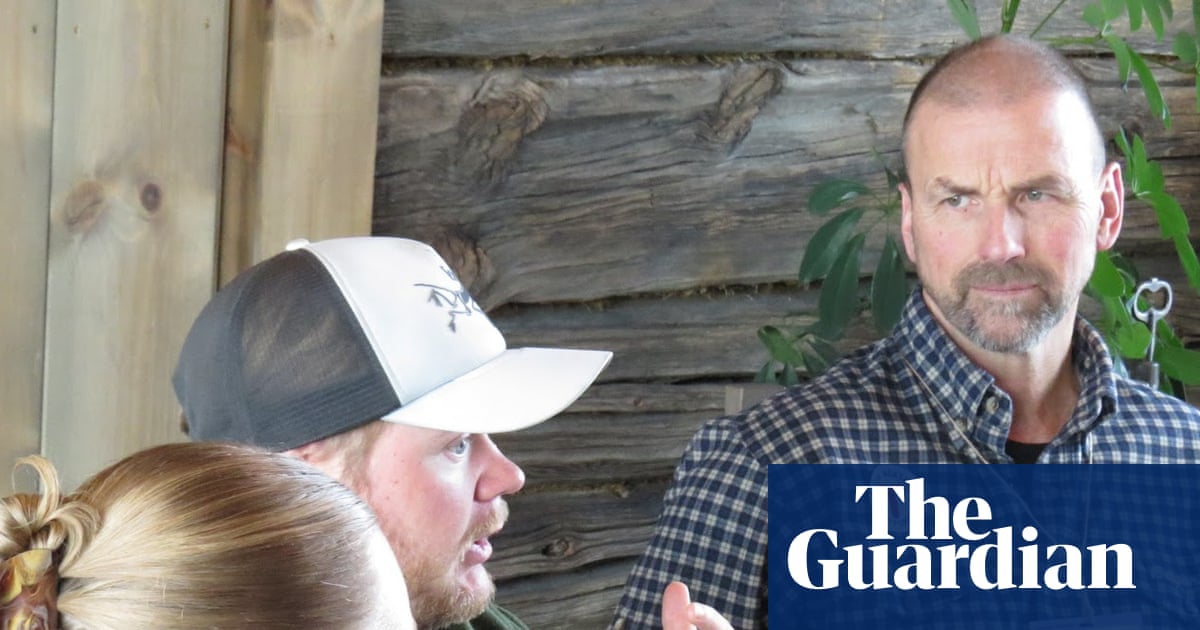
On the day of the council, 38 local representatives gathered at the Bjerkeløkkja conference center, all novices to this concept. The venue featured large windows offering views of coniferous forests and snow-capped hills. Chada participated as a spider, while Schneider-Marin represented a Norwegian spruce, and Vognild Blokhus spoke for a purple saxifrage flower. The mayor planned to join later, embodying a cloudberry.
The day’s activities began with briefings and icebreakers. When asked about their ancestry in Oppdal, around half of the attendees stood. Participants were invited to embody their assigned beings, resulting in various sounds and movements reminiscent of their species.
The council focused on discussions about the needs, challenges, and aspirations of different beings in Oppdal. Ritualistic elements, such as beings bowing during introductions, added a ceremonial aspect to the proceedings.
A rockfoil flower expressed a desire for humans to slow down and pay attention to areas where nature could accommodate more human activities and where it required space. A birch tree voiced concerns about its abundance, stating, “I thrive in open spaces, but I can become invasive.”
The River Driva, speaking with emotion, lamented, “I have often been viewed merely as a resource, without recognition for what I contribute to this landscape. I resent being made to conform or diminish in size.”
A fox expressed fondness for a nearby wader, saying, “I like him!”
Interspecies councils are not primarily focused on gathering data. Schneider-Marin remarked, “I deal with numbers often; we already know the statistics.”
Instead, these councils aim to foster interspecies empathy and help dissolve the perceived divide between humans and nature. Vognild Blokhus emphasized, “To care for nature, we need to understand it, feel it, and think from its perspective.”
Adopting a different way of thinking and feeling does not equate to claiming to know the thoughts of other species. Schneider-Marin described speaking for a tree without its sensory experiences as “a bit of a brain-twister,” but she considered it a valuable challenge. For Tickell, the goal of imperfect representation is preferable to exclusion. “Is it sillier to ask…”