
Farmers in southern Queensland are facing near-record dry conditions, compelling many to sell off most of their livestock and construct extensive water pipelines. This situation has led producers to take early action and adapt to the changing landscape before conditions worsen.
In the coming weeks, livestock owners will consider the possibility of completely destocking their herds. While certain regions of Queensland are still recovering from the state’s wettest summer in the past 15 years, the southern areas present a starkly different scenario. The Southern Downs and Goondiwindi regions are experiencing unusually arid conditions.
Karara, located approximately 200 kilometers southwest of Brisbane, recorded its second-driest summer ever, receiving only 94 millimeters of rainfall, as reported by senior climatologist Zhi-Weng Chua from the Bureau of Meteorology (BOM). Unfortunately, the outlook remains bleak, with the BOM recently indicating only a 35 percent chance of above-average rainfall for Queensland between April and June.
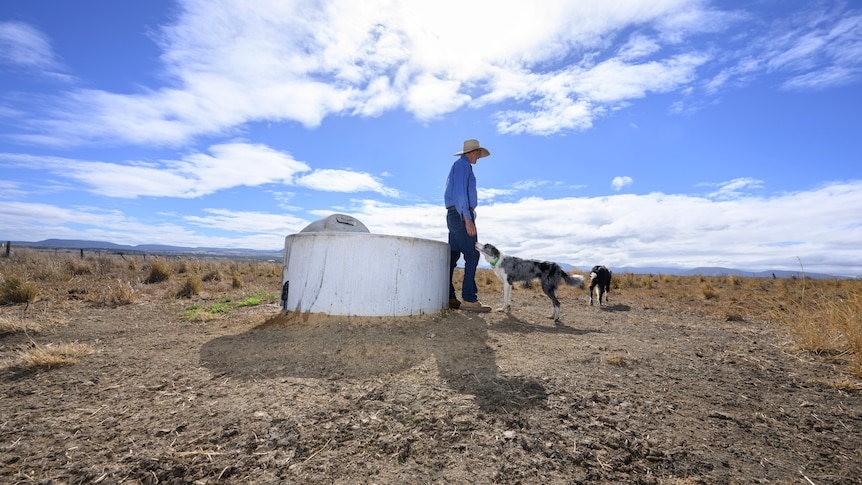
Even though there are no official drought declarations in place across the state, many farmers on the ground feel as though they are already in a drought. This sentiment has spurred farmers to take initiative, encouraging one another to make early and strategic decisions.
Dugald Spenceley, a grazier from Junabee near Warwick, recently made the difficult choice to sell off a majority of his family’s cattle. Having only spent five years in the livestock business, he has already sold around 120 animals due to insufficient rainfall over the past eight months, which has rendered the grassland unable to sustain them. “It’s a mix of emotions,” Spenceley shared. “You form attachments to the animals, but you also have to consider your business.” While the decision was challenging, he felt relief once he made the commitment.
The family has retained a small number of cattle and may further reduce their stock, including sheep, as winter approaches. Their primary aim, according to Spenceley, is to safeguard the land now to enhance its recovery later. “It’s never a pleasant task, and you won’t always make the right call, but having a plan is generally more effective than reacting in the moment,” he noted.
According to BOM, the disparity between the wet northern regions and the dry southern areas is attributed to prevailing weather patterns. From December to February, northern and central Queensland experienced multiple tropical systems, including cyclones and inland troughs, which brought substantial rainfall. However, these systems did not extend to the southern inland districts, leading to the southern Darling Downs being among the driest regions in the state. “This area has experienced some of the most significant dry conditions in the last four months, ranking in the bottom 10 percent historically,” Dr. Chua explained.
In Karara, Bruce McLeish, a livestock producer, is witnessing creeks and dams drying up on his property, with paddocks that typically flourish with tall bluegrass now sparse and struggling. He hasn’t seen significant rainfall—over 25 millimeters in a single day—since July. “That’s almost unheard of here,” he remarked. Instead of waiting, McLeish is opting to sell his cattle while they remain in good condition and market prices are favorable, with complete destocking becoming a viable option. “You have to think ahead,” he advised. “If the market is strong and your livestock are healthy, it’s better to act now than wait until deep into winter.” Having experienced previous droughts, including from 2019 to 2022, he noted that many farmers are taking a more proactive approach this time around.
In Lyra, about an hour south of Karara, David Andreatta has implemented infrastructure changes to tackle some challenges. His tomato and capsicum farm relies entirely on irrigation, and with minimal rain since November, he devised a solution by constructing a temporary 7-kilometer pipeline to draw water from a neighbor’s property. “Many farmers in the area have extensive networks of pipelines,” he said. Although this has increased costs, it has proven effective, and despite the harsh conditions, his crops are thriving. “The quality of our produce has arguably never been better,” he noted, adding that tomato yields are above average. However, he remains concerned about the future, particularly if dry conditions persist into the next season, which could affect employment and production levels.
Winemakers appear to be faring better amid the dry conditions. In Ballandean, vineyards have recently concluded their fourth consecutive successful vintage. According to winemaker Leeanne Puglisi-Gangemi, despite the challenges, the results have been commendable. “In a year filled with obstacles, we’ve managed to produce fruit and wines that we can all take pride in,” she stated.
Despite the ongoing difficulties, Dugald Spenceley holds onto the belief that tough seasons are temporary. While he has scaled back in some areas, he is also expanding in others by acquiring a neighboring property. “We remain confident,” he affirmed. “People still need to eat.”