
Gulf countries are looking to expand their security partnerships as they work to revitalize their economies following the recent conflict involving the US, Israel, and Iran. The ongoing tensions with a strengthened Iranian regime pose a significant challenge for these nations.
With the threat from Iran and its missile capabilities persisting, the Gulf states recognize that American military bases on their territory have made them susceptible to Iranian retaliation, especially after a joint US-Israel offensive. The Gulf nations have made it clear that they cannot accept Iran’s dominance over the Strait of Hormuz, a critical waterway for their trade. During a recent ceasefire agreement, Iran asserted its control over this strategic passage, raising concerns that it could choke off Gulf trade at any moment. This issue is expected to be a central topic in imminent negotiations between the US and Iran, set to take place in Islamabad starting Friday.
Despite the conflict, Gulf states reported significant success in intercepting a large portion of the Iranian missile and drone attacks over the past five weeks, demonstrating their defensive capabilities. However, there is division among these countries regarding their future approach to Iran. Some, led by the United Arab Emirates and Bahrain, are advocating for a more aggressive stance, while others are inclined towards fostering peace through renewed relations with Tehran.
In a recent development, Iranian state media accused the UAE of being behind an attack on its oil facilities on Lavan Island, shortly after the ceasefire was announced. This incident marks the only known offensive action taken by a Gulf nation during the conflict, and the UAE has not publicly responded to these allegations.
On Thursday, Saudi Arabia and Iran engaged in their first official communication since the outbreak of hostilities, with their foreign ministers discussing ways to reduce tensions and restore regional security and stability.
Bader Mousa Al-Saif, a professor at Kuwait University, suggested that Gulf nations should reconsider their security strategies, advocating for partnerships with countries like Turkey and other regional powers, rather than relying solely on the United States. He emphasized the need for a new approach to prevent recurring conflicts that hinder economic progress.
Countries like Turkey and Pakistan, both possessing substantial military capabilities, are expected to take on a larger role in Gulf security. This shift was already in motion prior to the conflict, with Saudi Arabia establishing a defense agreement with Pakistan and the UAE forming a partnership with India. Additionally, during the hostilities, Saudi Arabia, the UAE, and Qatar quickly signed defense accords with Ukraine to counter the threat posed by Iranian drones.
While there have been discussions about a potential “Muslim NATO,” such a concept is viewed as unlikely due to existing rivalries and unclear intentions regarding whether these alliances are aimed at countering Iran or Israel. Both Turkey and Pakistan, which share borders with Iran, are cautious about escalating tensions with Tehran.
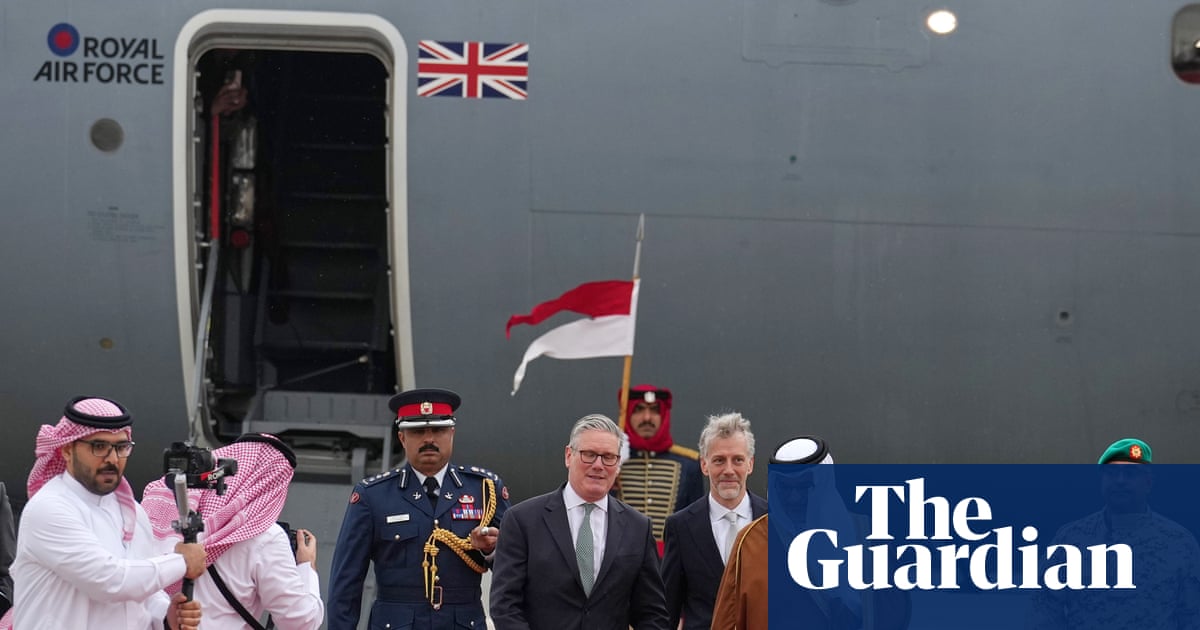
The UK, which played a role in defending Gulf airspace during the conflict, is also expected to be involved in future security arrangements. UK Labour leader Keir Starmer recently met with the Saudi crown prince in Jeddah to discuss enhancing defense industrial cooperation between the two countries.
Abdulkhaleq Abdulla, a political science expert in the UAE, anticipates that security cooperation with the US will deepen, alongside increased relations with Israel, which encompass military and intelligence collaboration. He noted that the UAE faced significant threats from Iran, with thousands of drones and missiles launched at it, yet managed to intercept over 90% of these attacks.
According to Abdulla, Iran has emerged as a primary adversary for the UAE and other Arab states. He stressed the need for constant vigilance in light of this evolving threat.
Yasmine Farouk, who leads Gulf projects at the International Crisis Group, pointed out that Saudi Arabia is better positioned for recovery due to its extensive oil infrastructure and geographic advantages, although reconstruction costs may challenge its ambitious economic diversification goals set for 2030.
Andreas Krieg, an associate professor at King’s College London, noted that while the Gulf states are not looking to entirely replace American security, they are seeking to complement it with partnerships with other nations, particularly in Europe. He expects increased investment in air and missile defense, port hardening, maritime surveillance, and alternative trade routes.
Krieg emphasized that while the United States remains the dominant military presence in the Gulf, many regional leaders now view it as an unreliable and costly security partner, leading to a shift in how they perceive their military facilities as more like tripwires than protective shields.