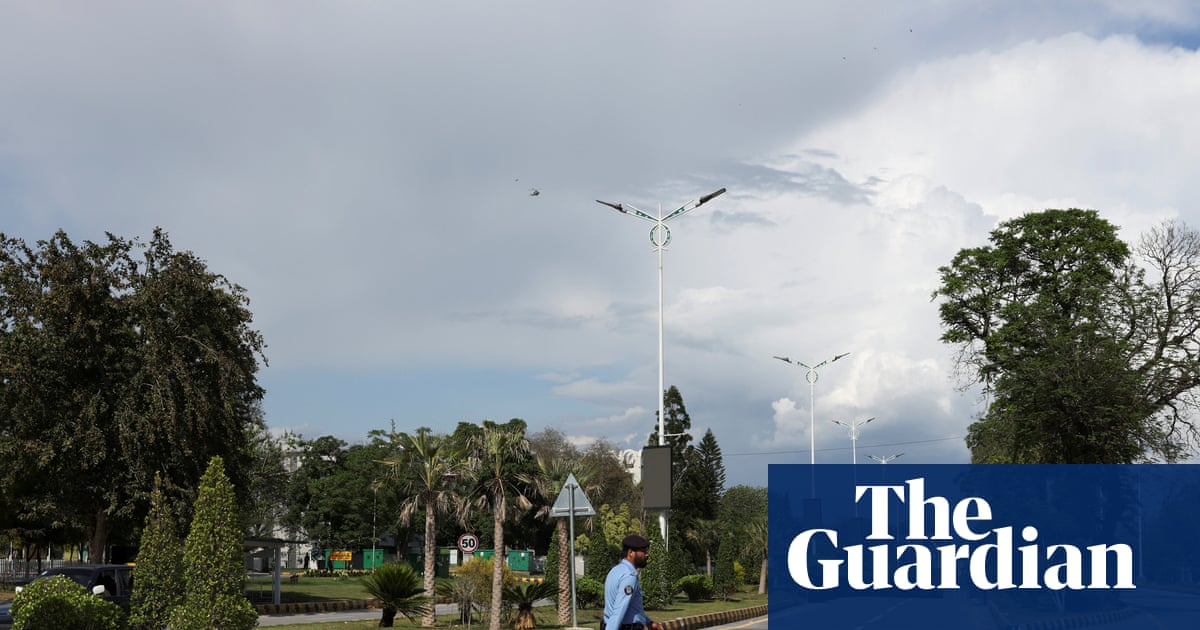

The capital city of Islamabad is currently under stringent lockdown as it prepares to host significant discussions between the United States and Iran, negotiations that could potentially bring an end to a prolonged conflict that has severely impacted the Middle East.
Despite the fragile nature of the US-Iran ceasefire, particularly in light of ongoing hostilities in Lebanon and unresolved issues regarding the talks, Pakistani officials have confirmed that the crucial peace discussions will proceed as scheduled over the weekend.
The hostilities, ignited by a US-Israeli offensive against Iran in late February, have resulted in numerous casualties and widespread economic turmoil. Iran’s response, which involved blocking the vital Strait of Hormuz, has contributed to a global energy crisis characterized by significant shortages of oil and gas.
Pakistan’s diplomatic efforts late on Tuesday played a pivotal role in securing a two-week ceasefire after US President Donald Trump issued a stark warning about catastrophic consequences if Iran failed to comply with his demands.
Under the terms of this ceasefire, both nations agreed to convene in Islamabad to pursue lasting peace, marking a notable achievement for Pakistan’s diplomatic initiatives.
Nonetheless, important concerns linger regarding the ceasefire and the framework for the negotiations. While both Iran and Pakistan maintained that the ceasefire would encompass Lebanon, the US and Israel have asserted it remains a distinct issue. Iranian President Masoud Pezeshkian emphasized that any peace talks would be rendered “meaningless” if military action continued in Lebanon.
Iranian Deputy Foreign Minister Saeed Khatibzadeh indicated that Pakistan has been actively working behind the scenes to uphold the ceasefire and mitigate tensions, claiming that Pakistan intervened to deter Iranian retaliation against attacks on Lebanon.
As the first round of talks in Islamabad approaches, scheduled for Saturday, security measures have been intensified, with military personnel and paramilitary forces patrolling the capital. Additionally, a public holiday was declared for Thursday and Friday, resulting in unusually quiet streets.
Pakistani officials have remained discreet about the specifics of the negotiations due to security and diplomatic considerations, but they assured that preparations are progressing smoothly.
“Our main focus is to ensure the talks proceed without incident,” stated a government representative involved in the planning. “We aim to facilitate rather than hinder. It is up to the parties involved, Iran and the US, to disclose any updates to the press if they choose.”
The official confirmed that key delegations are expected to arrive on Thursday evening and Friday morning. The White House has announced that Vice President JD Vance will lead the US negotiating team, accompanied by special envoys Steve Witkoff and Jared Kushner.
The Iranian delegation is anticipated to include Foreign Minister Abbas Araghchi and Parliament Speaker Mohammad Bagher Ghalibaf, both of whom participated in the previous ceasefire discussions. High-ranking members of Iran’s Revolutionary Guard are also set to be part of the delegation.
Additionally, officials noted that representatives from Gulf nations, including Qatar and Saudi Arabia—who have experienced significant Iranian aggression since the onset of the conflict—will also be traveling to Islamabad and may engage in supplementary discussions.
Given the heightened security concerns, Pakistani officials indicated that three to four potential venues are being considered for the critical US-Iran meeting.
The most notable attendees are expected to be accommodated at the prestigious Serena Hotel in Islamabad, which might also serve as the venue for the negotiations. The hotel has been cleared of all guests, and a 3-kilometer radius around it has been secured by the military. Other possible meeting sites include the Prime Minister’s Secretariat, the Islamabad Convention Centre, or a secure military facility.
While there is no established timeline for the discussions, guests who were displaced from the Serena Hotel were notified that the venue would remain occupied until Sunday evening.
In a meeting held on Thursday, Prime Minister Shehbaz Sharif and Army Chief Asim Munir, who played a significant role in facilitating the ceasefire, expressed their contentment with the de-escalation achieved thus far.