
During a week when numerous families flocked to the coast for some fresh air and the taste of local delicacies, visitors at a seaside resort in Lancashire found themselves confronted by an unpleasant smell.
The local newspaper’s headline proclaimed, “Welcome to Fleetwood: The Town That Smells of Bin Juice.” For over two years, this former fishing community has been afflicted by a noxious odor emanating from a recently reopened landfill, leading to more than 20,000 grievances filed with the Environment Agency.
Residents have likened the stench, which they say resembles rotten eggs and animal waste, to an unbearable level, with many asserting that the situation has deteriorated. In the past six weeks alone, the Environment Agency has recorded nearly 6,000 complaints.
Dave McPartlin, the head of Flakefleet Primary School, expressed concern that the odor has become so overpowering that children are hesitant to play outside. “It’s appalling, especially when the weather is pleasant. Just when families want to enjoy fresh air, they are met with this overwhelming and offensive smell,” he stated.
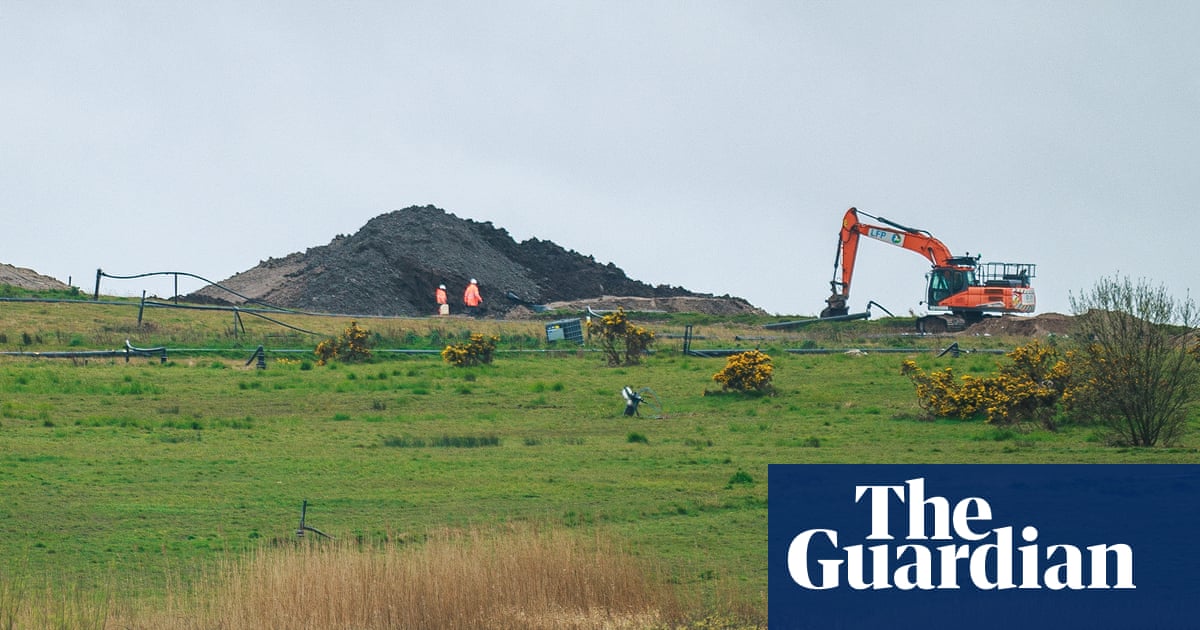
The offensive odor is attributed to hydrogen sulfide, a harmful gas released when Transwaste, a recycling company, reopened the long-closed Jameson Road landfill in late 2023 after five years of inactivity.
Residents report a variety of health issues linked to the smell, including nausea, headaches, nosebleeds, itchy eyes, and exacerbated respiratory conditions. The stench persists through the night, as cooler temperatures cause the gas to remain closer to the ground.
Donna Davidson, a retired educator residing in Thornton-Cleveleys, about three miles from the landfill, described the experience as “being gassed in their beds,” reflecting the extent to which the odor has invaded her home and even reached areas near Blackpool.
Visitors at local caravan parks adjacent to the landfill have taken to social media to voice their disgust at the “absolutely vile” smell, with one family noting that their child, who has sensory sensitivities, was unable to leave their room due to the nausea caused by the odor.
Allison Rowe, 65, who relocated to Fleetwood during the Covid pandemic, recalled her initial encounter with the odor in February 2024. “I stepped outside one morning and was immediately struck by the awful smell,” she recounted. “There have been times I’ve had to pull over in my car because I felt so ill.”
Rowe, who was diagnosed with asthma and mild chronic obstructive pulmonary disease (COPD) six months ago, believes these health issues are directly related to the landfill’s activities. “This is an abomination,” she asserted. “The long-term effects on pregnant individuals and those with existing health problems are unknown. Authorities must prioritize community health.”
A 2020 study conducted by Imperial College London indicated a slight uptick in birth defects among residents near municipal waste sites, although comprehensive research on the matter remains limited.
Fleetwood is known for having some of the most economically disadvantaged areas in England, with elevated asthma rates and nearly double the national average for COPD—conditions that the UK Health Security Agency indicates are worsened by exposure to polluted air.
In the nearly two years leading up to January, the Environment Agency documented 74 compliance violations at the Transwaste facility, with a third deemed “significant.”
In response to the ongoing odor issues, the Hull-based company, operated by brothers Paul and Mark Hornshaw, commenced the installation of a permanent barrier at the landfill this month. They claimed to have sought approval from the Environment Agency in December but only received the green light last week.
Many locals feel neglected by various public institutions, including the Environment Agency, local councils, and the NHS. Dr. Barbara Kneale, a local GP and occupational medicine consultant, expressed her frustration, stating, “They are treating us with contempt.” Alongside Davidson, she is documenting evidence to advocate for the landfill’s permanent closure, including monitoring hydrogen sulfide levels and tracking waste trucks arriving from various locations.
Last month, over 100 residents participated in a slow march to the landfill to protest, with some using mobility aids and others donning face masks. “No one is taking this seriously; they expect us to endure it,” Kneale noted, adding that the community’s response surprised authorities.
Lorraine Beavers, the local MP, used parliamentary privilege last month to condemn Transwaste, labeling the company as “crooks” who evade accountability. She stated, “The smell is more unbearable than ever and is ruining lives and livelihoods. I will not rest until this site is shut down.”
In response, Transwaste rejected Beavers’ allegations as “entirely unfounded,” asserting that they comply with all regulations and uphold high operational standards. They attributed many odor problems to the resumption of operations at the site.
Wyre Borough Council, the landlord of the landfill, mentioned that they could only pursue legal action if residents maintained detailed records and allowed council officers to verify the odor inside their homes. “With 20,000 complaints to the Environment Agency, isn’t that sufficient?” questioned McPartlin, expressing his belief that Fleetwood has been overlooked. “If this were a wealthy area in Surrey, such a situation would not be tolerated.”
An Environment Agency representative asserted that the community should not endure odors that disrupt their environment. They have urged the operator to cover areas of the site where fresh waste has been placed to minimize odor and are advocating for the prompt installation of permanent capping to prevent future emissions.