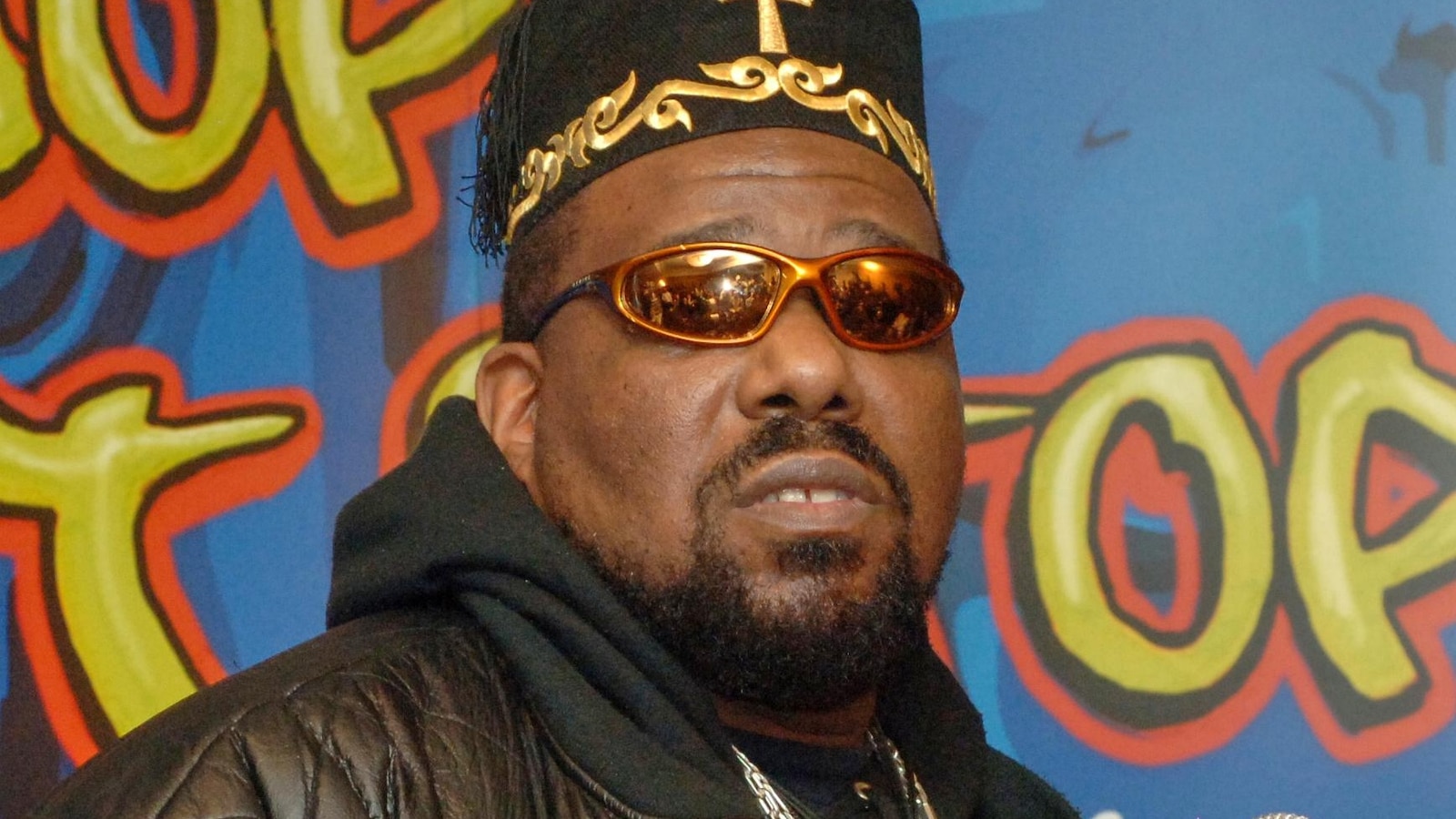

Afrika Bambaataa, a significant figure in the evolution of hip-hop, passed away on Thursday at the age of 68 in Pennsylvania due to prostate cancer, as confirmed by his attorney. His unexpected passing elicited a wave of tributes from friends, family, and fans globally, all acknowledging his substantial influence on one of the world’s most popular and socially impactful music genres. However, it should be noted that his legacy has been complicated in recent years by allegations of sexual abuse from several men who claimed to have been victimized by him during their youth.
Bambaataa, renowned for iconic tracks such as “Planet Rock,” released in 1982, was also the founder of the Universal Zulu Nation, an artistic collective. In a statement released by his talent agency, Naf Management Entertainment, they expressed, “Hip Hop will never be the same without him — but everything hip hop is today, it is because of him. His spirit lives in every beat, every cypher and every corner of this globe he touched.”
Born Lance Taylor in 1957 in the South Bronx, Bambaataa grew up amidst the challenges of a deteriorating neighborhood marked by severe economic decline and racial segregation. By the 1970s and 1980s, conditions had worsened, with landlords resorting to arson for insurance payouts, leaving many low-income families, primarily Puerto Rican and Black, without opportunities.
Bambaataa was raised in public housing by his mother and had Jamaican and Barbadian ancestry. In a 1998 interview with Frank Broughton, he shared how he was introduced to music through his mother’s vinyl collection. This early exposure led him to develop a unique style of mixing and repurposing old tracks, a hallmark of the community parties he hosted in the early 1970s, inspired by Kool Herc, a key figure in hip-hop history.
His parties gained immense popularity throughout the 1970s and into the 1980s, coinciding with the release of several electro tracks that played a pivotal role in shaping the hip-hop and electro-funk scenes. Bambaataa was among the first DJs to incorporate beat breaks and the iconic Roland TR-808 drum machine into his performances. “We played everything that was funky,” he remarked, emphasizing that while other DJs would extend songs for longer, he preferred to keep the energy high by changing tracks frequently.
During this period, he leveraged his connections with the Black Spades, a local street gang, to establish the Zulu Nation, named after a South African ethnic group that inspired him. His mission was to use the burgeoning popularity of hip-hop to foster peace and resolve gang conflicts, and eventually, he rebranded it to the Universal Zulu Nation to encompass a broader, more inclusive vision.
In recent years, Bambaataa faced numerous allegations of sexual abuse. In 2016, Ronald Savage, a Bronx political activist and former music industry executive, accused him of abusing him in 1980 when he was a teenager. “I was scared, but at the same time, I was like, ‘This is Afrika Bambaataa,’” Savage recounted at the time, sharing details of his experience.
Bambaataa has consistently denied these allegations, but following Savage’s revelations, several other men came forward with similar claims. In June 2016, the Universal Zulu Nation issued a public apology to the victims of Bambaataa’s alleged abuse, acknowledging that some within the organization had been aware of the situation but chose not to act. “We extend our deepest and most sincere apologies to the many people who have been hurt,” the statement read.
Reporting from New York City was contributed by Maria Sherman of the Associated Press.