
ANNAPOLIS, Md. — Maryland has announced a settlement with the companies responsible for the cargo ship that collided with a bridge in Baltimore two years ago, resulting in its catastrophic failure. This agreement was confirmed by Attorney General Anthony Brown on Thursday.
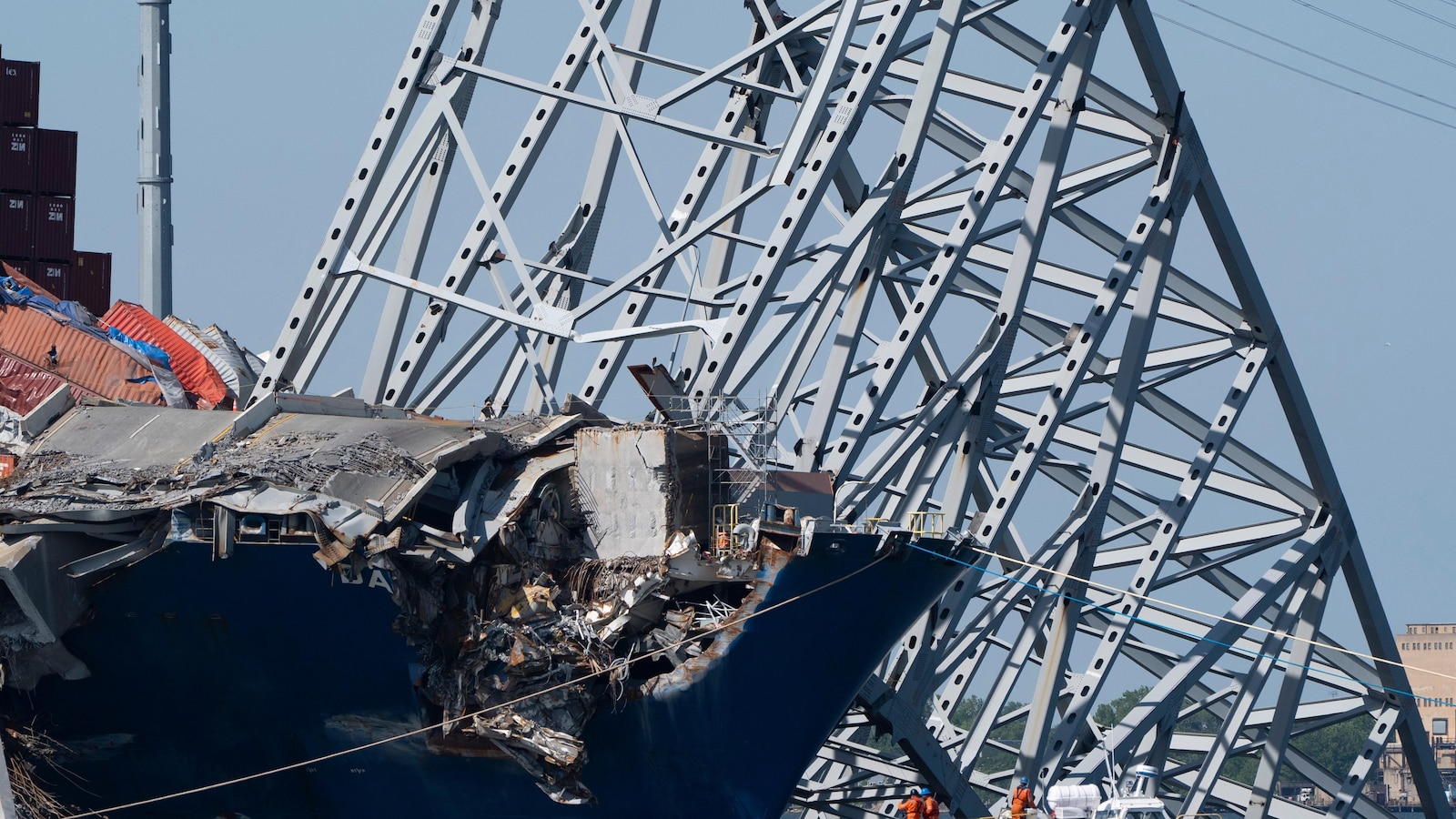
The settlement was reached with Grace Ocean Private Limited and Synergy Marine Pte Ltd, which own and operate the M/V Dali. It addresses certain claims from the state related to the ship’s incident on March 26, 2024, when it struck the Francis Scott Key Bridge.
“For the past two years, the residents, workers, and families of Maryland have had to bear the consequences of a tragedy that should never have occurred,” said Brown in a press release. Specific details regarding the terms of the settlement were not disclosed.
Brown highlighted that the collision significantly impacted the Port of Baltimore, disrupted many livelihoods, and created ongoing economic challenges for the state. “While our efforts are ongoing, this agreement represents a crucial step toward restoring Maryland,” he added.
A representative for the ship’s owner and operator had not provided a comment at the time of the announcement.
According to estimates from the Maryland Transportation Authority, the cost to build a new bridge is projected to be between $4.3 billion and $5.2 billion, with the aim of opening it to traffic by late 2030.
The settlement does not address any claims the state may pursue against the ship’s builder, Hyundai, as noted by the attorney general’s office.
The Dali was departing Baltimore en route to Sri Lanka when a steering failure caused by a loss of power occurred. Tragically, six road workers who were performing maintenance on the bridge during an overnight shift lost their lives when it collapsed.
The state filed claims in federal court in Maryland in September 2024, alleging that the incident stemmed from negligence, poor management, and the unsafe operation of a vessel that was not fit for sea travel and should not have departed the port.
The state sought compensation for damages related to the bridge’s destruction, environmental harm to the Patapsco River, lost revenue, and the extensive economic fallout experienced by Maryland and its citizens.
The bridge collapse halted all shipping activities at the Port of Baltimore, severely affected the livelihoods of thousands of workers, diverted traffic through communities already facing significant challenges, and initiated economic repercussions that are still being felt statewide, according to the attorney general’s office.
The bridge, a historic landmark in Baltimore, served as a crucial transportation link, enabling drivers to bypass the city center. The original 1.6-mile (2.6-kilometer) steel structure took five years to construct and was completed in 1977, playing an essential role in the operations of the city’s port.