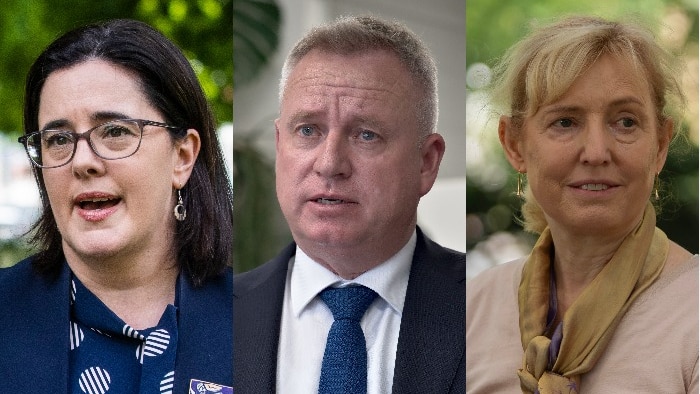

A recent national survey has revealed that a significant 70% of politicians at all levels of government report that their roles are adversely affecting their mental health, with one in five contemplating self-harm due to job-related stress. This troubling trend was highlighted by Tasmanian Premier Jeremy Rockliff, Labor MP Ella Haddad, and independent MLC Ruth Forrest, who all acknowledged the challenges faced both within and outside the parliamentary environment.
The findings indicate a broader mental health crisis among politicians, prompting concerns about the well-being of those in public office. Conducted by the Better Politics Foundation, Compassion in Politics Australia, and psychiatrist Patrick McGorry, a former Australian of the Year, the survey involved nearly 300 political figures. It found that 40% of respondents feel inhibited from discussing their mental health issues, and almost 75% described parliamentary workplaces as more stressful than any other job they have held.
In light of these findings, ABC News engaged in discussions with three Tasmanian lawmakers regarding the impacts of social media, mental health, and the prevailing culture within parliament.
Premier Jeremy Rockliff reflected on the profound changes that come with a political career, expressing concerns about the long-term effects of his experiences in office. Having entered politics over two decades ago, he recounted his emotional struggle when deciding to run for the Liberal Party. “I remember nearly being in tears speaking to this person about putting my name forward,” he shared, acknowledging the life-altering nature of his choice.
Rockliff, who has been a staunch advocate for mental health awareness, revealed that his personal battles have informed his understanding of the stigma surrounding mental health issues. He noted that his past experiences with depression, which he did not recognize at the time, fueled his commitment to becoming a Lifeline counselor to support others facing similar challenges.
Throughout his political journey, Rockliff has held various positions, including deputy premier. He pointed out that the COVID-19 pandemic marked a significant turning point in the scrutiny faced by politicians, exacerbated by social media. He remarked, “Had I not been involved for so long, I probably would have found my wellbeing impacted quite considerably,” adding that he manages online negativity by choosing to disengage from it.
Rockliff expressed concern that the hostile atmosphere fostered by social media could deter prospective candidates from entering politics. He emphasized the need for reflection among parliament members regarding the culture of personal attacks, which he believes undermines democratic discourse.
Labor MP Ella Haddad echoed these sentiments, noting that there exists a societal expectation for politicians to display unwavering strength and resilience. She explained that vulnerability is often viewed as a weakness, leading to fears that personal struggles could be weaponized against them in the political arena. Despite these challenges, Haddad has openly shared her own mental health journey, recognizing the importance of transparency in fostering a supportive environment.
Haddad recounted a particularly difficult period in late 2024 and early 2025 when she struggled with her mental health while still fulfilling her parliamentary duties. She was heartened by the support she received from colleagues who reached out to check on her well-being, which she found encouraging.
Currently feeling stronger, Haddad believes that sharing her experiences has contributed positively to her resilience in the long run. Both she and Rockliff highlight the urgent need for a cultural shift within the political landscape to foster mental health support and a more empathetic approach to public service.