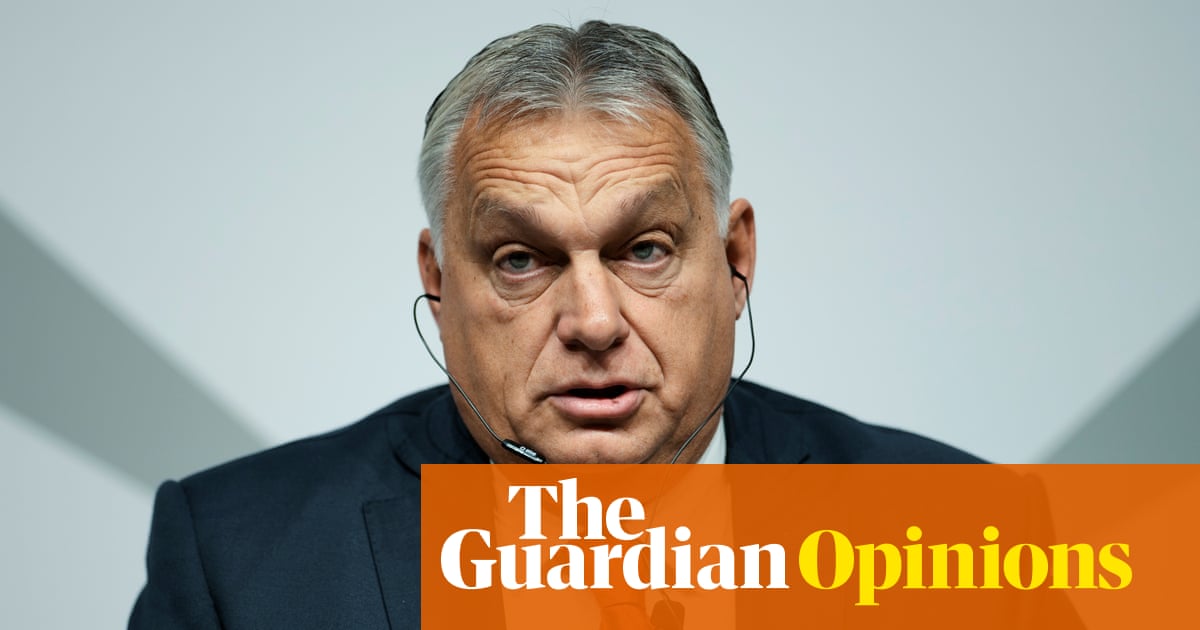

Hungary, with a population under 10 million and an economy contributing only 1.1% to the European Union’s GDP, is set to hold a pivotal election this Sunday—one of the most significant in Europe for the year. Prime Minister Viktor Orbán, who has been in power for 16 years, faces a formidable challenge to his leadership as he has systematically weakened democratic checks and balances. Recent polls indicate that Péter Magyar, the leader of the center-right opposition party, holds a considerable lead over Orbán.
Orbán has been likened to a precursor of Donald Trump by former Trump advisor Steve Bannon. In light of his precarious political situation, Orbán has garnered support from prominent figures in the global far-right, including Marine Le Pen, Matteo Salvini, and Geert Wilders, who recently visited Budapest. Additionally, U.S. Vice President JD Vance made an election-eve appearance, despite his administration’s controversial remarks regarding military action in Iran. Ironically, Vance spent much of his visit criticizing alleged EU interference in the election, an assertion that lacks credible evidence.
Given the backlash against the ongoing U.S.-Israel conflict in the Middle East, Vance’s presence may have mixed implications for Orbán. Nonetheless, it highlights Orbán’s role as a leader of a nationalist agenda akin to that seen in the U.S., as well as the American administration’s recognition of Hungary as a Eurosceptic counterforce against Brussels. The U.S. national security strategy actively seeks to support entities that challenge the EU, with Orbán positioned as a key disruptor. Recent disclosures have also revealed Budapest’s alignment with Kremlin interests, particularly in efforts to weaken European support for Ukraine amid its struggle against Russian aggression.
This election carries significant implications for Brussels, especially in light of the connections between Orbán’s administration and the agendas of both Trump and Putin. Contrary to Vance’s claims, EU officials have maintained a neutral stance despite Orbán’s Fidesz party launching a smear campaign against Ukrainian President Volodymyr Zelenskyy, framing Ukraine as a threat to Hungary. A potential fifth term for Orbán would challenge the EU’s efforts to hold accountable a leader who has exploited EU funds while undermining its core values and acting as a conduit for Russian interests.
While international dynamics are crucial, the primary concern for Hungarian voters remains domestic issues. Orbán’s self-described “illiberal democracy” has marginalized minority groups and concentrated power among a close circle of allies, leading to a stifling grip on the state, civil society, and the economy. Magyar, a former member of Fidesz and a moderate conservative, has gained traction by focusing his campaign on corruption and the declining state of democratic principles.
Although a single election is unlikely to dismantle the entrenched power structure of Fidesz within key institutions, a government led by Magyar would not necessarily be more liberal. Nonetheless, a shift away from Orbán’s prolonged rule could signal a critical moment for the global far-right, especially with upcoming midterm elections for Trump. Vance’s last-minute visit to Budapest underscores the wider ramifications of Sunday’s vote, which may extend well beyond Hungary’s borders.
Do you wish to share your thoughts on the matters discussed in this article? If so, please submit a response of up to 300 words via email for consideration in our letters section.