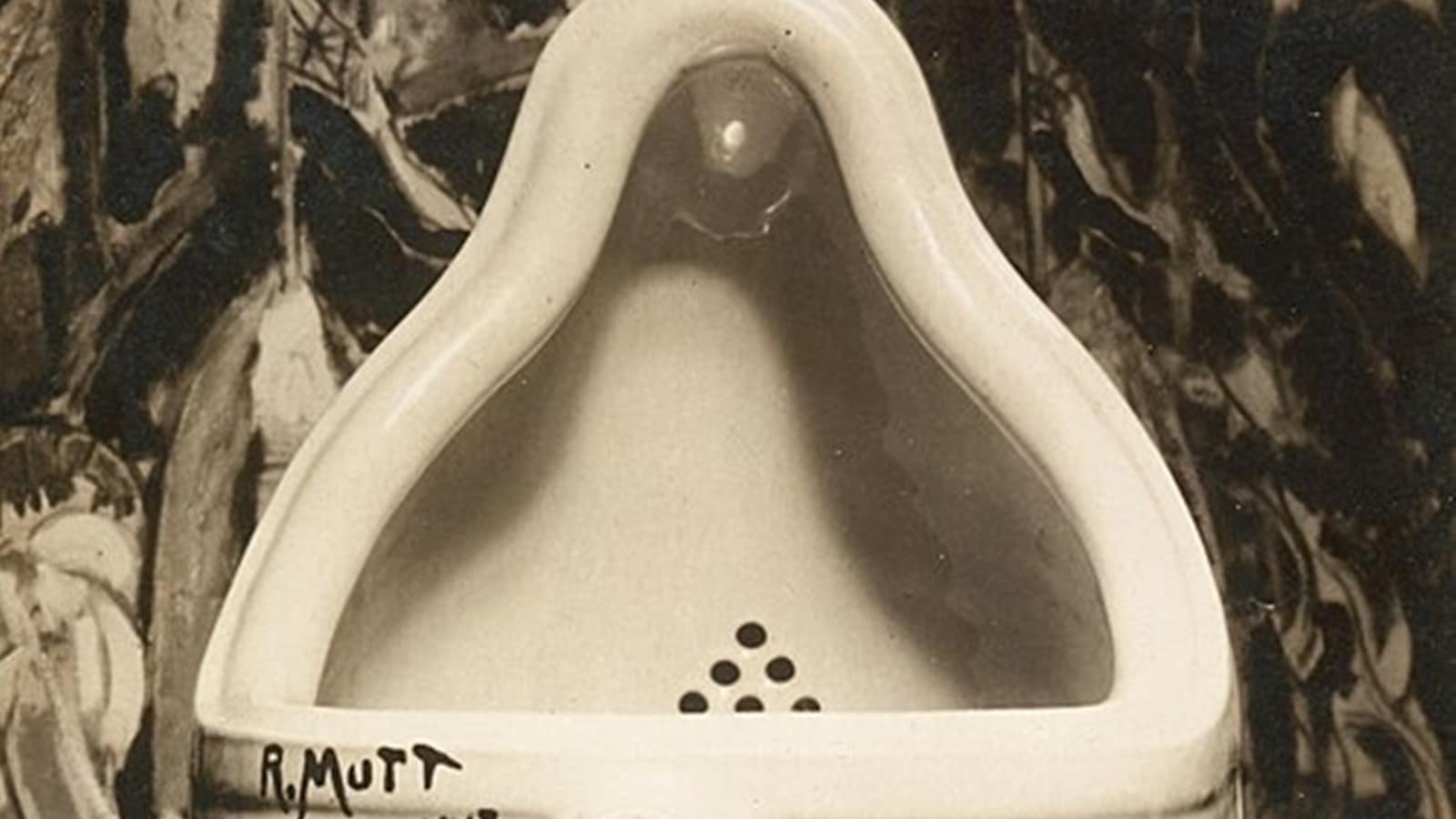

Over a century ago, artist Marcel Duchamp fundamentally transformed the art world with a simple act: he turned a urinal upside down. In April 1917, the French-American artist submitted this inverted urinal, signed “R. Mutt, 1917,” to the Society of Independent Artists’ salon in New York, which claimed to be an exhibition free from jury selection. Aligned with the Dada movement that emerged in post-World War I Europe, Duchamp aimed to challenge traditional concepts of art. Although his piece, titled Fountain, was ultimately excluded from the exhibition, it sparked significant controversy and debate.
This event ignited a prolonged discourse about what constitutes art and the creative rights of artists. The conversation surrounding these themes continues to develop, with Fountain often recognized as a pivotal work in the realm of conceptual art. Currently, the Museum of Modern Art (MoMA) in New York is honoring Duchamp’s contributions through an extensive exhibition, which is the first retrospective of his work in the United States since 1973. The showcase features over 300 pieces created between 1900 and 1968, providing insight into his innovative career.
According to a statement on MoMA’s website, “Throughout a career spanning six decades, Duchamp redefined the concept of art, paving the way for a new era of artistic freedom, the effects of which persist today. Though he resisted definitive artistic movements, Duchamp influenced various modern art movements including Cubism, Surrealism, and Pop Art. His artistic journey was characterized by constant reinvention and intentional contradictions, famously stating, ‘I have forced myself to contradict myself in order to avoid conforming to my own taste.’
Building on this foundation, the exhibition delves into Duchamp’s revolutionary ideas regarding art and authorship. The displayed works include early watercolors and his iconic “readymades,” such as a 1913 version of Bicycle Wheel and a replica of In Advance of the Broken Arm, which features a snow shovel. Notable highlights include Nude Descending a Staircase, No. 2 (1912), which depicts a nude figure in motion and is now one of his most celebrated pieces, despite initial criticism from Cubists who deemed it too “futurist.”
Fountain is also prominently showcased and was voted the most influential artwork of the 20th century in a 2004 poll of 500 art professionals in the UK.
Vandana Kalra serves as an art critic and Deputy Associate Editor at The Indian Express, where she has dedicated over 20 years to documenting the arts, culture, and daily life, with a focus on modern and contemporary art.
With a deep engagement in the arts and a comprehensive understanding of India’s cultural landscape, Kalra is recognized as a prominent voice in contemporary art journalism within India. Her career has evolved alongside shifts in India’s cultural scene, from the expansion of the Indian art market to the rise of international biennales and art fairs. She meticulously tracks the dynamics of the art world, reporting from studios, galleries, museums, and exhibition spaces, as well as covering significant Indian and global art events, including the Venice Biennale and the Kochi-Muziris Biennale.
Kalra has been invited to cover landmark developments in modern Indian art, such as SH Raza’s exhibition at the Centre Pompidou in Paris and the inauguration of the MF Husain Museum in Doha, reflecting her longstanding engagement with India’s modern artistic legacies.
In addition to her writing, she possesses a sharp editorial perspective, crafting and refining art and cultural narratives into cohesive and informed pieces. Through insightful features, interviews, and critiques, she clarifies complex artistic discussions, emphasizing themes of process, patronage, craft, identity, and cultural remembrance.
Her extensive coverage of major events includes the Kochi-Muziris Biennale, the Serendipity Arts Festival, and significant international auctions. She also writes detailed profiles on both modern masters like M.F. Husain and contemporary performance artists such as Marina Abramović, always highlighting how art reflects the experiences of marginalized communities, including migrants, farmers, and workers.
Kalra’s recent articles focus on the 2025 art season in India, showcasing various events and topics. Some of her notable pieces include coverage of the Kochi-Muziris Biennale and the Serendipity Arts Festival, where she discusses innovative initiatives supporting artisans, features on artists addressing social issues, and interviews with prominent figures in the art world.