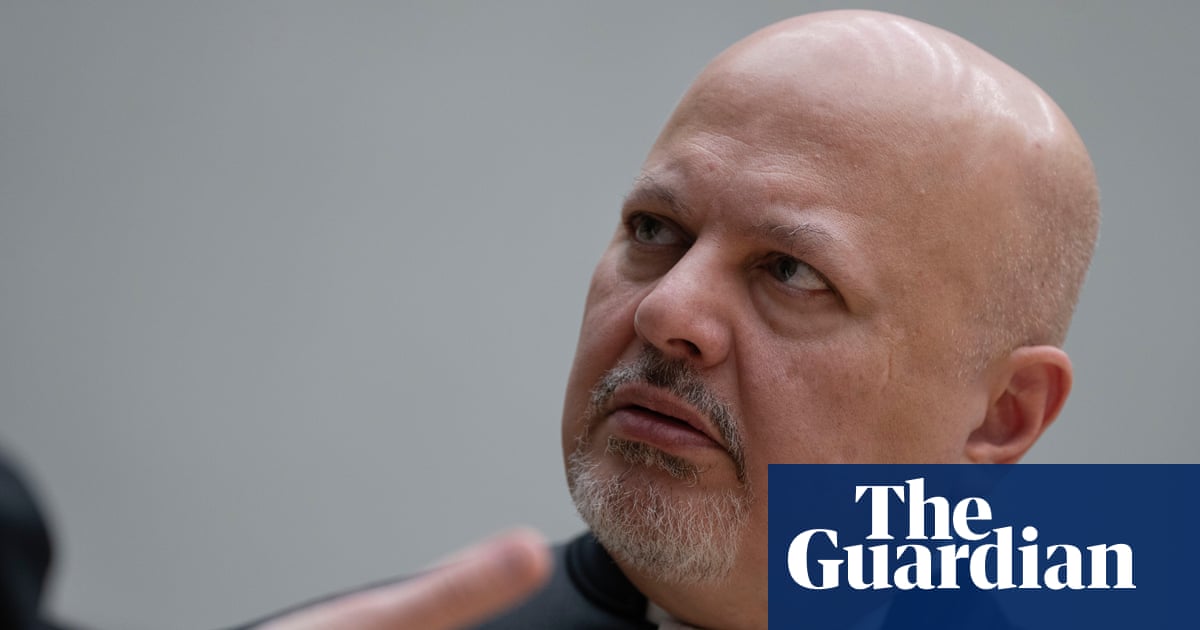

In the secure confines of a substantial chamber at the International Criminal Court (ICC) headquarters in The Hague, high-ranking diplomats have convened weekly to address an ongoing crisis concerning the court’s chief prosecutor, Karim Khan. This British attorney’s tenure has been marred by allegations of sexual misconduct that he vehemently denies, which arose nearly two years ago.
A committee composed of a rotating group of 21 member states from the ICC’s 125 nations is currently evaluating two detailed reports about these allegations, part of a complex process that could extend for several more months before reaching a conclusion.
Recently, the committee voted to move forward with the case against Khan, a decision that his legal team argues is an attempt to undermine him, particularly in light of his intention to pursue arrest warrants for senior Israeli officials regarding alleged actions in Gaza.
What initially began as workplace misconduct allegations from a former employee has now become intertwined with geopolitical issues and legal debates surrounding standards of evidence. The situation has gained broader implications, especially against the backdrop of the proposed Gaza arrest warrants.
The Guardian outlines critical questions surrounding this case, which represents the most significant challenge to the ICC since its inception 24 years ago, aimed at addressing the world’s most severe offenses.
The allegations against Khan, which he refutes, pertain to his behavior towards a female staff member from 2023 to 2024. This individual, a respected lawyer in her late 30s from Malaysia, has worked at the ICC for several years and is a mother whose life has reportedly been profoundly affected by the situation, causing her significant psychological distress.
Initially hesitant to file a complaint due to concerns it might jeopardize the ICC’s case involving Palestine, she claims that Khan engaged in coercive sexual behavior over a protracted period. The alleged incidents reportedly occurred in hotel rooms during work-related trips, in Khan’s office, and at his residence.
Additionally, last year, another woman came forward with claims of mistreatment by Khan during her internship earlier in his career. Her allegations, which he also denies, share similarities with those made by the court staffer regarding events at his home.
Khan’s legal representatives assert that he “categorically denies” any harassment or mistreatment, asserting that he has not abused his authority or engaged in any conduct that could be deemed coercive or inappropriate.
Following the emergence of these allegations in late 2024, the ICC’s governing body, known as the Assembly of States Parties (ASP), commissioned a United Nations oversight body to conduct a fact-finding investigation into the claims.
Over the span of a year, the UN agency conducted numerous interviews and analyzed extensive evidence. A two-page summary of the final report, which has been obtained by the Guardian, indicates that the inquiry found “evidence indicated” that Khan’s behavior towards the staff member had “escalated over time,” culminating in nonconsensual sexual contact.
The summary revealed that during interviews, Khan did not confirm whether he had a sexual relationship with the staffer. The inquiry concluded that it had “identified evidence establishing a factual basis” for the staff member’s claims against him and recommended that the ASP “consider appropriate action based on the evidence.”
Khan reportedly told investigators that he “never engaged in any prohibited conduct” concerning the woman. His legal team has stated that the summary, which has been distributed among ICC member states, was “not accepted by the prosecutor as fair or accurate.”
After reviewing the inquiry’s findings, the ICC’s governing body directed the document to three senior judges, who were tasked with providing legal characterization of the inquiry’s conclusions. The judges, hailing from Belgium, Jamaica, and South Africa, produced an 85-page analysis.
The panel unanimously determined that the UN watchdog’s findings “do not establish misconduct or a breach of duty under the relevant legal framework.” Khan’s lawyers promptly claimed that this outcome amounted to exoneration, and some media outlets reported that he had been “cleared of all wrongdoing.”
However, the situation is far more nuanced. An executive summary of the panel’s recommendations, also seen by the Guardian, suggests that the panel itself recognized its inability to fulfill the task assigned to them. The judges noted that the UN inquiry had not been able to ascertain “where the truth lies,” leaving “many unresolved factual disputes.” Consequently, they stated that any effort to evaluate the findings was “almost destined for fruitlessness,” as there was “little that is capable of being legally characterized.”
They further commented that while the panel could not make a definitive statement regarding the occurrence of the alleged misconduct, it found itself compelled to conclude that the disclosed materials provided insufficient evidence to support a finding of misconduct beyond a reasonable doubt.
Danya Chaikel, representing the International Federation for Human Rights at the ICC and following the case closely, emphasized that the panel had “acknowledged it was not equipped to definitively determine whether the alleged conduct occurred,” which is why the panel’s advice should not be seen as an exoneration.
The panel’s conclusions have left the ICC in a precarious position, as it grapples with the implications of these serious allegations while navigating the intricate legal and political landscape surrounding them.