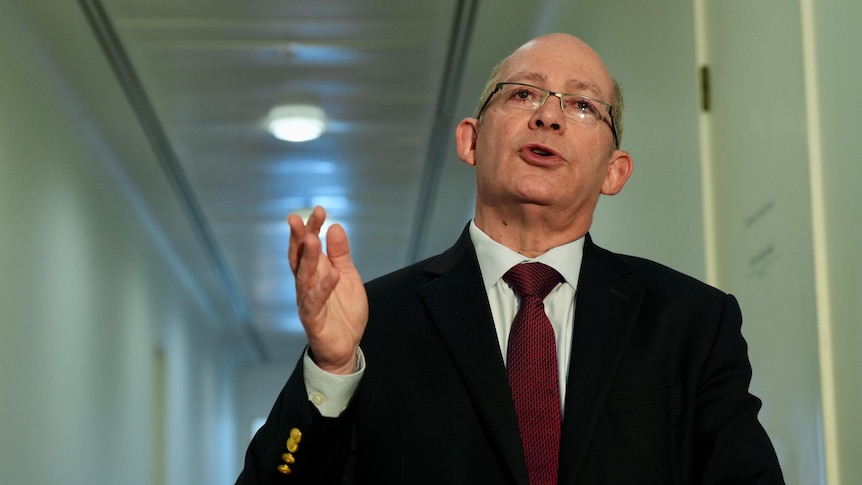

In a recent discussion on ABC’s Insiders On Background, Israel’s Ambassador to Australia, Hillel Newman, shared insights regarding the unexpected extent of Iran’s reaction to the ongoing conflict in the Middle East.
Ambassador Newman revealed that Israel was taken aback by Iran’s aggressive measures, such as the closure of the Strait of Hormuz and retaliatory strikes against Gulf nations, including Oman and Qatar. He mentioned that the shipping routes through the strait have been disrupted as ceasefire negotiations are set to take place in Pakistan.
Newman acknowledged that while Israel prepares for various contingencies, the decision to engage in warfare did not factor in the possibility of Iran obstructing global energy supply routes. This closure has led to a spike in international oil prices, adding pressure on U.S. President Donald Trump, who had just declared a ceasefire earlier in the week.
During the podcast, Newman expressed surprise at the breadth of Iran’s actions, stating, “We would assume that Iran would not jeopardize the global community and energy supply chains due to their own situation,” characterizing Iran as a “rogue state.”
He noted that Israel considers all possible scenarios, including extreme ones like Iran’s potential nuclear capabilities, but admitted that the closure of such a crucial waterway was not anticipated in their strategic planning. “You hope and pray that a rogue entity like Iran will not act against their own interests and those of the international community,” he remarked.
Furthermore, Israel did not foresee Iran conducting retaliatory attacks against allied Gulf states. “They even targeted their allies, like Oman and Qatar, which do not recognize Israel diplomatically,” he added.
A central goal for both the United States and Israel at the conflict’s onset was to restrict Iran’s ability to develop nuclear weapons. Trump indicated that the ceasefire was a result of achieving military objectives, despite Iran reportedly maintaining a stockpile of 440 kilograms of enriched uranium stored underground.
Newman stated that while the enriched uranium situation “needs to be addressed,” it does not necessitate military intervention. “This ceasefire aims to create opportunities for peaceful negotiations to achieve our goals,” he explained. “If peaceful talks fail, we may regrettably have to reconsider military options.”
Following the ceasefire announcement, Israel conducted airstrikes in Lebanon targeting Hezbollah, which resulted in significant casualties. Israeli Prime Minister Benjamin Netanyahu and the White House clarified that Lebanon was not included in the ceasefire agreement, a stance that was contested by Pakistan, the broker of the deal, and Iran.
Trump mentioned that Netanyahu had agreed during a phone conversation to reduce military actions in Lebanon. In response, Newman asserted that Israel’s inclination to “lower the profile” was driven by its own desire for resolution through direct negotiations. “Israel has extended gestures of peace towards Lebanon numerous times; the challenge lies with the radicals,” he stated. “Disarming Hezbollah could pave the way for genuine peace between Israel and Lebanon.”
Israeli politicians across the spectrum have criticized the handling of the conflict with Iran. Newman conceded that the current Israeli government has faced backlash in public opinion, but emphasized that enduring criticism is sometimes necessary to ensure the safety of the populace. “Israel will emerge stronger as moderates gain influence, and Iran, the leader of extremism, will be weakened, thus creating opportunities for peace across the Middle East,” he concluded.