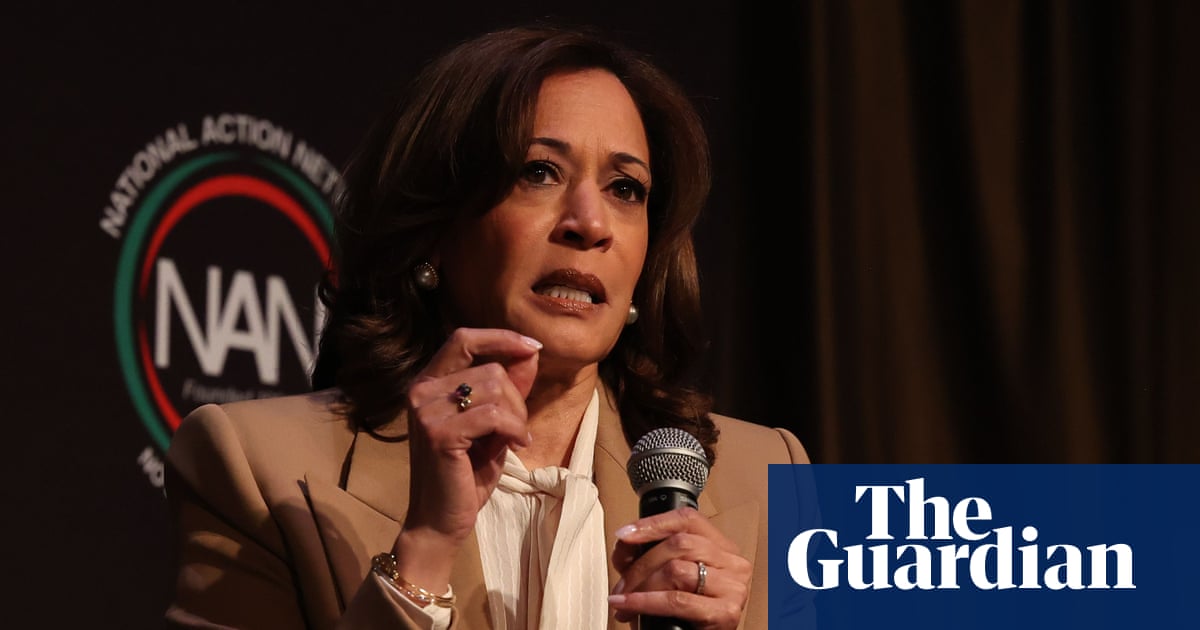

Kamala Harris has indicated that she is considering a run for the presidency in the 2028 election. During a recent event hosted by the National Action Network (NAN), a civil rights group established by Al Sharpton, she shared her thoughts with attendees in New York City. “I might, I might. I’m thinking about it,” the former vice president and current 2024 candidate said in response to a question about her potential candidacy.
Harris elaborated on her experience, stating, “I served for four years being a heartbeat away from the presidency of the United States… I understand the responsibilities that come with the position.” She emphasized her travels across the country over the past year, particularly in the South, and noted her observations that the current system is failing many Americans. “The status quo is not working and hasn’t been working for a lot of people for a long time,” she remarked.
Reflecting on the role of the presidency, Harris asserted, “It must be focused on the American people. I am contemplating this in the context of who can best serve the public. I’ll keep you informed.”
In her address, Harris also criticized President Donald Trump, claiming he has undermined U.S. global alliances. She stated, “He is the first president since World War II who does not value our partnerships with friendly nations… and the significance of these relationships for our international standing.”
On the topic of the U.S. military actions regarding Iran, Harris labeled it a “war of choice,” asserting that Trump’s aggressive stance is detrimental. “While he boasts about his intentions to destroy an entire people, he is, in reality, making us weaker and diminishing our reliability and influence,” she said.
Harris expressed concern about the ongoing erosion of voting rights in the U.S., stating, “They have worked for years to shape a Supreme Court that is now poised to make a decision on Section 2 of the Voting Rights Act.” This section mandates that lawmakers consider race to ensure fair representation for racial minorities. She warned, “I fear they will dismantle it, which would strip us of a crucial legal tool to challenge racially biased laws that hinder voting access.”
She urged citizens to verify their voter registration status promptly, advising, “Don’t wait until election day to find out if your name has been removed from the rolls.” Harris encouraged voters to check their polling locations, highlighting the tactic of closing traditional voting sites, which could lead to confusion on election day.
Since leaving office, Harris has not dismissed the possibility of another presidential campaign. Sharpton recently remarked to Politico that Harris remains a significant figure in the Black community, suggesting that her contributions have been overlooked, and he intends to address this during their upcoming convention.
Harris is also scheduled to attend a fundraiser for the South Carolina Democratic Party next week. Her participation coincides with the presence of numerous prominent Democratic leaders and potential 2028 candidates at NAN’s annual convention, where discussions have centered on the midterm elections, affordability issues, the situation in Iran, and the future direction of the Democratic Party.
This week, several elected officials have spoken, including Maryland Governor Wes Moore, Illinois Governor JB Pritzker, Pennsylvania Governor Josh Shapiro, California Representative Ro Khanna, Arizona Senator Ruben Gallego, House Minority Leader Hakeem Jeffries, and Massachusetts Representative Ayanna Pressley, among others.
Following Harris’s remarks, former Transportation Secretary Pete Buttigieg hinted at his own presidential aspirations for 2028. When Sharpton asked if he should reserve a table at Sylvia’s restaurant in Harlem, where they had previously dined, Buttigieg replied, “You save your seat. I’ll be there.”
Buttigieg, like Harris, criticized the Trump administration, particularly its approach to voting rights, stating, “This administration has adopted a destructive method toward anything related to aiding disadvantaged communities.” He also called for enhanced leadership within the Democratic Party, asserting, “Our only obstacles are self-imposed. We need stronger leadership. The opposition is not the only issue we face.”
Upcoming speakers at the convention include Maryland Representative Glenn Ivey, South Carolina Representative Jim Clyburn, and New York District Attorney Alvin Bragg. On Saturday, attendees can expect remarks from Arizona Senator Mark Kelly, Florida Representative Maxwell Frost, and Kentucky Governor Andy Beshear. It has been reported that California Governor Gavin Newsom and New York Representative Alexandria Ocasio-Cortez are unable to attend the event.