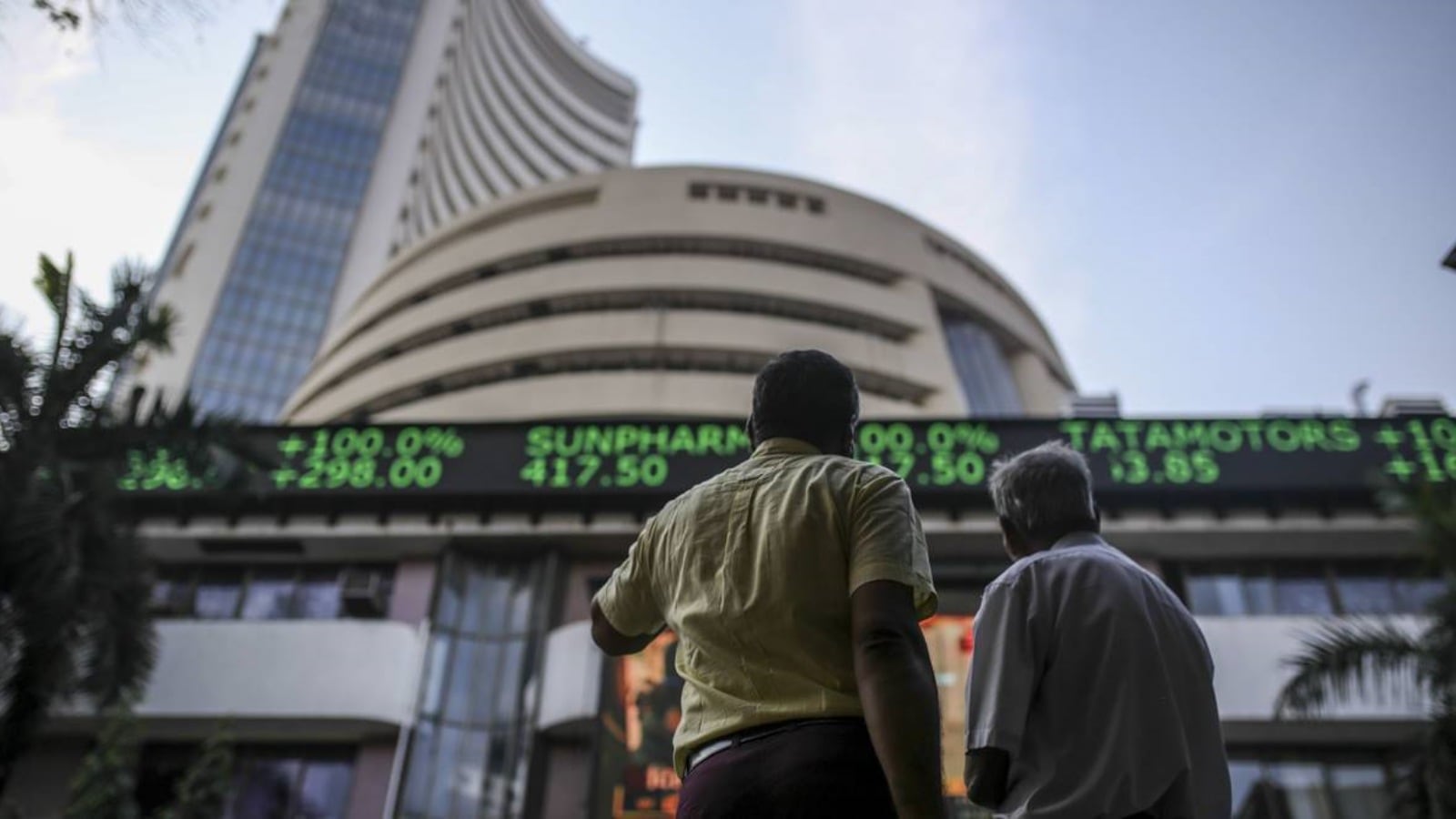

The primary stock market indices experienced a notable increase of nearly 6% over the past week, breaking a streak of six consecutive weeks of losses. This rally was largely attributed to a ceasefire agreement between the United States and Iran, which mitigated market volatility and prompted investors to adopt a more optimistic stance. Prior to this rebound, the benchmark Nifty 50 and Sensex indices had each declined by over 12% during the preceding six weeks.
On Friday, the BSE’s Sensex index closed 1.2% higher, gaining 919 points to finish at 77,550.25 points, primarily driven by strong performances in the banking and financial services sectors. Similarly, the Nifty 50 also rose by 1.2%, adding 276 points to close at 24,050.60. All sectors, with the exception of Information Technology, recorded substantial gains during the trading session.
The India VIX, a measure of market volatility, fell by another 8%, reaching its lowest point in over three weeks. This decline suggests that investors are beginning to anticipate greater stability in the market, despite lingering uncertainties surrounding the ceasefire.
The shift in market sentiment followed an announcement by U.S. President Donald Trump on Wednesday, who declared a two-week halt to military actions against Iran just hours before a critical deadline. Iran’s agreement to allow shipments through the Strait of Hormuz further fueled a significant surge in the indices, with the Nifty and Sensex rising by 4% during that session. Additionally, crude oil prices have sharply decreased this week, dropping from around $115 per barrel to a range of $95 to $100.
Despite these developments, tensions have escalated since the agreement, with skepticism regarding the ceasefire’s durability remaining prevalent among analysts.
Foreign institutional investors (FIIs) have continued their trend of withdrawing funds from Indian markets, although the rate of withdrawal has slowed as the month progressed. On Thursday, FIIs withdrew $144 million, a decrease from approximately $743 million the previous session. However, provisional data from Friday indicated that FIIs invested Rs 672 crore. In contrast, these investors had previously pulled out $2.2 billion and $1 billion in the first two sessions of the month. Domestic investors have shown resilience, purchasing shares worth Rs 35,572.48 crore in March alone. Additionally, mutual funds have maintained their investment momentum, with inflows reaching an eight-month high this month.