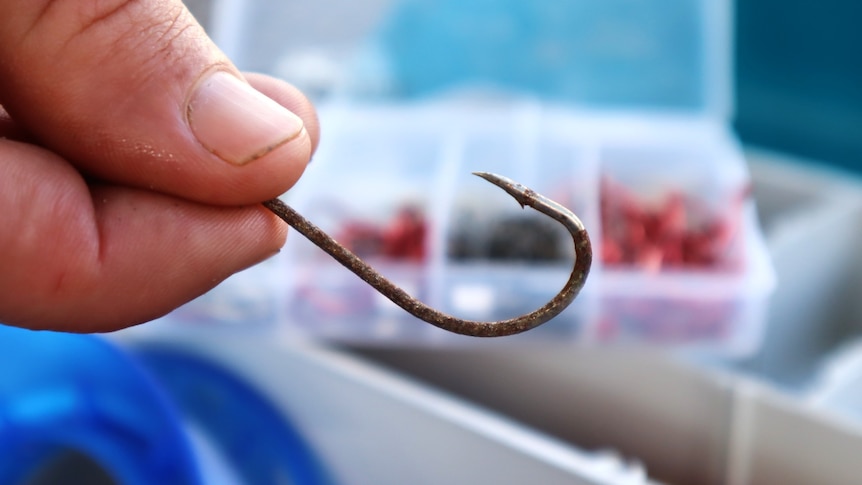

In northern Queensland, many residents engage in the weekend pastime of fishing, enjoying time on the water. However, incidents can occur when an angler accidentally hooks themselves instead of a fish.
Since 2020, the Townsville University Hospital has treated 438 cases of fishhook injuries. Local fishing charter operator and captain Adam Finlay noted that there are numerous anecdotes associated with these incidents. “We’ve had a couple of clients do some foolish things with hooks, including one case where a lure pierced someone’s ear, which was rather unusual,” he recounted. “We also had a deckhand who got hooked in the leg while reeling in a dolphin fish, which was another memorable event.”
Deacon Martin, one of Finlay’s deckhands, has witnessed his share of fishhook injuries as well. “I’ve seen a couple of friends get lures stuck in the tops of their heads, simply due to not paying attention while casting,” he shared.
Bryce Chaney, another member of the crew, recounted a particularly striking incident involving his brother. “My brother got his lure caught in some mangroves. In a moment of frustration, he flicked it too hard to free it, and it ended up getting him right between the toes and in the webbing of his feet,” Chaney explained.
Finlay emphasized the importance of being prepared for such injuries by keeping a well-stocked first-aid kit on board. “You handle situations as they arise — applying pressure to stop the bleeding and providing whatever first aid you can,” he stated. “For more severe cases, you might need to tape it up or even cut the hook out; those decisions need to be made on the spot.”
Professor Richard Franklin, a public health expert at James Cook University, mentioned that while some hooks can be removed easily, it’s advisable to seek medical assistance for more serious punctures to prevent exacerbating the injury. “Severity is key,” Dr. Franklin noted. “For minor issues, you might be able to pull them out yourself, and although there may be some bleeding, it’s likely manageable. However, anything involving the eye should absolutely prompt a medical visit.”
Dr. Franklin further advised that deep wounds in other areas of the body should also be treated by medical professionals. “If something is deeply embedded and you’re unsure how to remove it, don’t attempt to dig around; seek medical help instead,” he cautioned. Additionally, he highlighted the importance of ensuring that one’s tetanus vaccination is current following such injuries.
To minimize the risk of fishhook injuries, Dr. Franklin recommended several preventative measures. “Wearing sunglasses can provide some eye protection,” he suggested. “Appropriate clothing is also beneficial; good pants and proper footwear can make a significant difference, as we do see cases of people stepping on hooks, which can be quite painful.”