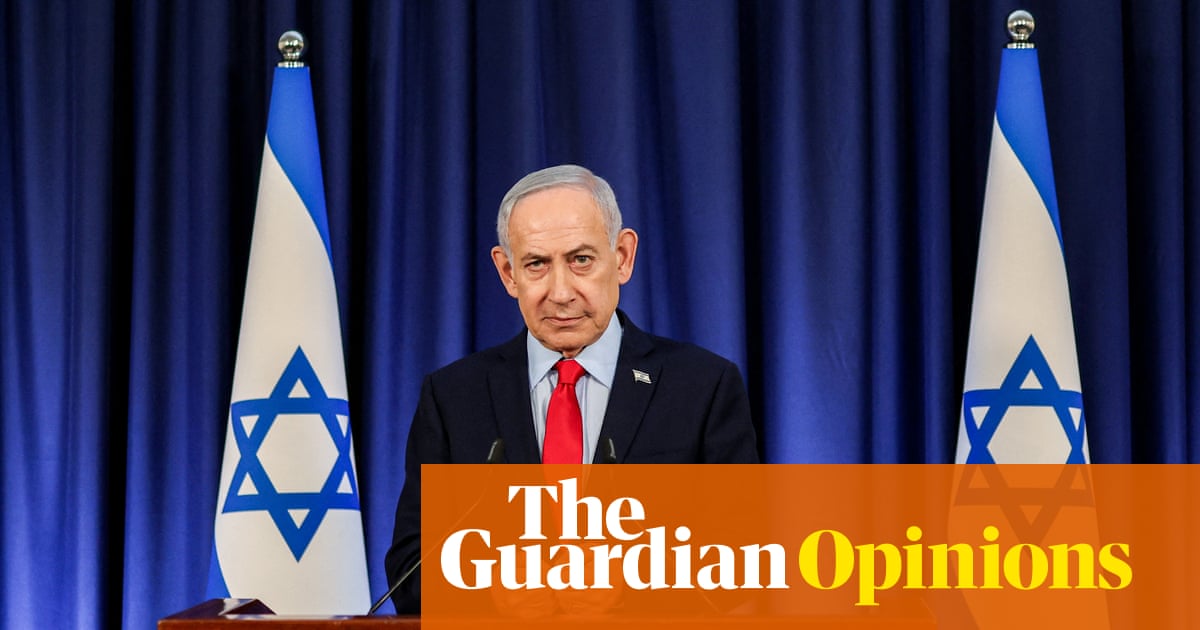

This is a striking account of significant failure, although my focus is not on Donald Trump, but rather on his ally in the ongoing conflict. While Trump has dominated headlines as the prominent figure in the 40-day confrontation with Iran, employing aggressive rhetoric and utilizing his social media platform to announce a ceasefire and upcoming discussions in Islamabad, his partner has only just begun to emerge from the shadows. That partner is Benjamin Netanyahu.
Netanyahu has garnered international attention, particularly as the Israeli prime minister seems to have ignored any signals of a ceasefire in the Middle East. Israel’s military actions against Hezbollah have continued unabated, despite Trump’s claims of progress with Tehran. Following Trump’s announcement of a breakthrough, Israel executed one of the most devastating bombing campaigns in recent memory against Lebanon, a nation already beset by hardship. In a mere ten minutes, Israeli forces targeted 100 locations in and around the capital, resulting in over 300 fatalities and more than 1,150 injuries, many of which were civilians.
Israel maintains that Trump’s agreement does not extend to Lebanon, a stance that Iran and Pakistani mediators dispute. JD Vance has referred to this as a “legitimate misunderstanding” that necessitates immediate clarification. For the time being, Netanyahu appears to be attempting to balance pressures by agreeing to discussions with the Lebanese government while simultaneously promising to continue strikes on what Israel identifies as Hezbollah launch sites with “full force.”
Netanyahu’s reputation can be assessed from two distinct perspectives: the international view and the domestic perspective, which often differ significantly. On the global stage, Netanyahu has long been accused of war crimes and is wanted by the International Criminal Court in The Hague for his role in the devastation of Gaza, parallel to Trump’s notorious reputation. However, at home, he has maintained a different, though not universally positive, image. Supporters regard him as a security-focused leader, adept at navigating challenges, despite ongoing ethical controversies and corruption charges. This domestic perception holds more weight for Netanyahu, especially as elections loom, due no later than October 27.
What will Netanyahu present to his constituents, who judge him by their own standards? The most significant fact is that during his tenure, Israel experienced the deadliest terrorist attack in its history on October 7, 2023. On that day, Hamas militants breached the poorly defended border from Gaza and inflicted severe casualties on Israeli civilians. This incident alone should have disqualified him from continuing in office, as in many political systems he would have been ousted long ago.
In the aftermath, Netanyahu promised “total victory” over Hamas, aiming to eradicate the group’s influence in Gaza. Yet, despite a two-year intensive military campaign that resulted in approximately 70,000 deaths, he has achieved little toward this goal. In areas of Gaza not occupied by Israeli forces, Hamas retains control.
During the same conflict, Netanyahu claimed to have defeated Hezbollah, asserting that the group could no longer threaten northern Israel with missile attacks, allowing displaced residents to return home. However, they soon found themselves under renewed assault from Hezbollah as the group joined forces with Iran in this current conflict, a war initiated by both Netanyahu and Trump. Over the past month, it has become evident that the assertions regarding Hezbollah’s defeat were significantly overstated. While Israel did eliminate the group’s leader, Hezbollah itself has survived and is capable of rebuilding its military capabilities.
The ongoing confrontation with Iran tells a similar story. In June, the U.S. and Israel engaged Iran in a 12-day conflict that Trump claimed had “obliterated” Iran’s nuclear program, while Netanyahu hailed it as a “historic victory.” However, this “victory” lasted a mere eight months, as by February, Tehran was again viewed as a serious existential threat.
The outcome? Iran continues to possess a substantial stockpile of enriched uranium and maintains missile capabilities, targeting Gulf nations and Israeli cities right up until the ceasefire was announced. The Iranian leadership remains intact and has even adopted a more hardline stance, contrary to Netanyahu’s promises of regime change, and they find themselves in a stronger position than before. Tehran has effectively demonstrated its capacity to wield significant influence, even without a nuclear weapon, through its control of the Strait of Hormuz, a critical point for global trade. Any resumption of shipping traffic will be subject to Iranian approval and likely accompanied by demands for substantial fees.
In essence, after nearly four decades of warning about the threats posed by the Iranian regime—central to Netanyahu’s political narrative—what has he truly accomplished?