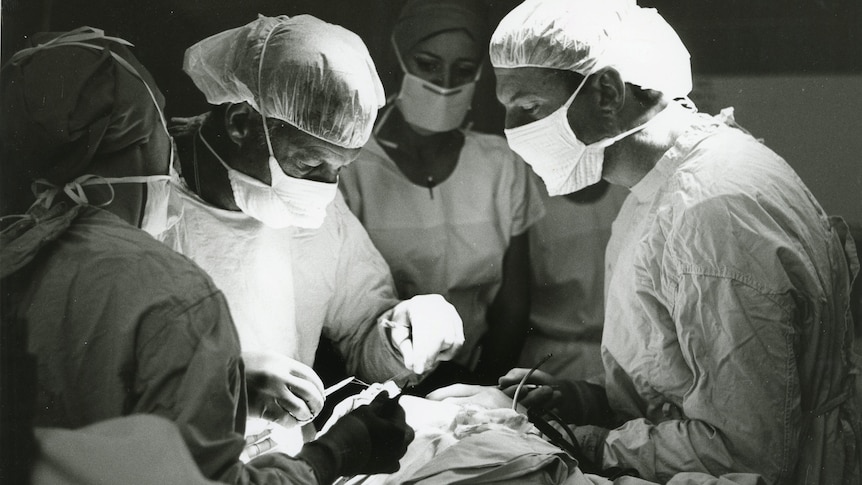

In 1975, Sydney was abuzz with cultural milestones, including the release of Steven Spielberg’s iconic film “Jaws” and the debut album from the rock band AC/DC. During this period, a 29-year-old named John Ross underwent double bypass heart surgery at St Vincent’s Hospital. Initially given a grim prognosis that he might not see his 40th birthday, John has defied the odds and is now thriving at the age of 80.
St Vincent’s Hospital, which has been providing care for John for nearly 51 years, believes he may hold the record as Australia’s longest-living patient after such a surgery. He is just three years shy of the global record, currently held by Robert Miller from the United States, who had a similar procedure in 1972.
Reflecting on his decision to proceed with the surgery, John expressed his initial apprehensions about open-heart surgery but ultimately placed his trust in the medical team at St Vincent’s. “I was a bit hesitant at first, but then I had faith in St Vincent’s and the doctors there, so I went ahead with it,” he recounted. “It was a bit of a jump off the cliff and see what happens.”
John’s courageous decision to undergo surgery played a significant role in popularizing the procedure, which is now regarded by heart surgeons as a routine operation with minimal risks. Annually, around 17,000 coronary artery bypass grafting (CABG) surgeries are performed in Australia. However, as newer treatment options emerge, the number of bypass surgeries is decreasing, with current patients typically being older and in poorer health than those in previous decades.
Heart bypass surgery aims to create an alternative route for blood flow in patients with narrowed or blocked arteries, which can lead to chest pain or heart attacks. This condition, known as coronary heart disease, remains a leading cause of mortality in Australia. Bypass surgery utilizes veins from the patient’s inner chest, arm, or leg to bypass the obstructed vessels.
John’s surgery in May 1975 positioned him among the first cohort of patients to receive this treatment in Australia, as noted by Dr. Paul Jansz, head of the transplant surgical unit at St Vincent’s. “The first successful bypass surgery was performed in 1967, with the first Australian case occurring in 1969, making John one of the early patients to undergo this operation,” Dr. Jansz stated. “He’s certainly the oldest or longest-living patient I’ve encountered.”
The pioneering surgery in 1967 was carried out by Argentinian surgeon Rene Favaloro at the Cleveland Clinic in Ohio, marking a significant advancement in cardiac care. Today, bypass surgery is recognized as the most prevalent form of cardiac surgery globally. “Cardiac surgery has become remarkably routine,” Dr. Jansz remarked. “In 1975, the idea of opening someone’s chest and stopping their heart was still a novel concept.”
As John approaches the 51-year anniversary of his surgery, Dr. Jansz highlighted that despite advancements in surgical techniques over the years, the fundamental procedure remains largely unchanged. “The basic act of connecting two vessels together has not evolved significantly,” he explained, noting that improvements have largely occurred in anesthesia and the technology of heart-lung machines that maintain circulation during surgery.
According to Professor Julian Smith, a senior cardiothoracic surgeon at the Victorian Heart Hospital, modern techniques have introduced stabilizers that allow some parts of the heart to keep beating, reducing the need to stop the heart entirely. This development minimizes risks associated with surgery. Professor Smith also noted that contemporary bypass surgeries are performed more quickly and with improved safety. While a double bypass might have taken four to five hours in the past, it now typically requires only two to three hours.
Mortality rates for cardiac surgeries in Australia have also seen a substantial decrease, dropping from approximately 5-10% in previous decades to just 1-2% today. “The most significant change is the improved safety of heart surgery, leading to excellent patient outcomes,” Professor Smith noted.
Moreover, contemporary bypass surgeries are increasingly performed on older and sicker patients, who might have been considered unfit for surgery 50 years ago. “We are now undertaking more complex operations on patients with serious health issues, and they are responding well,” he added.
Since the early 2000s, the frequency of heart bypass surgeries in Australia has declined as alternative treatments, such as angioplasty and stenting, have become more prevalent. Additionally, there is a heightened public awareness regarding the risk factors for heart disease, including smoking, high blood pressure, and poor diet, along with improved non-surgical treatment options available.