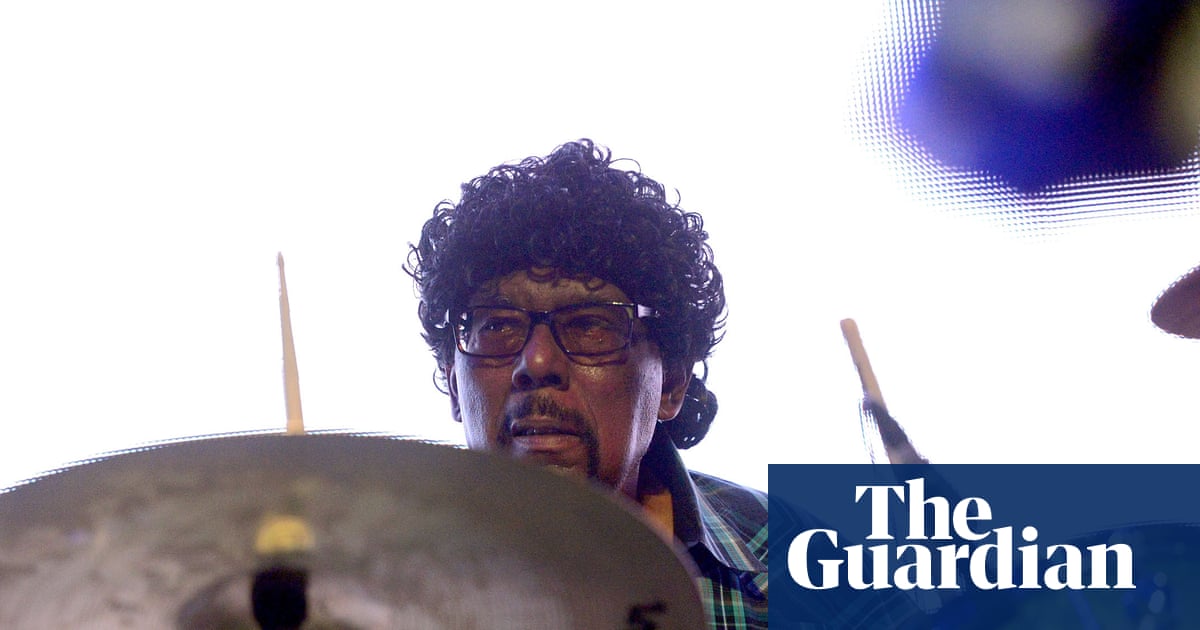

In the realms of R&B, soul, funk, disco, and various styles of African-American popular music, the role of the drummer is vital, particularly one who can adeptly locate “the pocket,” a term musicians use to describe that elusive sweet spot where a song’s rhythm is both deep and captivating. James Gadson, who passed away at the age of 86, dedicated his entire career to mastering that pocket, driving the momentum behind numerous iconic 1970s tracks, including Bill Withers’ “Lean on Me,” Marvin Gaye’s “I Want You,” Diana Ross’ “Love Hangover,” the Jackson 5’s “Dancing Machine,” Gloria Gaynor’s “I Will Survive,” Smokey Robinson’s “Cruisin’,” and Peaches & Herb’s “Reunited,” among countless others throughout his extensive career in Los Angeles’ recording studios.
His remarkable talents were also sought after by artists across various genres. Gadson contributed his drumming skills to Boz Scaggs’ “Slow Dancer” (1974), Elkie Brooks’ “Live and Learn” (1979), Leonard Cohen’s “The Future” (1992), and in the 21st century, he played on Rickie Lee Jones’ “The Evening of My Best Day,” Paul McCartney’s “Chaos and Creation in the Backyard,” Lana Del Rey’s “Paradise,” and numerous albums by Beck, to name just a few.
Gadson emerged during a time when major American cities featured elite drummers who were the go-to choice for local recording sessions. The bustling studios of Los Angeles were populated by notable drummers such as Earl Palmer, Hal Blaine, Jim Keltner, Jim Gordon, Paul Humphrey, Ed Greene, and Gadson himself, whose work would later inspire sampling by hip-hop and breakbeat artists, including NWA and Kendrick Lamar.
Beginning his career in the early 1960s as an innovative jazz drummer, Gadson later redirected his focus toward what might initially have seemed a simpler musical genre. However, he quickly understood that more mainstream styles came with their own set of complexities, especially when targeting dance audiences.
“Most grooves, particularly for dance music, are quite straightforward,” Gadson remarked in a 2007 interview with Modern Drummer. “Yet, to master them, you need to take it slow. Often, we practice intricate rhythms to see how fast we can play. I believe you must slow things down and simplify them to truly feel their danceability.”
While much of his work remained behind the scenes, his talents shone brightly during a performance in a small London television studio in 1972. As part of Withers’ four-member band, he played “Ain’t No Sunshine” and “Use Me” for the viewers of BBC2’s “The Old Grey Whistle Test.” Shortly after, Withers and the band recorded the renowned “Live at Carnegie Hall” album during a tour in New York.
Gadson was not one to seek the spotlight; his performances were always aimed at supporting the song’s overall impact. His intricate hi-hat and snare rhythms, executed with precision, were crafted to elevate the music rather than draw attention to his skill. The tastefully syncopated bass-drum patterns he incorporated behind Diana Ross in “Love Hangover” stood out, particularly at a time when many disco drummers relied on a monotonous 4/4 beat.
Born and raised in Kansas City, Gadson was the son of drummer Harold Gadson and Arlethia (née Hopson). Although Harold played with big bands, he discouraged his sons from pursuing a music career, opting instead to buy them cornets for a marching band. However, by the time James reached his teenage years, he was performing with his brother Tutty in a doo-wop group called the Carpets and sneaking into nightclubs to experience the vibrant music scene. After a two-year stint in the US Air Force, he decided to pursue drumming full-time at the age of 21.
His first prominent touring experience was with Hank Ballard, known for creating “The Twist,” from whom he learned about the sophisticated jazz of John Coltrane. After returning to Kansas City, he played in clubs with organ trios and free-jazz ensembles, but his career took a significant turn when he moved to Los Angeles at the end of the 1960s and joined Charles Wright’s band, previously a member of a doo-wop group known as the Shields.
Wright instructed him to abandon the complex jazz techniques. “Just play it straight,” he advised, as the group, which would later be recognized as the Watts 103rd Street Rhythm Band, rehearsed songs like “Love Land” and “Express Yourself,” the latter of which became major hits on the US pop and R&B charts in 1970. Gadson absorbed a wide range of influences and worked diligently to fulfill Wright’s expectations, with the laid-back groove of “Express Yourself” reflecting his deep understanding of New Orleans drumming, particularly that of the Meters’ Zigaboo Modeliste.
Gadson referred to Los Angeles as “the melting pot of rhythm,” drawing inspiration from various sources: the “second line” rhythms of New Orleans, Mississippi shuffles, Motown grooves, Chicago’s new jack swing, Latin rhythms from New York, and disco’s four-on-the-floor beats. He skillfully blended these elements into a distinctive style that attracted numerous artists throughout his career, including BB King, Bobby Womack, Ray Charles, Herbie Hancock, Herb Alpert, Helen Reddy, and Sturgill Simpson. His last recordings featured contributions to recent albums by Keith Urban and Michael Kiwanuka.
In 1968, Gadson married Barbara, who survives him along with their children, grandchildren, great-grandchildren, and his sister, Robbie.
James Edward Gadson, renowned drummer, was born on June 17, 1939, and passed away on April 2, 2026.