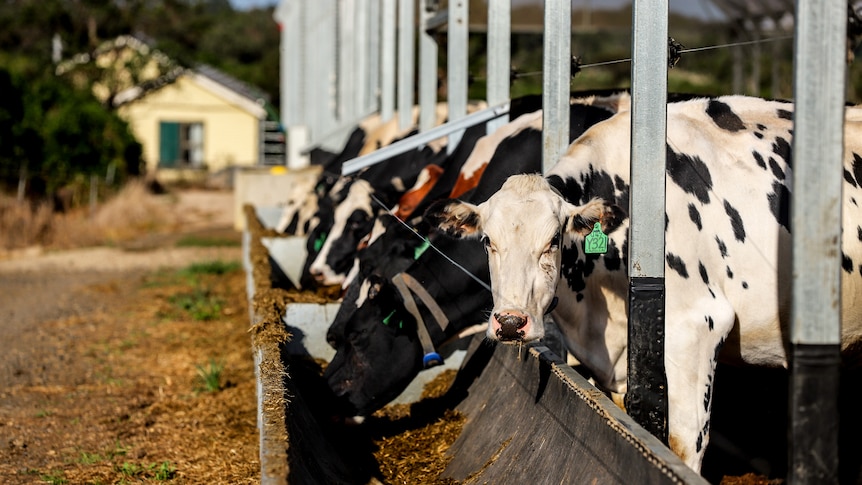

The Australian dairy sector is facing challenges due to escalating fuel and fertilizer expenses, which could have a significant effect on production levels. In response to these rising costs, some farmers are already beginning to reduce their output to mitigate financial losses.
Industry representatives are urging for an increase in dairy prices to help alleviate the financial strain on farmers. EastAUSmilk, an advocacy group representing dairy farmers in Queensland and New South Wales, has indicated that to cover the rising costs of transport and fertilizers, the retail price of milk must increase. If this does not happen, they warn that production will decline and supply may diminish.
Tim Bale, president of EastAUSmilk and a dairy farmer himself, noted that while the availability of fuel and fertilizers has remained stable, the costs have, in some cases, more than doubled, posing a significant challenge for farmers. He explained that some farmers have already opted to reduce their use of urea, which is vital for pasture growth and subsequently affects the number of cows they can milk and overall milk production.
Bale expressed concerns about a potential milk shortage, citing instances of producers in Queensland and New South Wales who are cutting back on their operations. “I spoke to another farmer today who is contemplating laying off staff and possibly reducing his herd by a hundred cows,” he shared. He emphasized the need for farmers to feel assured in their operations, stating that continuing with the current costs could wipe out profits.
EastAUSmilk is advocating for a price increase of 30 cents per litre of milk, suggesting that consumers would be willing to pay more if they knew the farmers would benefit. Bale stated, “Consumer feedback indicates that people are open to paying higher prices if it means farmers receive a fair share.” He stressed the importance of fair pricing for the sustainability of the industry.
Rob Brokenshire, president of the South Australian Dairyfarmers’ Association, highlighted that any reduction in production could strain the industry. While he does not foresee an immediate shortage, he acknowledged that maintaining production levels would require addressing high input costs. He noted that South Australian dairy production has already decreased by approximately 6 percent over the past year due to drought conditions, which is concerning amid a strong demand for milk.
According to Dairy Australia, milk production in Australia has been in decline over the years, currently estimated at around 8 billion litres, significantly lower than New Zealand’s production of 21 billion litres. Janine Waller, executive director of the Australian Dairy Products Federation, emphasized the need for government assistance to help avert potential shortages. “Every drop of milk is crucial,” she remarked, urging collaborative efforts to secure milk supply and production in the future.
Waller called on consumers to support local dairy farmers by purchasing Australian products, especially as the industry confronts multiple challenges, including recent droughts and natural disasters. Andrew Cavill, a dairy farmer and chair of DairySA, expressed that in his five decades in the field, he has never encountered a crisis as disruptive as the ongoing conflict in the Middle East, which has compounded difficulties already faced since the COVID-19 pandemic.
He lamented the rising costs of essential supplies, including fuel, fertilizers, and animal health products, which have added strain to farmers’ operations and could impact production if the situation persists. “This is a significant food security issue that affects not just dairy, but agriculture across the board,” he warned, noting potential shortages in the marketplace if these trends continue.
Mandy Pacitti, a dairy farmer from Hindmarsh Tiers, South Australia, echoed these sentiments, stating that escalating costs have become burdensome, with operational expenses consuming considerable time and resources. She emphasized that farmers are at the mercy of these rising costs and cannot pass them on to consumers.
In response to these challenges, a spokesperson for Woolworths indicated that the retailer is striving to balance the interests of both farmers and consumers amidst growing cost pressures. They aim to support the sustainability of their suppliers while minimizing the financial impact on customers. Similarly, an ALDI representative stated that they are closely monitoring the situation and collaborating with suppliers to maintain fair pricing. Coles has also been approached for comment on this pressing issue.