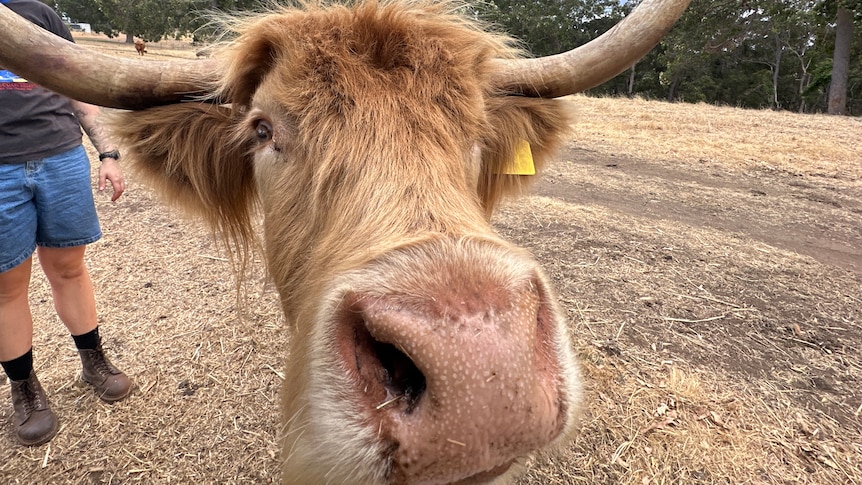

Highland cattle breeding is experiencing significant growth in Western Australia, with the number of registered breeders increasing from approximately 12 to over 40 in just five years.
This surge in popularity is largely attributed to the influence of social media, the rise of hobby farming, and a growing interest in agritourism.
While the number of breeders may start to stabilize, the interest in experiencing Highland cattle firsthand is anticipated to continue rising.
Recognized as one of the oldest registered cattle breeds globally, Highland cattle have gained traction among both farmers and tourists in Western Australia.
The region is emerging as a rapidly expanding area for Highland cattle breeding, as the unique Scottish breed sees increased demand across various farms and agritourism initiatives.
Rob Murrell, a representative from the Australian Highland Cattle Society in Western Australia, noted that the breed’s popularity has “increased exponentially” in recent years.
During his visits to Scotland in 2023 and 2024, he observed a significant growth in the tourism sector surrounding Highland cattle.
“I think there’s been a flow-on effect with WA catching up to the eastern states, with many cattle being brought over from there to new breeders in our region,” he remarked, adding, “They’re just a super popular animal.”
According to Mr. Murrell, Highland cattle hold the distinction of being the oldest registered breed worldwide, with herd records tracing back to the 1800s in Scotland.
“The primary focus should be on maintaining breed standards and improving the cattle with each breeding cycle,” he explained.
The breed’s calm demeanor and unique appearance attract a diverse array of new owners, ranging from hobbyists to seasoned cattle farmers. However, Mr. Murrell pointed out that their popularity is accompanied by several misconceptions.
“They aren’t merely large, fluffy pets; they require proper handling as livestock,” he cautioned. “It’s essential to provide them with adequate space and proper equipment for veterinary care.” He emphasized the necessity of having a cattle crush for vet checks, along with sufficient yards and grazing space.
The growth in Highland cattle breeding has also been propelled by agritourism, as farm visits and on-site experiences gain traction.
In Donnybrook, located around 200 kilometers south of Perth, Jackie De Luis has been breeding Highland cattle for six years, motivated by her Scottish heritage.
“I adore their appearance and nature, and I appreciate being able to engage with a cow that enjoys interaction,” she shared.
Although the breed originates from Scotland’s colder climate, Ms. De Luis noted that their thick hides are beneficial in local conditions as well. “In Scotland, it protects them from the freezing temperatures, but here in WA, it also helps them cope with the heat,” she stated, adding that they have adapted remarkably well to their environment.
She further explained that their social structure and care requirements are more intricate than many realize. “Each paddock has its own hierarchy. We keep our bull separate to adhere to our breeding program and maintain control over that,” Ms. De Luis elaborated. “Our heifers are managed separately from mothers and calves to ensure they receive extra nutrition.” She highlighted the importance of respecting their social dynamics when interacting with them in the paddock.
Mr. Murrell predicts that interest in Highland cattle will persist. “While the number of owners may plateau somewhat, the breed’s overall popularity is likely to continue,” he stated. “With agritourism thriving, numerous farm tours and visits are fully booked each week as people are eager to meet and interact with Highland cattle.”