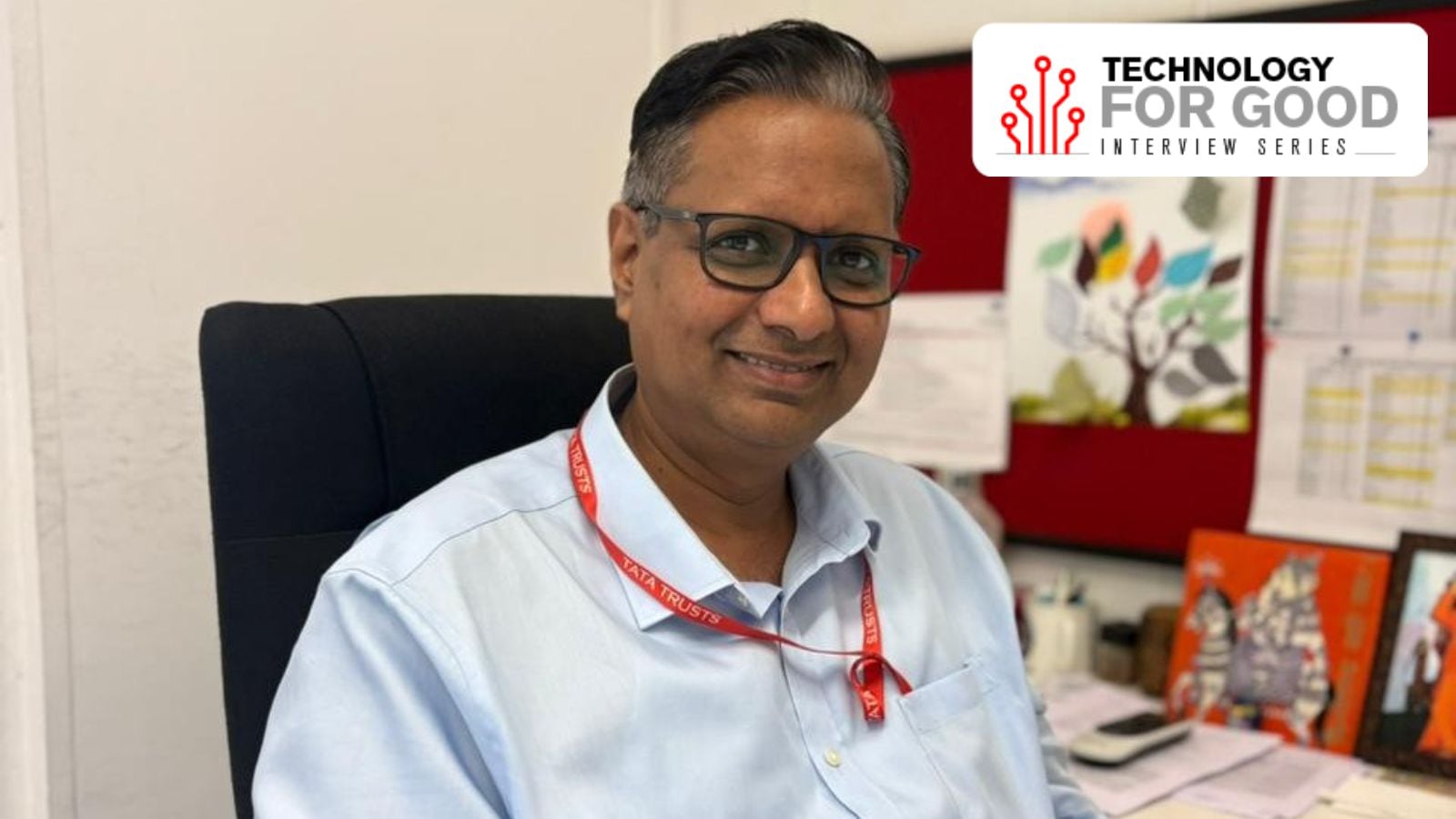

HSD Srinivas is at the forefront of primary healthcare programs at Tata Trusts, one of the most established and significant philanthropic organizations in India.
Tata Trusts has been instrumental in enhancing India’s healthcare framework by partnering with governmental bodies, non-profit organizations, researchers, innovators, and startups to facilitate affordable and scalable technology-driven solutions in the health sector.
With a career spanning over 34 years, Srinivas has been a key figure in advancing healthcare delivery systems throughout India.
Before his tenure at Tata Trusts, he oversaw community health projects at Reliance Foundation. His previous leadership positions include roles at the L.V. Prasad Eye Institute in Hyderabad and Chief Operating Officer for Andhra Pradesh at GVK EMRI (Emergency Management and Research Institute).
Srinivas possesses an engineering degree and an MBA, complemented by executive training in Healthcare Delivery and Strategy from Harvard Business School.
In an interview with indianexpress.com, Srinivas discussed Tata Trusts’ initiatives, the effectiveness of medtech interventions, and the emerging technologies in India’s public health landscape. The following are edited excerpts from the conversation:
H.S.D. Srinivas: Healthcare is a crucial focus for all 16 of our trusts. Although each trust has its own specific mission and goals, health is a common theme across many of them. Last year, we allocated approximately Rs 1,200 crore towards healthcare initiatives.
We concentrate on four primary areas within healthcare. The first is cancer care, where we develop infrastructure, equip hospitals, and manage them. The Tata Cancer Care Foundation operates three hospitals and is in the process of constructing another one.
The second area under my supervision encompasses all health concerns aside from cancer, primarily focusing on public health and primary care initiatives.
The third area is nutrition, and the fourth, which is our latest effort, involves the Tata Health Care Foundation, which aims to establish hospitals in various cities throughout India.
H.S.D. Srinivas: Our public health strategy emphasizes primary care interventions. Over the past decade, we have invested around Rs 100 crore annually to improve access to various services at the primary care level.
We pay particular attention to marginalized groups, including non-working individuals such as mothers, children, and the elderly, who often do not receive adequate care. Historically, health investments in India have favored the working male as the primary earner.
The government has made commendable strides in recent years, particularly since the introduction of the National Rural Health Mission, to better address the needs of expectant mothers and children.
Our team typically assesses existing challenges and effective solutions, looking for ways to scale these solutions while also investigating innovative approaches to tackle these persistent issues.
Our work is organized into three main sectors: maternal and child health, non-communicable diseases (NCDs), and communicable diseases.
H.S.D. Srinivas: We are firm believers in the potential of technology to enhance both equity and efficiency within existing healthcare systems.
Since the introduction of 4G services in rural regions around 2015-16, we have seen a ripe opportunity for experimentation. Although telemedicine has been available for almost three decades, it was often deemed unsuccessful due to weak community engagement and unreliable connectivity, largely reliant on satellite systems.
With improved broadband access and reduced data costs, we began experimenting with various models over the next four to five years.
One approach was a hub-and-spoke model where a central hospital served as a hub, managing telemedicine units in outreach programs. We implemented this with the Ramakrishna Mission hospitals in Mathura and Vrindavan, which acted as hubs with approximately 15 spokes. This innovation significantly reduced the need for individuals to travel long distances for basic medical care.
Another model involved a centralized care coordination center in Hyderabad, linking primary health centers (PHCs) and sub-centers in four districts in Telangana. In collaboration with the state health department, doctors at the hub were able to support nurses at remote facilities.
This initial work coincided with the development of larger government platforms like eSanjeevani.
A third model was trialed in Vijayawada, where Tata Trusts provided a team of doctors to support around 20 rural health centers.
Telemedicine proved to be a significant success, especially during the Covid pandemic when both the medical community and government recognized it as a legitimate method of delivering care, something that lacked clear guidelines prior to that.
H.S.D. Srinivas: Our work primarily serves a catalytic role in terms of scale and impact. We create models, demonstrate their effectiveness, and assist governments in expanding them. We collaborate with both the Union government and various state governments across India.
In addition to our initial digital health initiatives, we also focused on technology related to non-communicable diseases. By around 2016-17, it became increasingly evident that India was grappling with a growing NCD crisis, prompting the government to recognize the necessity for population-level screening, which required a robust technological foundation.
We partnered with Dell EMC, which developed an application for this purpose. After a successful pilot, we scaled the initiative across multiple districts in Andhra Pradesh.
The Telangana government later extended this to all 33 districts, and eventually, the Government of India adopted and scaled it nationally. Tata Trusts played a role in deploying and refining the platform across approximately 650-700 districts.
Currently, the platform, which has been fully handed over to the government, contains around 55 crore records of adults over the age of 35, with approximately 35 crore individuals screened.
In Telangana, we also showcased how around 700 PHCs could be interconnected with nearly 60 medical colleges and district centers, enhancing overall healthcare delivery.