
Getty Images: Daniel Carson/AFL Photos
Getty Images: Daniel Carson/AFL Photos
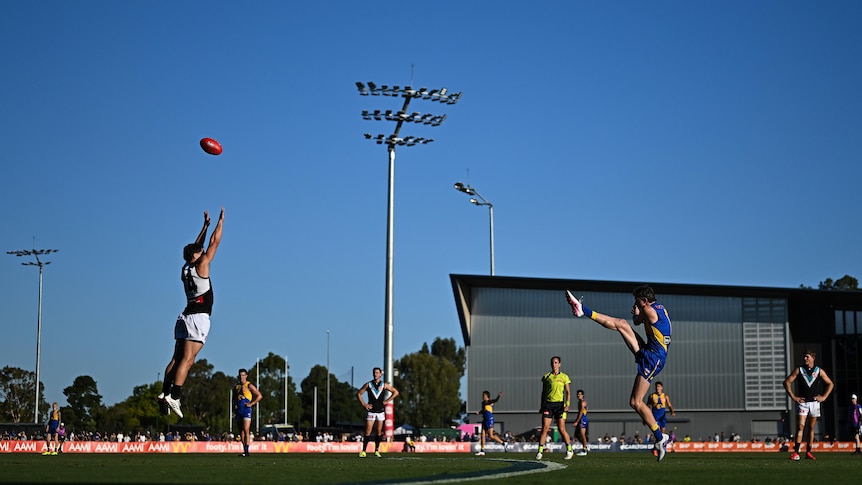
One of the most exhilarating aspects of Australian Rules Football is witnessing extraordinary moments that distinguish the truly exceptional players from the merely good. These instances can be fleeting, such as a spectacular handball, an audacious fend-off, or a remarkable mark, but some of the most thrilling and prolonged moments occur when players score from a considerable distance.
The iconic long-range goal, whether executed from a set play or in the flow of play, stands out as one of the most captivating events in footy. Unfortunately, in recent times, such long-distance shots have become increasingly rare. In the year 2000, 11% of goals were scored from beyond the 50-meter line; however, this figure plummeted to just 6% by 2020.
Looking ahead to 2026, there is renewed optimism for fans who appreciate long-range scoring, as the current season has seen a resurgence in goals from outside the arc, reaching the highest levels seen in over a decade. Teams are not only attempting more shots from long distances but are also showing greater accuracy in these efforts. Data from Expected Score (xScore), which evaluates shot difficulty, indicates that teams are converting long-range attempts more effectively than anticipated.
This surge in both attempts and successful conversions has significantly contributed to the increase in scoring during the current season. Teams are averaging approximately three more points per game compared to the same period last year, with long-range scoring improving by over four points per game.
Observations this season reveal that teams are willing to take risks regardless of the distance from the goal, with the average distance of scoring shots reaching its longest in a decade. This is a shift from the previous focus on getting the ball into more advantageous scoring areas.
The Sydney Swans lead this trend, having historically capitalized on long-range scoring to secure their presence in the finals. They faced off against the West Coast Eagles, who surprised many by starting the season with a 2-1 record, defying expectations that they would struggle.
In a thrilling match, the Eagles showcased their long-range capabilities, scoring five of their 13 goals from outside the 50-meter mark. However, in their subsequent encounter, the Swans demonstrated their own prowess by scoring five goals and two behinds from beyond 50 meters, along with an additional 6.6 from 40 meters out during a convincing victory. This match served as a wake-up call for the Eagles, while the Swans continued their established norm.
With these five long-range goals, the Swans have firmly established themselves as the team with the highest scoring from beyond the arc this season. This ability to score from a distance has been a hallmark of their success over the past decade.
Over the last 14 years, Swans fans have enjoyed a successful run, with their seasons frequently extending into the spring. They have participated in five grand finals and secured one championship, only missing the playoffs three times during this period.
While the Swans are known for their formidable defense, their capacity to stretch opposing defenses has also been crucial to their victories. By scoring from long range, they can enhance their overall offensive structure and create more space within the forward line.
Since 2014, the Swans have averaged five goals per game from beyond 40 meters, indicating their reliance on long shots. The presence of star forward Lance Franklin has been a significant factor in this success, as his ability to score from remarkable distances has captivated fans. However, even in the wake of his retirement, the Swans have maintained their scoring effectiveness from deep, thanks to contributions from midfielders and smaller forwards.
Last year’s struggles for the Swans coincided with a drop in their long-range scoring, as injuries hampered key players like Errol Gulden and Tom Papley—two of their primary long-range scorers. This affected the spacing and cohesion of their forward structure, placing additional pressure on remaining scoring threats, Chad Warner and Isaac Heeney, who faced tougher defensive attention.
To address these challenges, the Swans acquired two-time Coleman Medalist Charlie Curnow, a noted long-range shooter, in the offseason. Curnow’s addition allows the team to feature three of the league’s top five long-range scorers over the past five years.
This season, Curnow has yet to register a goal from outside 50 meters, taking only three shots, but the team has benefitted from the contributions of six other players who have scored from that range. With five reliable long-range scorers, the Swans have given their players the freedom to take shots when the opportunity arises. The current trajectory suggests they are on track to replicate the scoring dynamics that characterized their 2024 grand final campaign.