
This week, the President of the United States issued a grave threat against Iran, raising concerns about the potential for genocide. As Israel continues its bombardment of Lebanon, resulting in over 200 fatalities in one day, it is crucial to remember this context, especially given the uncertainty surrounding the sustainability of such threats. To fully grasp the current situation, it’s essential to reflect on the origins of this descent into chaos.
On Tuesday, Donald Trump stated, “A whole civilization will die tonight, never to be brought back again.” Just over a year prior, he declared, “A civilization has been wiped out in Gaza.” The links between these statements are evident. Trump was aware of the destruction in Gaza, asserting it was “not a place for people to be living.” His alignment with the perpetrators of that destruction in an unlawful conflict against Iran has turned the devastation of Gaza into a model for future actions.
For the past two and a half years, Western politicians and media have normalized Israel’s blatant violations of international law. Critics of the actions in Gaza warned that such behavior would unleash unprecedented violence, and their predictions have proven accurate.
The US-Israel military campaign against Iran commenced with the tragic deaths of 175 individuals, primarily schoolgirls, in Minab. This event barely garnered any front-page outrage or significant condemnation from Western leaders. What more could be expected? The West had already accepted the deaths of over 20,000 Palestinian children as a consequence of conflict, many of whom were killed in their homes or targeted by gunfire, as reported by medical professionals in Gaza. Currently, reports indicate that 763 Iranian schools have been damaged or destroyed, mirroring the fate of numerous educational institutions in Gaza, which suffered similar attacks.
The Iranian Red Crescent has reported that 316 medical facilities have been severely impacted or completely destroyed. Yet, did the West not previously normalize the Israeli assaults on hospitals and the deaths of at least 1,722 healthcare workers in Gaza?
Trump has threatened to target Iran’s power infrastructure. This echoes the rhetoric of Israel’s former defense minister, Yoav Gallant, who declared “no electricity, no food, no water” for Gaza shortly after the conflict began, justifying this stance by labeling the population as “human animals.” When Trump was confronted about the potential war crimes associated with attacking critical infrastructure in Iran, his response mirrored Gallant’s: “They’re animals.”
Many who now express outrage over Trump’s genocidal language remained silent during similar remarks made by Israeli leaders. For instance, Israeli President Isaac Herzog stated that “an entire nation out there is responsible,” while an Israeli general referred to “the citizens of Gaza” as “human beasts” who would face severe consequences. Given this history, it is unsurprising that Trump would suggest Iran would be “living in hell.”
Trump’s blatant disregard for international law comes at a time when that very law has been severely undermined. Israel has committed war crimes in Gaza using weapons supplied by Western nations. Following the issuance of arrest warrants for Israeli leaders by the International Criminal Court, many Western nations have chosen to ignore these demands, while the judges faced sanctions from the US and abandonment by their European counterparts.
Most Western leaders have overlooked Israel’s intent to commit genocide entirely, and many media outlets have either minimized or entirely bypassed the coverage of these events. When the intentions became reality, they were also normalized.
How did we reach this point? Various factors contribute, including the belief among some politicians that Israel serves Western strategic interests. Joe Biden famously stated in 1986, “If there were not an Israel, we’d have to invent one.” Additionally, lobbying power plays a significant role; for instance, the American Israel Public Affairs Committee has contributed $221 million since December 2021 to political campaigns.
Many media outlets have historically reflected official Western foreign policy narratives. However, the lack of vocal opposition from commentators raises questions about the perceived value of Palestinian lives. The absence of outrage over atrocities may stem from a belief that the victims do not share the same worth in the eyes of many commentators. This is evident in the muted response to horrific events such as the massacre of civilians seeking aid or the suffering of children caught in violence.
Much of this silence can be attributed to fear. Journalists have expressed concerns that speaking out could jeopardize their careers, leading to job losses or exclusion from future opportunities. Freelancers risk losing commissions, while broadcasters may shy away from inviting outspoken critics. Accusations of antisemitism and being labeled as supporters of terrorism are also very real concerns.
These fears are not unfounded; many journalists have faced repercussions for their candid opinions. A minority of mainstream journalists have spoken out from the beginning, understanding the career risks involved. But the question remains: what is the price of cowardice? How do we measure the cost of prioritizing personal careers over the lives of countless Palestinians suffering from violence and deprivation?
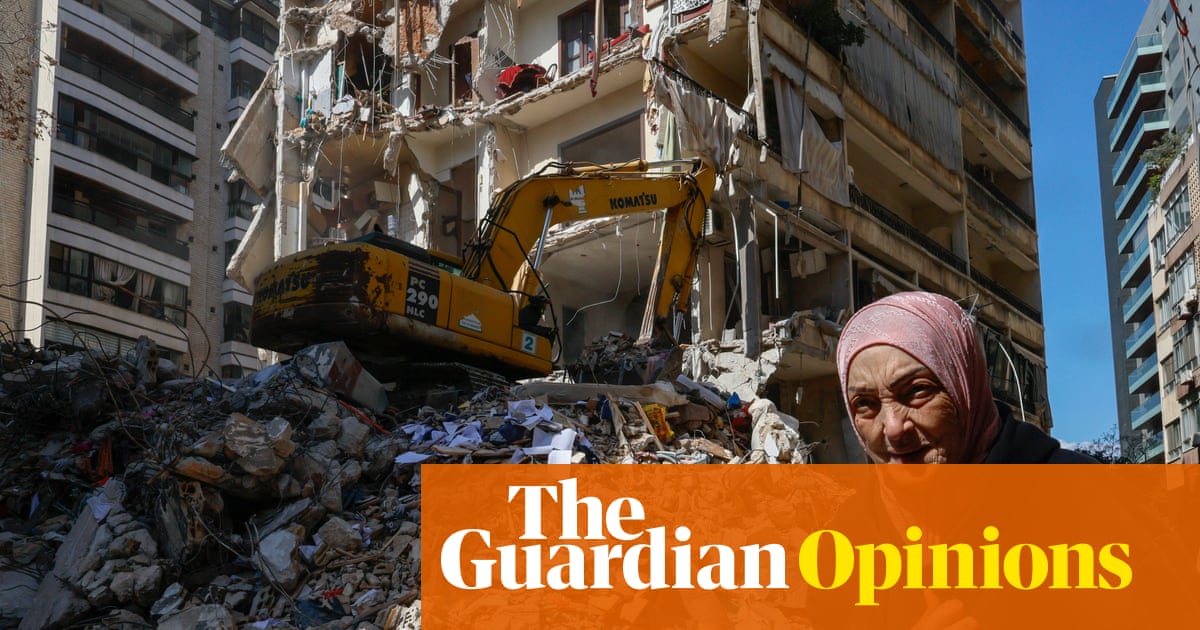
The consequences of the actions and inactions of Western politicians and media are currently being felt by civilians in Lebanon. This week, Israel conducted 100 airstrikes within a span of 10 minutes, targeting homes and civilian infrastructure with the knowledge that no substantial repercussions would follow.
The toll will continue to mount, resulting in years of violence and destruction. When barbarism becomes normalized, and the distinction between acceptable and unacceptable behavior is erased, it cannot easily be reinstated. What was once deemed unacceptable evolves into routine; what was previously unthinkable becomes policy. There is no simple path back from such a state of affairs. The impending horrors will extend beyond the Middle East. When the same political figures and media representatives express their delayed outrage, it is important to remember their role in creating this environment.