
The heat shield designed for NASA’s Artemis II mission has been acknowledged as flawed by the agency itself. This vital component is situated at the bottom of the spacecraft and serves to shield both the vehicle and its crew from extreme temperatures during reentry into Earth’s atmosphere. A failure of the heat shield could result in catastrophic damage to the spacecraft’s structural integrity, including the potential for melting or disintegration, leaving the astronauts without an escape option.
Despite these issues, NASA officials express confidence that the four astronauts aboard Artemis II will safely endure their return to Earth on Friday evening, traveling at speeds approaching 24,000 mph, after completing a ten-day journey to the moon and back. Jared Isaacman, NASA’s administrator, stated in a January interview that thorough analysis and testing of the heat shield material provided them with a sense of security to proceed with the mission, asserting that there was ample margin for safety.
However, Charlie Camarda, a former NASA astronaut and heat shield specialist, has voiced strong concerns regarding the decision to proceed with Artemis II. He argues that NASA lacks a comprehensive understanding of the likelihood of heat shield failure and warns that, despite the mission’s progress, it could ultimately lead to a tragic outcome for the astronauts. “I’m going to pray that nothing happens,” he said just days before the launch, estimating a 95% chance of safe return, which still implies a 1 in 20 risk of disaster.
This situation contrasts sharply with the approximately 1 in 9 million likelihood of fatality in a commercial airline accident, highlighting the differing standards of risk assessment in the two fields. The debate centers on the acceptable level of certainty when a perfect resolution is unattainable.
During the previous Artemis I mission, which did not carry astronauts and successfully orbited the moon in 2022, the Orion capsule managed a safe reentry. However, upon recovery, the heat shield, sharing the same design as the one intended for Artemis II, exhibited unexpected damage with notable pieces missing. Following this, NASA conducted a thorough investigation to understand the implications of worst-case scenarios, which they believe, combined with adjustments to the reentry path for Artemis II, provides a sufficient safety margin.
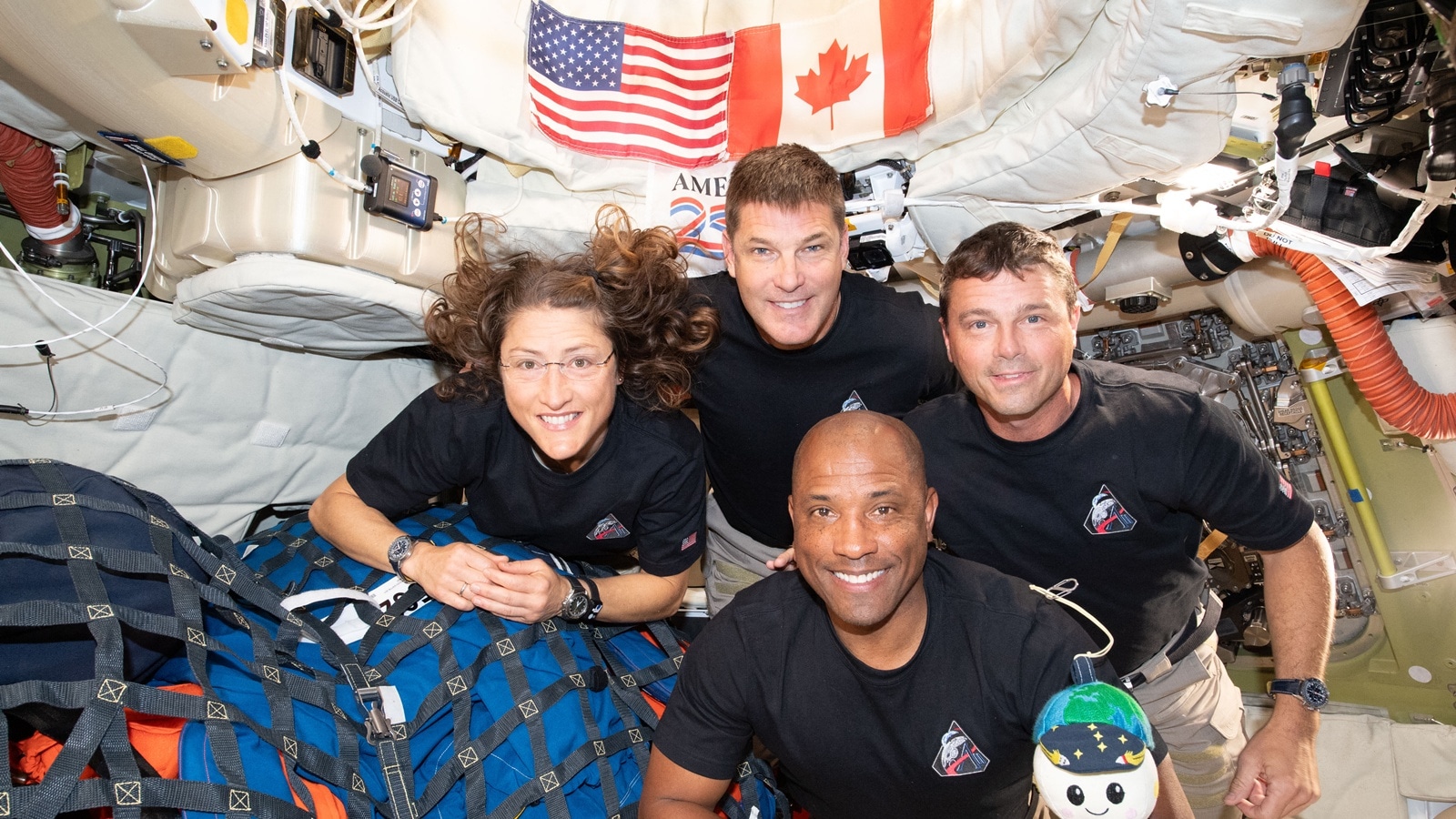
The Artemis II crew is aware of the inherent risks and the measures taken by NASA to mitigate them. Commander Reid Wiseman emphasized their involvement throughout the spacecraft’s development process. In contrast, Camarda argues that NASA does not yet fully grasp the fundamental physics involved in the Artemis I mission, thus hindering their ability to accurately predict potential worst-case outcomes.
Nasa has attempted to alleviate concerns regarding the heat shield’s performance. During a January 2024 press briefing, Amit Kshatriya, the agency’s associate administrator, acknowledged unexpected phenomena observed with the Artemis I heat shield but affirmed its effective thermal protection capabilities.
The heat shield is constructed from Avcoat, a material similar to that used in the Apollo missions over fifty years ago, designed to char and burn off during reentry to protect the spacecraft from heat. Investigators discovered that gas buildup in some sections of the Artemis I heat shield led to cracks and the sudden loss of material, rather than a gradual burn-off as intended. To address this issue for future missions, updates to the Avcoat formula have been implemented to enhance porosity and allow trapped gases to escape.
The challenge for Artemis II lies in the fact that the heat shield, using the original formula, was already attached to the Orion capsule when these issues were identified. Replacing the shield or the entire spacecraft would have delayed the launch significantly. Consequently, NASA engineers opted for a steeper, shorter reentry trajectory to reduce the duration of exposure to high temperatures, thereby enhancing astronaut safety.
Dan Rasky, a former NASA heat shield engineer, shares Camarda’s reservations about this decision. He likened the situation to driving a vehicle with a deteriorating tire, questioning the logic of continuing without addressing the potential for failure. He characterized the decision to proceed with Artemis II without modifying the heat shield as imprudent and even reckless.
If the Artemis II heat shield performs similarly to its predecessor, the astronauts are expected to land safely in the Pacific. However, the scenario evokes memories of two of NASA’s most tragic incidents: the Challenger disaster in 1986 and the Columbia tragedy in 2003. In both cases, prior warning signs were ignored, with management mistakenly reassured by the success of earlier missions, ultimately leading to catastrophic outcomes.
The pressing question for the Artemis II mission remains: Is there a risk that cracks could develop and propagate rapidly? Accurately predicting this possibility is an extremely complex challenge.