
The UK government’s agreement to transfer the strategically significant Chagos Islands to Mauritius is facing challenges after the United States withheld a crucial legal requirement. As reported by the Financial Times, this development has compelled the UK to postpone a parliamentary Bill aimed at ratifying the 2025 agreement concerning the Indian Ocean islands, which includes a joint military base operated by the US and UK on Diego Garcia.
Initially, US President Donald Trump supported the UK-Mauritius arrangement, which was first introduced in October 2024 and formally signed in May 2025. However, he has since expressed strong opposition to the agreement, which coincides with rising tensions between the UK and NATO regarding issues related to Iran.
This article explores the historical context of the UK’s control over the Chagos archipelago, the reasons behind the current hold on the transfer plan, and the implications of this situation for US-European relations.
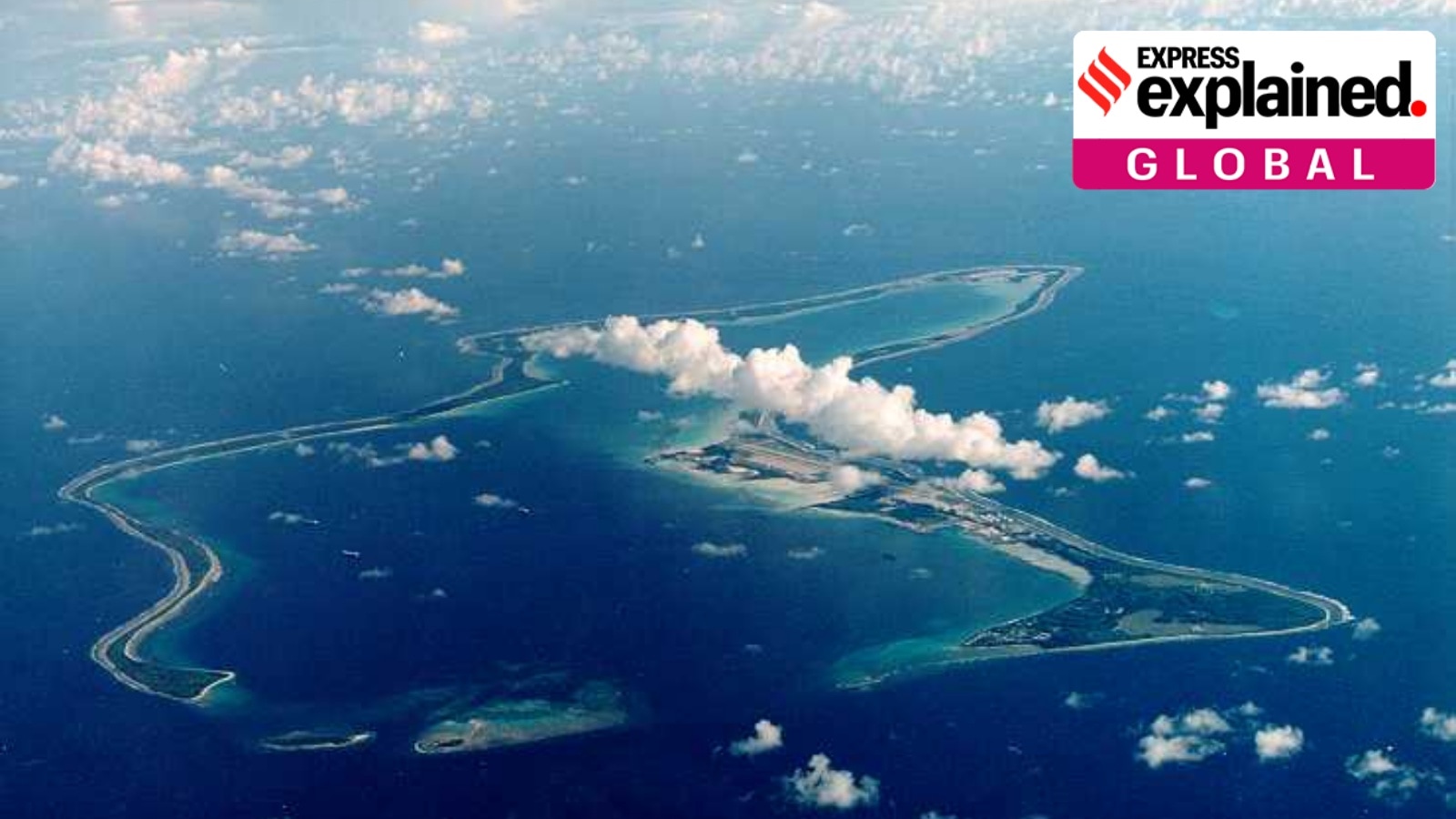
The Chagos archipelago consists of 58 islands located approximately 500 kilometers south of the Maldives and about 2,000 kilometers northeast of Mauritius. The islands remained uninhabited until the late 18th century when the French introduced enslaved laborers from Africa and India to cultivate coconut plantations. Following the conclusion of the Napoleonic Wars in 1814, France ceded the islands to British control.
The British subsequently administratively attached Chagos to Mauritius until 1965, when they separated Chagos to establish the British Indian Ocean Territory (BIOT). Upon Mauritius gaining independence in 1968, Chagos was retained by the UK in exchange for a £3 million grant. Mauritius contends that this cession was coerced and unlawful.
During this period, the UK permitted the US to construct a military base on Diego Garcia, which involved the forced relocation of thousands of residents. Between 1968 and 1973, around 1,500 to 2,000 Chagossians were displaced and resettled in Mauritius and the Seychelles. In 1976, additional islands from the BIOT were transferred to Seychelles following its independence from British rule.
Diego Garcia, the largest island in the Chagos archipelago, became strategically vital for the US after World War II. As various nations gained independence, US military planners expressed concerns over diminishing access to overseas bases, particularly in the face of Cold War adversaries such as the Soviet Union and China. Diego Garcia emerged as an essential military foothold in the Indian Ocean, situated about 3,000 kilometers from the Bab-el-Mandeb Strait and the Malacca Strait, and around 4,000 kilometers from the Strait of Hormuz.
Today, the joint US-UK base at Diego Garcia is one of two critical bomber bases in the Indo-Pacific region, the other being Andersen Air Force Base in Guam. The facility houses bombers, nuclear submarines, and guided-missile destroyers and plays a significant role in US Space Force tracking operations.
Throughout its operational history, Diego Garcia has been pivotal in numerous military actions, including air operations during the Gulf War in 1990-1991, strikes in Afghanistan in 2001, and the early stages of the Iraq War in 2003. The US military presence on the island expanded significantly after the Iranian Revolution in 1979, leading to extensive development, including the deepening of the harbor and the construction of a 12,000-foot runway for bombers.
Since the 1980s, Mauritius has asserted its claim to the Chagos Islands through various international legal channels. In 2019, the International Court of Justice advised that the UK should relinquish control of the islands “as soon as possible.” Consequently, in 2022, the UK and Mauritius initiated negotiations regarding the exercise of sovereignty over the archipelago, influenced by concerns that inaction might push Mauritius into closer ties with China.
In October 2024, the UK government announced its intention to return the islands, and by May 2025, UK Prime Minister Keir Starmer signed a formal agreement transferring sovereignty to Mauritius. Under the terms of this deal, Diego Garcia would be leased back to the UK for 99 years at an annual cost of £101 million, ensuring the military base’s future while the US would cover its operational expenses. Additionally, the agreement includes a £40 million trust fund to assist Chagossians, allowing Mauritius to resettle on islands other than Diego Garcia.
In February 2025, Trump expressed support for the Chagos plan, and after the May signing, US Secretary of State Marco Rubio noted Trump’s endorsement. However, by January 2026, Trump criticized the treaty on social media, citing national security concerns and expressing disbelief that the UK would relinquish Diego Garcia, which he described as vital for US military operations.
Following a conversation with Starmer, Trump moderated his stance briefly but resumed criticism shortly afterward, warning that leasing the island could be a significant error for the UK.