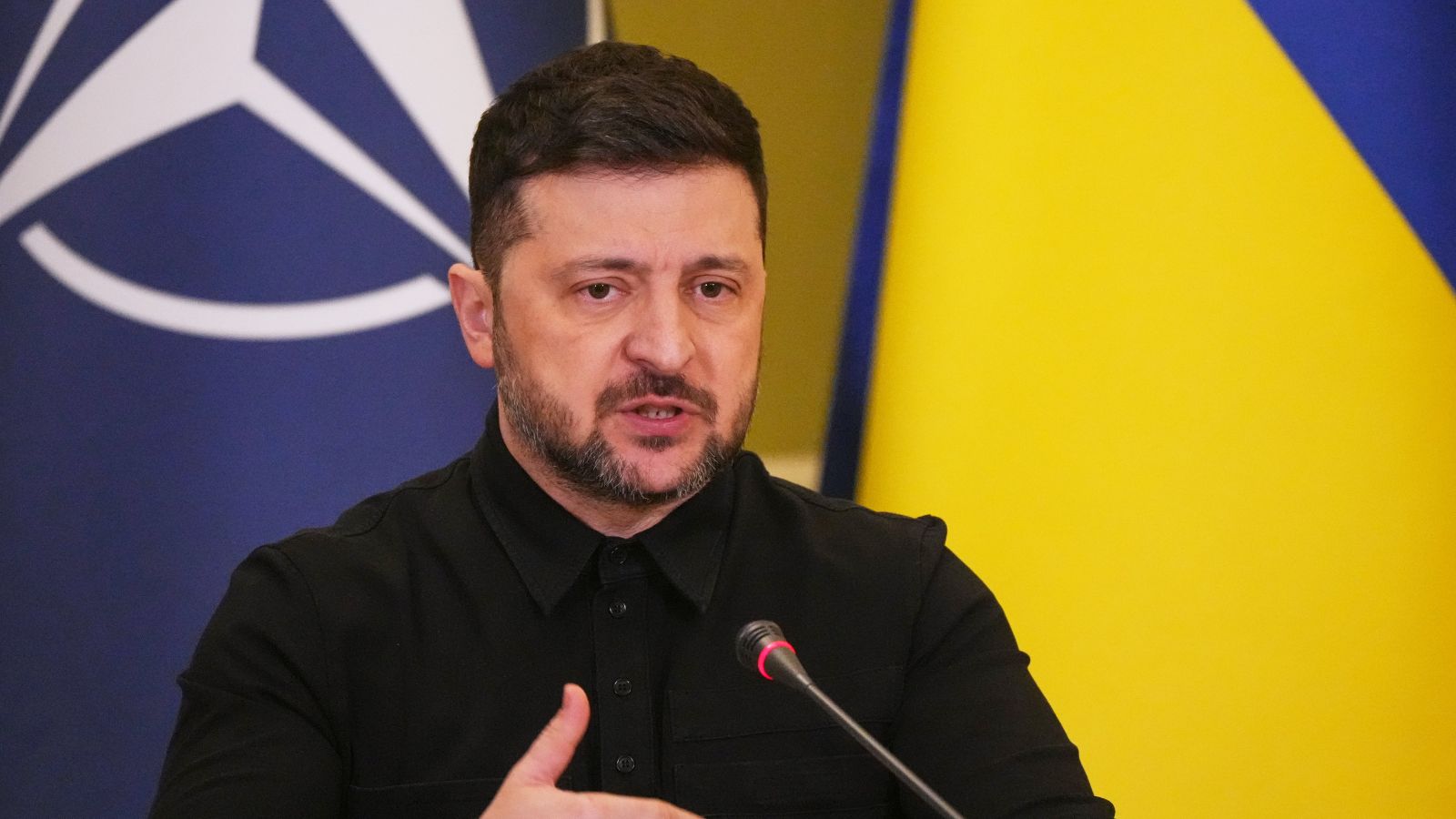

Ukrainian forces have successfully intercepted Iranian-made Shahed drones in various countries across West Asia during the ongoing conflict involving Iran, according to President Volodymyr Zelenskyy. He characterized these military actions as part of a larger initiative to assist allied nations in combating the same weaponry utilized by Russia in Ukraine.
In comments to the media on Wednesday, which were made public on Friday, Zelenskyy acknowledged Ukraine’s involvement in overseas missions employing homegrown interceptor drones. “This was not merely a training operation or exercise; it was about providing support to establish an effective modern air defense system,” he stated.
These operations took place prior to a tentative ceasefire agreement reached this week between Iran, the United States, and Israel. While Zelenskyy refrained from specifying the nations involved, he confirmed that Ukrainian military personnel were deployed across multiple countries to bolster their air defense capabilities, involving the dispatch of 228 experts to the region.
“We have sent our military specialists to the Middle East, including those with expertise in interceptor drones and electronic warfare. We have shown several countries how to operate interceptors. Did we successfully neutralize Iranian ‘Shahed’ drones? Yes. And was this limited to a single country? No, it occurred in several,” Zelenskyy elaborated.
In exchange for their support, Ukraine received military supplies to safeguard its energy infrastructure, as well as oil, diesel, and financial assistance. “Our efforts are aimed at enhancing their security while receiving vital contributions to our national resilience,” he noted. “This goes beyond mere financial transactions.”
Zelenskyy also indicated that Ukraine is prepared to reciprocate any ceasefire proposals following Russian President Vladimir Putin’s recent announcement of a temporary truce for the Easter period, instructing military forces to cease hostilities for a 32-hour window starting Saturday afternoon through Sunday.
“We have consistently expressed our readiness to undertake parallel actions. We proposed a ceasefire during this year’s Easter season and will proceed accordingly. People deserve an Easter free from threats and a genuine advancement towards peace; Russia has an opportunity to refrain from resuming strikes post-Easter,” he remarked.
On the subject of military supplies, Zelenskyy confirmed that allies continue to provide missiles for Patriot missile systems and noted the delivery of a new shipment recently. He emphasized that Ukraine remains engaged with partners to sustain its air defense initiatives.
Looking ahead, Zelenskyy expressed concern over potential pressures Ukraine may face in the spring and summer months as both political dynamics and battlefield conditions evolve, particularly with the U.S. shifting its focus to domestic electoral issues. He encouraged U.S. diplomats Steve Witkoff and Jared Kushner to visit Kyiv and proposed a trilateral dialogue format including Moscow. He mentioned that U.S.-led discussions have yet to yield significant progress on crucial matters. “It’s imperative that sufficient pressure is maintained on Russia during this time,” he added.
Zelenskyy voiced his anticipation that Western allies would reinstate comprehensive sanctions on Russian oil, warning that any relaxation could enable Moscow to continue its military operations and liquidate energy assets. He noted that Russia has benefitted from elevated global energy prices following damage to oil and gas infrastructure in the Gulf and Iran’s obstruction of the Strait of Hormuz.
In response, Ukraine has intensified its strikes against Russian energy facilities to diminish oil revenue streams. He acknowledged that partners have requested Kyiv to temper its attacks during the ongoing disruptions in the Strait of Hormuz. “I won’t disclose who made these requests, but it is true that partners at various levels, from political to military leadership, have asked us to do so,” he commented.
The Express Global Desk at The Indian Express is dedicated to providing reliable, verified, and in-depth coverage of significant international events shaping global politics, policy, and migration trends. The desk emphasizes stories that resonate with both Indian and global audiences, blending breaking news with comprehensive analysis.
A significant focus of the desk includes U.S. immigration and visa policies, encompassing developments related to student visas, work permits, permanent residency options, executive actions, and judicial outcomes. The Global Desk also closely monitors Canada’s immigration and visa landscape, reporting on changes to study permits, post-study work opportunities, permanent residence programs, and regulatory updates affecting migrants and international students.
All reporting from the Global Desk adheres to the editorial standards of The Indian Express, relying on official data, government notifications, court documents, and verified sources. Clarity, accuracy, and accountability are prioritized, ensuring readers can navigate complex global systems with confidence.
The Express Global Desk is led by a team of seasoned journalists and editors with extensive knowledge in international affairs and migration policy, including:
Aniruddha Dhar – Senior Assistant Editor with a wealth of experience in global affairs, international politics, and editorial management.
Nischai Vats – Deputy Copy Editor specializing in U.S. politics, visa and immigration policy, and policy-driven international reporting.
Mashkoora Khan – Sub-editor focusing on global developments, particularly in Canada’s visa, immigration, and study-related policies.