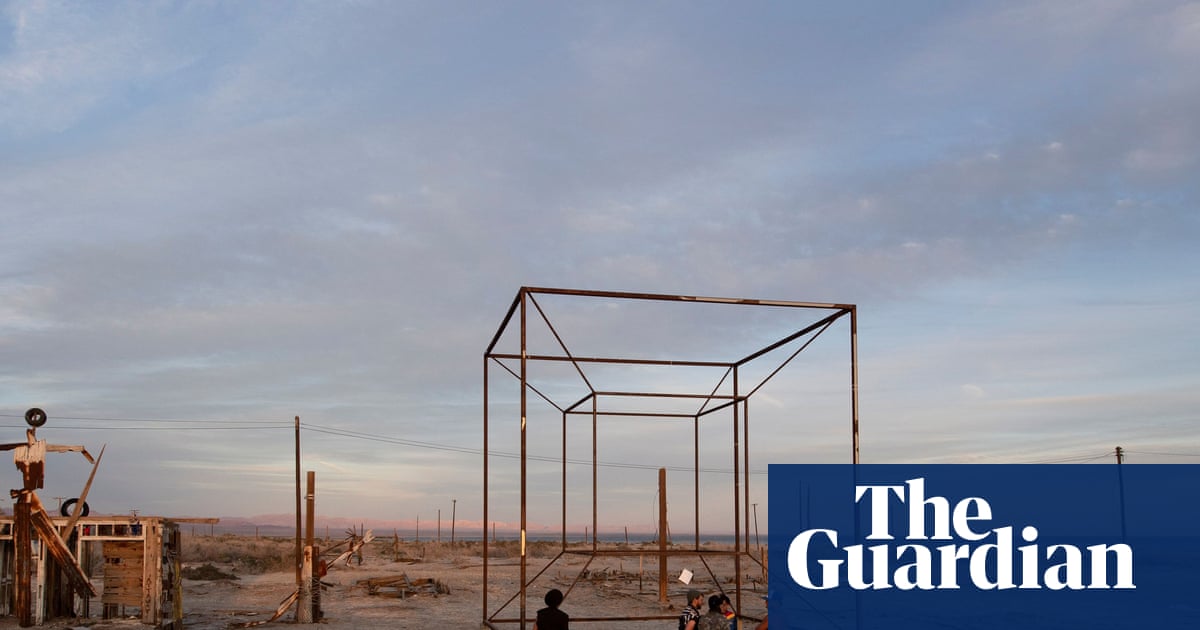

Envisioning an outdoor art festival in Bombay Beach, a small and economically challenged desert town in California, may seem unusual. Located over 150 miles east of Los Angeles and 235 feet below sea level, the area is characterized by its intense heat and the unpleasant odor emanating from the nearby Salton Sea, an inland lake suffering from ecological decline due to a century-old irrigation mishap.
Yet, the Bombay Beach Biennale stands out as a remarkable event that transcends the typical art festival experience. It embodies both the distinctiveness of its unusual environment and serves as a reaction to it. The Biennale merges elements of a counter-culture arts and philosophy movement with initiatives aimed at cultural, civic, and environmental rejuvenation, emphasizing its outsider status and its connection to the town’s 231 permanent residents.
Initially launched ten years ago as a modest gathering of about 100 participants, the festival has significantly expanded over the years. This year marked its 10th anniversary, drawing the involvement of 150 artists alongside thousands of volunteers and attendees, with exact figures being difficult to ascertain due to the lack of formal attendance tracking.
The festival promotes an intentionally do-it-yourself, analog, and bohemian atmosphere. With no hotels in the vicinity, visitors are required to camp or use trailers for accommodation. The event refrains from selling merchandise or running advertisements, aiming for a self-sustaining festival devoid of overt commercial influences.
On the final Saturday night of the festival, the beach came alive with flame tree sculptures—large metal structures that shoot fire into the sky—and massive neon cubes illuminating the shoreline and surrounding art displays. Colorful processions featuring quirky art cars and extravagantly dressed individuals paraded along the old berm separating the town from the Salton Sea. Vintage yet still dilapidated buildings hosted a bustling jazz bar, a Turkish coffee shop, and various dance venues. For those seeking sophisticated entertainment, hundreds gathered for open-air opera and avant-garde ballet performances.
However, the festival now faces challenges as questions arise regarding whether its success has led to an overwhelming size that could threaten its sustainability. Organizers are determined to avoid comparisons to commercial events like Coachella or Burning Man, expressing concerns over disruptive behavior from an influx of uninvited guests.
An incident on Friday night highlighted these concerns when a drunken attendee drove the wrong way down a one-way street, resulting in a crash that severely injured a passenger who required airlifting to a hospital over an hour away. Consequently, the festival found it necessary to hire private security for the first time, incurring notable expenses.
The inaugural Biennale in 2016 was founded by Tao Ruspoli, Lily Johnson White, and Stefan Ashkenazy, who have consistently nurtured and curated the festival while ensuring it remains true to its anti-establishment ethos. The event is free and unticketed, with dates kept confidential to control attendance to friends and word-of-mouth referrals.
Ruspoli, a filmmaker and philosopher based in Los Angeles, is captivated by the complexities and contradictions present in Bombay Beach, viewing it as a microcosm of broader societal challenges facing America today.
“In Bombay Beach, all the world’s troubles seem to converge; it’s often described as apocalyptic or post-apocalyptic,” Ruspoli remarked. “The area faces climate change, environmental degradation, severe poverty, and contaminated water. The beauty of this apocalyptic reality is that it lays bare the issues within our culture and prompts us to consider what comes next after such a collapse.”
This existential inquiry shapes each Biennale, with a unique, often somber philosophical theme featuring apocalyptic elements. The theme for this year was “Year X: The Last Judgement,” while previous themes included “Art of Decay” and “God’s Silence.”
Despite the philosophical discussions that form part of the festival’s programming, the overall atmosphere remains joyful and spirited. Attendees can be seen in swimsuits navigating the town on bicycles and scooters, seeking respite from the harsh desert sun by attending indoor performances, film screenings, or enjoying leisure time in a large above-ground livestock pond.
Amidst the positive energy and the festival’s accomplishments, many founders and organizers express a need for changes to alleviate overcrowding and mitigate adverse effects on local residents, aiming to recapture the more intimate, collaborative spirit of earlier festivals.
Ruspoli noted that live cultural events like ballet and opera are designed to enrich the local community, which typically lacks access to such experiences. However, due to the increased crowd sizes, locals often find themselves excluded.
“We’re evolving as a community,” stated Dulcinee DeGuere, the Biennale’s systems architect and producer. “We cherish all our guests and are thrilled they get to share in our experiences. However, we plan to invite them to participate throughout the season rather than all at once.”
As the future of the Bombay Beach Biennale unfolds, Ruspoli reflects on the festival’s unique journey and its achievements thus far. “I’m astonished that this experiment gained traction at all,” he shared. “It felt like we had a flicker of fire in a windy campsite, uncertain if it would truly ignite. Miraculously, it did. I am incredibly grateful to the many individuals who have helped turn this unconventional vision into a reality.”