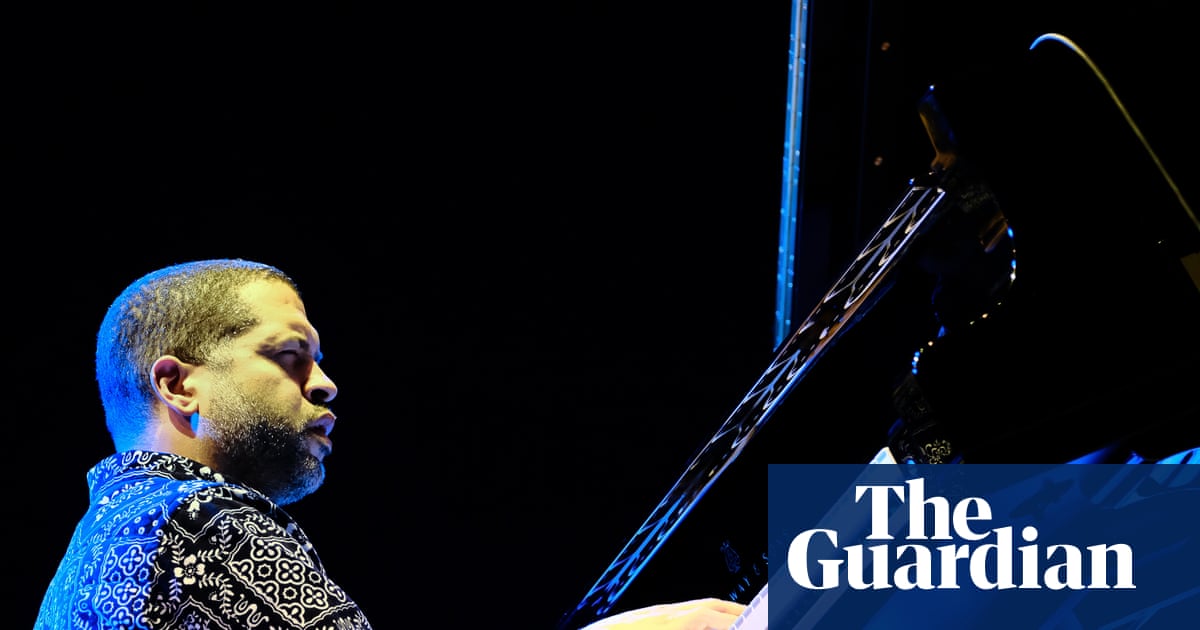

Jason Moran, an esteemed jazz pianist and composer, received an unusual phone call from a friend last month. The friend, bassist Burniss Earl Travis, expressed curiosity about a new record attributed to Moran that he discovered on Spotify, the popular music streaming service.
“It has your name on it,” Travis remarked, “but I doubt it’s actually you.”
Moran clarified that he does not utilize Spotify for distributing his music, opting instead for Bandcamp. This discrepancy prompted him to investigate further, leading to the discovery of an artist profile under his name on Spotify. This profile featured several albums from his previous label, Blue Note Records, which retains the rights to his earlier works. Among these was a new EP titled “For You,” which featured an album cover styled in a moody Japanese anime aesthetic, showing a young woman seated in the rain. Intrigued, he decided to listen to it.
Moran is not alone in this experience; a growing number of musicians are finding their names being misused on streaming platforms by entities that seem to be AI bots pretending to be the actual artists. This issue has reportedly affected numerous well-known jazz musicians, indie rock performers, and even high-profile artists like Drake. For those artists facing this influx of misleading content, the situation is both frustrating and surreal, as Moran expressed.
In response to this rising concern, Spotify has acknowledged the prevalence of misleading content on its platform, revealing last September that it had removed over 75 million “spammy tracks” during the preceding year. At that time, the company also announced it was enhancing its protections for artists, including stricter policies regarding impersonation.
Recently, Spotify stated in a blog post that it is developing a new feature aimed at granting artists greater oversight over what is published under their names. The initiative aims to prioritize the safeguarding of artist identities and will allow artists to review and approve or reject releases before they are made public on the platform.
However, for Moran, who previously served as the artistic director for jazz at the Kennedy Center, these measures fall short of what is necessary, particularly since AI-generated content is not always flagged internally, and the issue appears to be escalating. He raised concerns about the additional burden on artists like himself who do not share their music on Spotify, as well as for musicians who have passed away.
The Spotify representative confirmed that the estates or rights holders of deceased artists can opt into the new tool if they possess an account. For those artists without accounts, living or deceased, the spokesperson indicated that Spotify would continue to rely on its internal detection and accountability systems.
After Travis alerted Moran about the counterfeit “For You” album, Moran shared a video detailing the incident on his Instagram and Facebook pages. He received numerous messages from fellow artists who reported similar experiences of being victims of what they believed to be AI-generated content. Some mentioned they had been grappling with this issue for years.
In the jazz community alone, Moran noted that AI impersonation has impacted several prominent figures, including pianist Benny Green, saxophonist Antonio Hart, drummer Nate Smith, the Australian band Hiatus Kaiyote, and vocalists Dee Dee Bridgewater, Jazzmeia Horn, and Freddy Cole, who is Nat King Cole’s brother.
Last October, NPR reported that indie rock artists Luke Temple and Uncle Tupelo had their accounts compromised by AI, as did the late electronic artist Sophie and country singer Blaze Foley. In a peculiar turn of events in December, the Australian psych-rock group King Gizzard and the Lizard Wizard pulled their music from Spotify, only to be replaced by an AI imitation named King Lizard Wizard, which produced identical song titles and poorly crafted AI-generated artwork.
Morgan Hayduk, co-CEO of Beatdapp, a company specializing in fraud detection for music streaming, noted that this issue is not confined to Spotify; it also occurs on Apple Music, YouTube, and various other platforms. His company estimates that fraudulent streams account for 5% to 10% of all streams industry-wide, translating to a loss of $1 billion to $2 billion annually.
Recently, a man named Michael Smith pleaded guilty to defrauding music streaming services by inundating them with thousands of AI-generated songs, subsequently employing automated bots to artificially inflate the number of streams into the billions. Federal prosecutors reported that Smith earned over $10 million in royalties from his operations during a seven-year period.
According to Hayduk, the issue of fraud in the music streaming industry continues to be a growing concern.