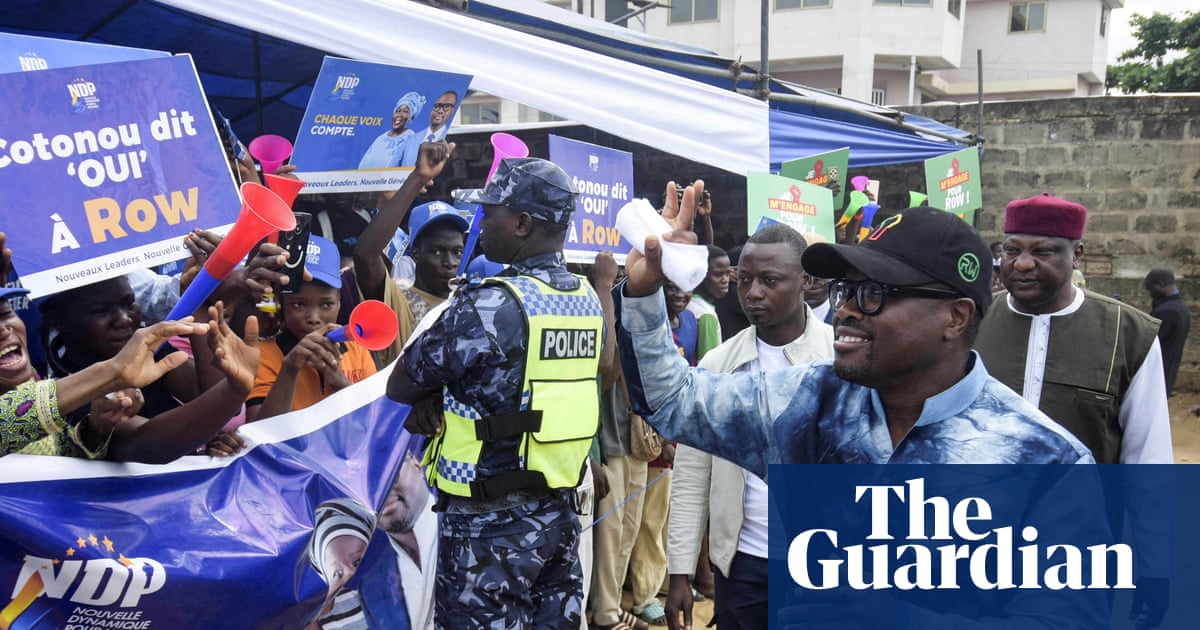

This Sunday marks a pivotal moment for Benin as it prepares for a presidential election, just four months following a thwarted coup. The atmosphere surrounding the election resembles more of a coronation event than a competitive race.
Patrice Talon, who assumed the presidency in 2016 and has completed two five-year terms, is barred from seeking reelection. The victor of this election will be eligible to serve two seven-year terms due to a contentious constitutional amendment that extended presidential terms.
Romuald Wadagni, currently serving as the finance minister, has emerged as the candidate of the ruling coalition without undergoing any primary elections, making him the frontrunner in this electoral contest. As reported by the investigative newsletter Africa Confidential, the path for Wadagni’s candidacy has been cleared through decisive and often harsh measures that sidelined potential rivals.
Fluent in English due to his experience as a technocrat in the United States, Wadagni is credited with contributing to the fiscal stability witnessed during Talon’s presidency. He has promised initiatives such as free education and job creation, appealing to the nation’s youth, who make up more than half of the population.
If victorious, the 49-year-old Wadagni would rank among the youngest leaders in Africa, a continent where the average age of presidents is around 65. Notably, West and Central Africa are home to some of the world’s oldest serving leaders, including Paul Biya of Cameroon, aged 93, and Teodoro Obiang Nguema of Equatorial Guinea, who is 83.
A successful democratic transition in light of the recent coup attempt offers Benin a chance to stand out in a region where several neighbors are governed by military regimes. However, critics of Talon argue that he exhibits strongman tendencies, claiming he suppresses dissent despite some developmental progress in the nation.
Discontent among military personnel culminated in the attempted coup in December, a reaction partly attributed to increasing jihadist violence along Benin’s borders with Burkina Faso, Niger, and Nigeria.
The government has taken stringent actions against independent media, closing several newspapers indefinitely that have published dissenting views. Journalist Hugues Sossoukpè, who had been in exile in Togo since 2021, was apprehended in Ivory Coast by Beninese authorities last July and remains imprisoned in Ouidah, labeled as a “dangerous cyberactivist advocating terrorism.”
Dieudonné Dagbéto, head of Amnesty International Benin, remarked, “Civic space in Benin is diminishing due to a series of attacks on independent media and the arbitrary arrest and detention of dissenters. Despite some advancements, women and marginalized groups continue to face discrimination, while forced evictions threaten the rights of thousands.”
Concerns are also rising regarding Benin’s drift towards a one-party system. In 2024, parliament amended candidacy requirements, now stipulating that parties must receive at least 10% of the vote to gain representation and that presidential candidates need support from at least 15% of the country’s mayors and lawmakers. This revised framework enabled the ruling coalition to secure all 109 seats in the legislative elections held in January, effectively sidelining opposition parties.
Voter turnout during the January elections was low, with only 36% of the approximately 7.8 million registered voters participating. There are worries that a similar trend may occur this weekend.
The main challenger to Wadagni is former culture minister Paul Hounkpè, representing the Cowry Forces for an Emerging Benin (FCBE), a minor opposition party. His candidacy is perceived as largely symbolic following an agreement with the ruling coalition to qualify for the election.
The leading opposition party, the Democrats, has opted not to field candidates due to their inability to meet the new requirements. While they have not officially called for a boycott, they have refrained from endorsing any candidates in this election. Additionally, the party recently suspended nearly two dozen members for actions deemed contrary to party interests after they reportedly supported the ruling coalition’s candidate.
In a statement following the constitutional court’s confirmation of their candidates’ disqualification last October, the Democrats declared, “The exclusion of our candidate duo is a deliberate act of exclusion, underscoring that the 2026 election is being structured to eliminate any serious competitor to the ruling authority.”