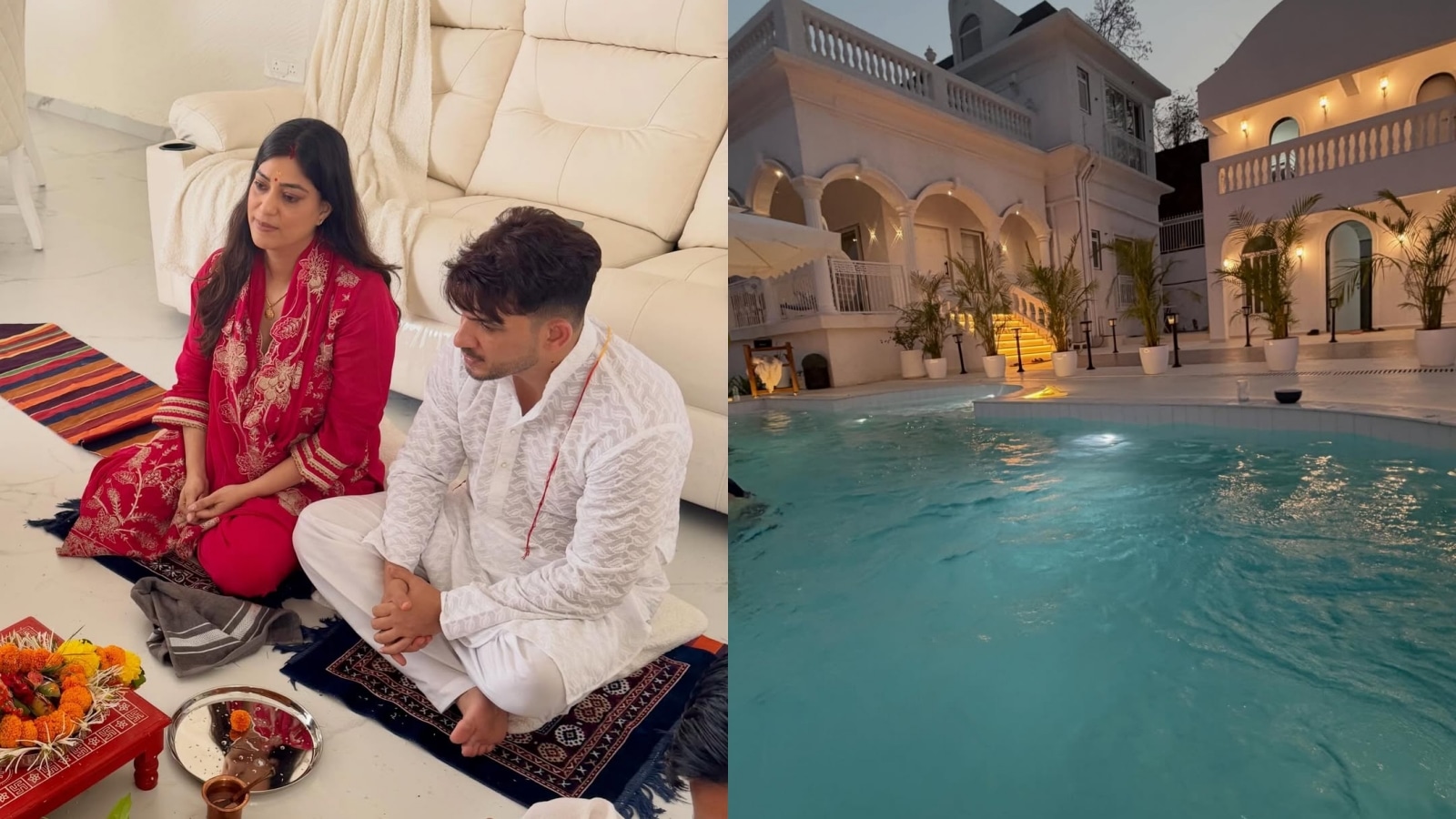

Actor and television presenter Arjun Bijlani has recently acquired an opulent farmhouse situated in Karjat, on the outskirts of Mumbai. The 43-year-old shared glimpses of the new property through a collection of photos from the griha pravesh ceremony, which he celebrated with his wife, Neha Swami, and their family.
The farmhouse embodies a harmonious blend of luxury and serene living. Its striking all-white design gives the residence a clean, timeless elegance. A standout feature of the home is its expansive living area, which is both spacious and inviting.
This area is adorned with comfortable furnishings and stylish decor that enhance its overall allure. The neutral color palette is beautifully complemented by abundant natural light streaming in through large glass windows. The overall ambiance is both expansive and calming, surrounded by lush greenery that provides a refreshing contrast to the hustle and bustle of urban life.
The property also includes a meticulously maintained garden and a swimming pool, perfect for hosting small gatherings. Additionally, the terrace and balcony areas offer picturesque views, serving as an ideal setting for morning coffees or peaceful evenings, complete with a swing and cozy seating.
The couple chose to celebrate their new chapter on the auspicious occasion of Gudi Padwa. Arjun expressed his gratitude, stating, “Thank you, Ganpati Bappa, for your blessings!! Happy Gudi Padwa and Chetti Chand. And yes, Mom insisted I wear that cap for the first time. She is overjoyed,” alongside the photos he shared.
In another series of images, Neha expressed her appreciation for Arjun, saying, “It’s us, it’s ours. Grateful to God for our new home. Especially thankful to Arjun, the one who made it all happen.” The photo captures the family making memories on the grand staircase.
Experts note that while many individuals are drawn to all-white homes, some may find them unwelcoming. Dr. Murali Krishna, a consultant in Psychiatry and Counselling Services at Aster RV Hospital in Bangalore, explained, “The lack of color, texture, or warmth can be perceived as emotionally shallow, giving the space a sterile or isolating feel. Preferences vary based on individual taste, cultural color associations, and the balance between desire for stimulation and simplicity.”
He further elaborated that all-white environments might place unwelcome pressure on residents, particularly children, to maintain cleanliness. “Despite the serene appearance, these spaces often impose a hidden expectation for orderliness, which can increase stress for caregivers and may inadvertently restrict children’s ability to express themselves freely,” Dr. Krishna noted.
The expert also highlighted how such aesthetics could inhibit playfulness in children. “A pristine all-white home can create an ongoing sense of vigilance. Psychologically, environments that are overly immaculate may stifle creativity and playfulness. However, if approached with a flexible mindset, such homes can still thrive,” he stated.
Dr. Krishna emphasized the significance of open spaces, like balconies and gardens, in enhancing creativity and reflection, ultimately reducing cognitive fatigue. “These areas provide a mental break, allowing thoughts to transition from structured reasoning to more fluid, associative thinking,” he added.
“That is why individuals often report clearer thinking, improved problem-solving, and deeper introspection in such environments,” he concluded.