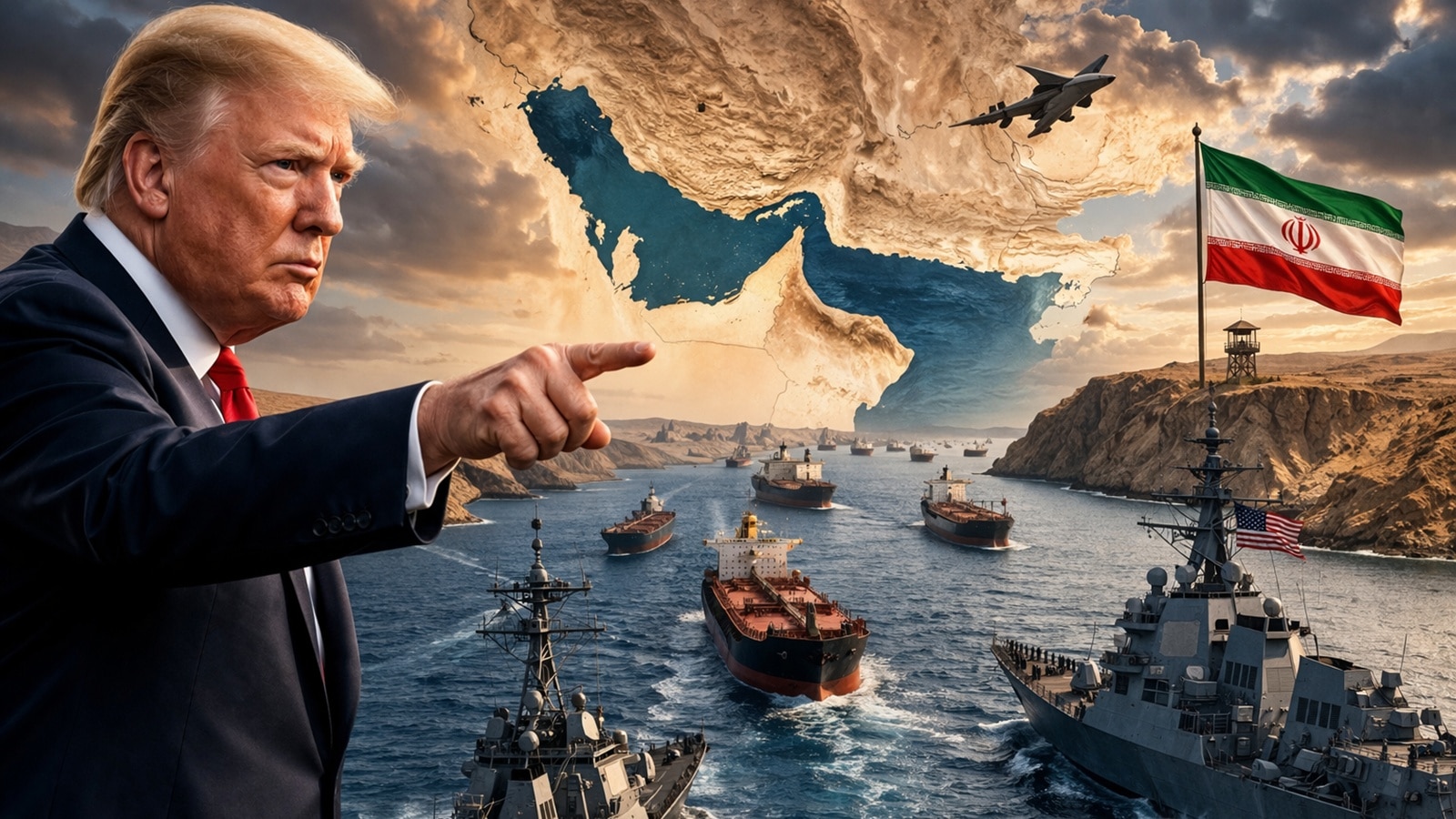

Following the conclusion of discussions between the United States and Iran in Islamabad, which did not yield any agreements to resolve the ongoing conflict in West Asia, President Donald Trump has mandated a “complete blockade” of the Strait of Hormuz. In response, Iran’s Revolutionary Guards Corps (IRGC) issued a stern warning, stating that adversaries could find themselves ensnared in a “deadly vortex” should they miscalculate their actions.
The Naval Command of the Revolutionary Guards declared on social media platform X that “all traffic is completely under the control of our armed forces” and cautioned that any erroneous moves by enemies would result in them being caught in a perilous situation within the Strait.
According to Haji Babaei, the deputy speaker of Iran’s parliament, the Strait of Hormuz is “entirely” under Iranian jurisdiction. He further indicated that any vessels wishing to navigate through this critical passage must pay a toll in Iranian rials.
In remarks reported by the Mehr news agency, Babaei stated that a unanimous decision had been made by 250 members of parliament in support of the plan regarding the Strait of Hormuz, emphasizing its strategic importance and asserting that it is non-negotiable.
During the negotiations held in Pakistan, Iran’s Tasnim news agency reported that the discussions faltered due to what they termed Washington’s “excessive” demands, which encompassed issues related to Iran’s nuclear program and the Strait of Hormuz.
President Trump commented on the blockade, stating, “It’s called all in, and all out… Many countries are expected to assist us in this effort, but we are implementing a complete blockade. We will not allow Iran to profit from oil sales to allies while excluding others.”
Babaei also noted that despite sanctions, Iran’s oil exports have surpassed 1.6 million barrels, asserting that Iranian oil has become almost impossible to sanction. He emphasized that Iran would not concede its demands.
As talks about potentially extending a two-week ceasefire unfolded, two American navy destroyers reportedly entered the Strait of Hormuz, where they destroyed an Iranian surveillance drone approaching one of the vessels, according to multiple U.S. officials cited by the New York Times.
This operation by U.S. naval forces marked the beginning of efforts to eliminate mines from the Strait of Hormuz, aiming to reassure commercial shipping that the route is safe for transit. U.S. officials confirmed that the destroyers, USS Frank E. Petersen Jr. and USS Michael Murphy, entered the Persian Gulf via the Strait of Hormuz for this purpose before turning back.
However, Iranian officials firmly rejected claims that American destroyers had entered the strategic waterway. The U.S. Central Command later confirmed that the ships had indeed navigated through the Strait to prepare for clearing naval mines reportedly laid by Iran.
In the ongoing ceasefire negotiations, Iran has insisted on maintaining control over the Strait of Hormuz and has expressed intentions to collect transit fees from vessels crossing this vital passage, which facilitates the transportation of approximately 20% of the world’s oil and gas daily.
On Sunday, President Trump reiterated that the U.S. Navy would “immediately” initiate a blockade to prevent any ships from entering or exiting the Strait of Hormuz. He further instructed the Navy to intercept any vessels in international waters that had paid transit fees to Iran, declaring that no vessel that pays an illegal toll would be granted safe passage.