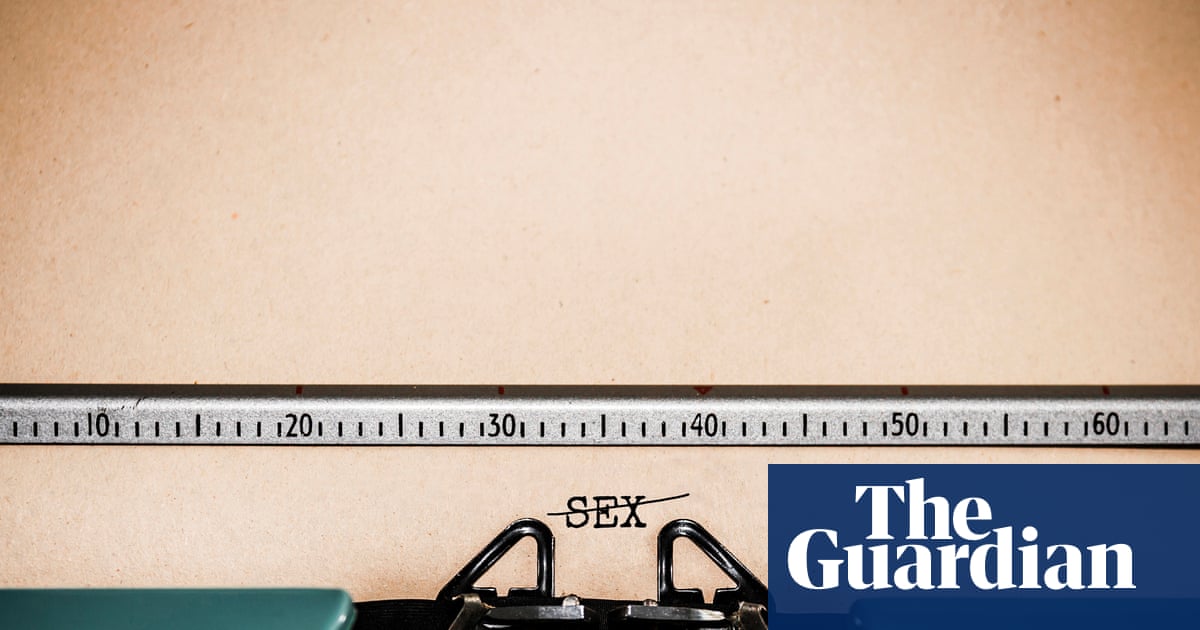

Are heterosexual male authors hesitant to address sexual themes in their writing? A glance at contemporary literature might lead one to believe so. There seems to be a fear that including a sexual scene could come across as exploitative or unnecessary, or perhaps there is a sense that men have already expressed enough on this topic and should refrain from further commentary.
In contrast, female authors exploring heterosexual relationships do not appear to share this anxiety. In fact, sexual themes often serve as a pivotal component in their narratives, enriching the portrayal of masculinity. This is evident in the works of writers like Sally Rooney, who captures the tender yet awkward moments of intimacy, and Diane Williams, whose exceptional short stories celebrate and mourn the erotic experience.
The Bad Sex in Fiction award, which concluded in 2019, is not particularly missed. Its offense lay in equating poorly written sexual content with significant literature that simply featured subpar depictions of sex. However, many of the most humorous and cringe-worthy recipients of the award were straight male authors whose attempts to write about sex sincerely often resulted in either ludicrous metaphors or poorly executed eroticism. Notable past winners include James Frey, with his exaggerated expressions, and Didier Decoin, whose work featured awkward imagery.
It may not be a coincidence that in the 21st century, many straight male writers seem to have steered away from writing about sex altogether. This is unfortunate, as writers are inherently fascinated by relationships and the complexities of human interaction—how we connect, fail, or fulfill one another. Omitting sex from this conversation means neglecting crucial aspects of human experience.
In my latest novel, Black Bag, I made a conscious effort to include sexual themes, as they are integral to character development. Each detail within a sex scene reveals something about a character’s relationship with their own sexuality, as well as their treatment of others and themselves.
Avoiding the pathological misogyny and detached conquests of authors like Henry Miller and Charles Bukowski is essential. Similarly, we do not wish to follow John Updike’s suburban narratives as a model. While it is valuable to recognize what to avoid, there remains uncertainty about how to approach writing sex authentically.
Our discomfort often leads to a tendency to fade to black during intimate moments, allowing readers to rejoin characters after the act is done. This echoes a sentiment expressed in T.S. Eliot’s The Waste Land, where a typist reflects on the relief of having completed such moments. Novels like Keiran Goddard’s Hourglass candidly explore themes of post-breakup grief, but physical intimacy is conspicuously absent, replaced by an obsession with long-distance running. Joe Dunthorne’s The Adulterants humorously depicts a sexless open marriage, while Vincenzo Latronico’s Perfection features a couple who feel they should embrace a more adventurous sex life but ultimately find it unsatisfying. In my second novel, The Answer to Everything, I intentionally avoided sexual themes by depicting characters as exhausted young parents, too worn out for romantic pursuits, culminating in a scene of them merely dressing after an encounter, filled with remorse.
In David Foster Wallace’s 1999 collection, Brief Interviews with Hideous Men, anonymous characters reveal their disdain for women alongside their sexual desires, discussing seduction strategies while exhibiting emotional detachment. This portrayal serves as a critique of the legacies of authors like Roth, Updike, and Bellow, signaling a shift in the literary landscape.
As Luke Brown noted in 2020, heterosexual male desire has been so closely associated with power abuses that the two seem inseparable. This dynamic often manifests in traditional campus novels, where self-absorbed, middle-aged male lecturers engage in destructive affairs with students. Such narratives appear in varying tones, from the brutal in J.M. Coetzee’s Disgrace to the tragic in David Gilmour’s Sparrow Nights, or even satirical in Percival Everett’s American Desert.
While I do not anticipate an uplifting novel by a straight man celebrating the wonders of sex, I do believe that writing serves as a means of exploration. Many authors grapple with significant psychological barriers surrounding sexuality that they may not fully understand or articulate. Perhaps these reservations stem from insecurities about sex, where the stakes of writing about it are high, leading to the fear of embarrassment—a sentiment that contradicts traditional notions of masculinity.
Conversely, numerous examples of strong sexual writing can be found in queer literature. I often find myself yearning for Brandon Taylor’s deeply flawed protagonists to experience emotional release through physical connection. Djamel White’s recent debut, All Them Dogs, juxtaposes authentic intimacy with the hyper-masculine culture of west Dublin gang life. Some of the most poignant writing about sex acknowledges power dynamics or playfully engages with them. In Naoise Dolan’s Exciting Times, the exploration of sexual relationships is layered with complexity and insight.