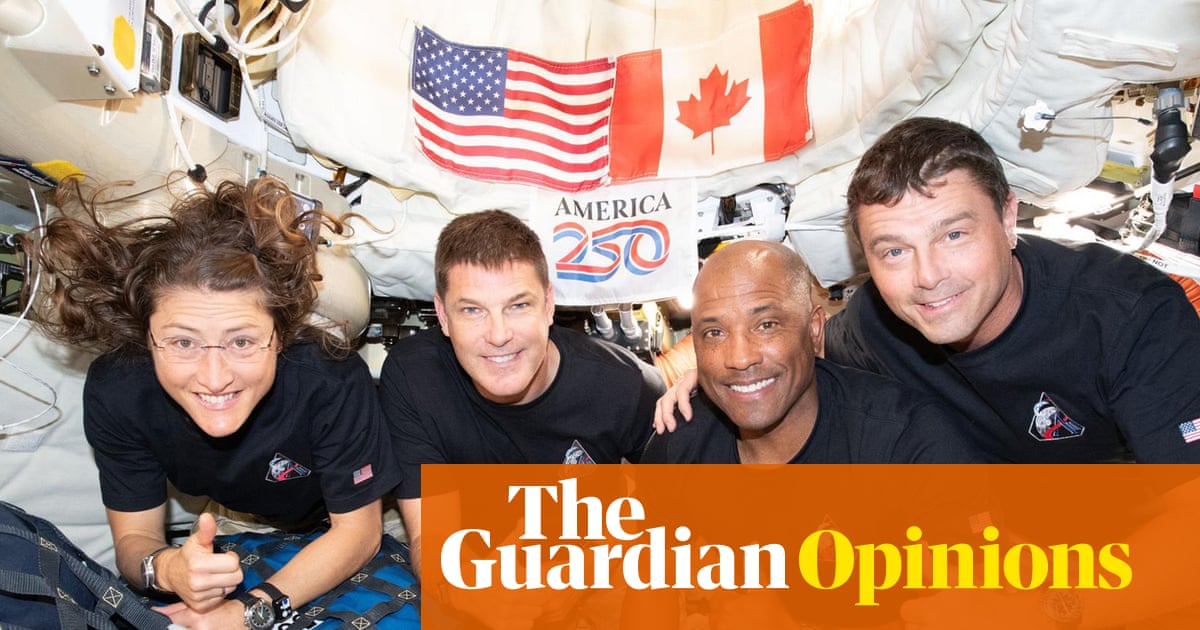

The 2020s have marked a resurgence of the “Apollo spirit.” The United States and China appear to be competing to land humans on the moon by the decade’s end and potentially set their sights on Mars thereafter. Recently, NASA astronauts returned from a ten-day mission that circled the moon. While their return was successful, NASA acknowledges that there is insufficient data to accurately assess the risks involved. This mission was only the second launch of the Artemis program and the inaugural one with astronauts aboard.
As of now, the Artemis program has seen expenditures nearing $100 billion (£75 billion). The “one big beautiful bill” passed by the U.S. Congress in July 2025 allocates $9.9 billion for the Artemis IV and V missions, with even higher costs anticipated for establishing a comprehensive lunar base.
The rationale for lunar exploration is compelling. In-depth investigations can provide critical insights into the solar system’s formation, which may also shed light on the histories of exoplanets around distant stars. Additionally, the moon serves as a stable platform for various telescopes, including extensive radio antenna arrays, which can benefit from their position on the moon’s far side, away from the interference of Earth’s light and radiation.
However, the necessity of having humans present on-site is debatable. While astronauts can still offer value, considering the challenges of sustaining their life and productivity, the advantage may shift towards robots in the coming decade. Robots can operate continuously, are relatively cost-effective, and do not require replacement for many years or even decades.
Robotic missions on Mars, such as Curiosity and Perseverance, along with their Chinese counterparts, have excelled for years, relying solely on solar power. These advanced machines continually enhance their capabilities, while humans, who require sustenance and shelter, do not evolve in the same way. This raises questions about the costs, including potential tragedies, associated with sending astronauts into space for inspiration. Moreover, given that humanity achieved the moon landing over fifty years ago, one might wonder how much inspiration astronauts can offer today.
Space exploration inherently involves both political and scientific dimensions, with manned missions being particularly attention-grabbing. China’s ambitious plans reflect an effort to elevate its status through space endeavors. China has made significant strides in lunar exploration, successfully launching two robotic missions to orbit the moon and three that landed softly. The third Chinese mission, which returned soil samples from the moon’s far side in 2024, marked a significant milestone. Another mission is set to launch this August, targeting the moon’s south pole with an orbiter, lander, and a “mini-hopper” probe. Plans for 2028 include sending equipment to assess the feasibility of constructing a lunar base, featuring a self-contained ecosystem on the lunar surface. There are strong expectations that China will also aim to send humans to the moon in the future.
The stark contrast between the Apollo era and the mid-2020s lies in the remarkable advancements in creating and deploying robotic explorers. Innovations in sensors and artificial intelligence will empower these robots to autonomously identify intriguing locations for sample collection. In the next ten to twenty years, lunar exploration may become largely autonomous, reducing the necessity for human presence. Similarly, engineering tasks and the extraction of rare minerals could potentially be handled by robotic systems, further diminishing the justification for human spaceflight as robotic and miniaturization technologies progress.
Humans have undeniably played crucial roles in assembling and repairing spacecraft in Earth’s orbit. For instance, following the launch of the Hubble Space Telescope (HST) in 1990, astronauts were needed for a “rescue” mission to correct its misaligned mirror and later to upgrade its instruments. This has been frequently cited as evidence of the indispensable role of humans in space missions. However, Riccardo Giacconi, who led the initial X-ray telescope project and later oversaw the Hubble project, noted that if humans were not involved, multiple copies of the HST could have been built and launched at a lower cost.
The James Webb Space Telescope (JWST), launched in December 2021, represents a more sophisticated mission with no option for repairs, as its orbit is far beyond the reach of astronauts. Unlike the HST, which was placed in a low orbit, the JWST’s location is significantly farther away, showcasing the complexities that can be tackled without human crews.
As advancements in robotics and miniaturization continue, the scientific and practical arguments for human spaceflight are increasingly undermined. The primary motivation for such missions may now be seen as an adventurous pursuit—a costly endeavor that could be better left to billionaires and private enterprises.
While we might admire the Artemis crew who experienced the same awe as Apollo 8 astronaut Bill Anders did in his iconic Earthrise photograph, there is no pressing need to send astronauts to the moon or beyond to reap the benefits of space exploration for humanity.
Martin Rees serves as the Astronomer Royal and is a former president of the Royal Society. Donald Goldsmith is an astrophysicist and science communicator.