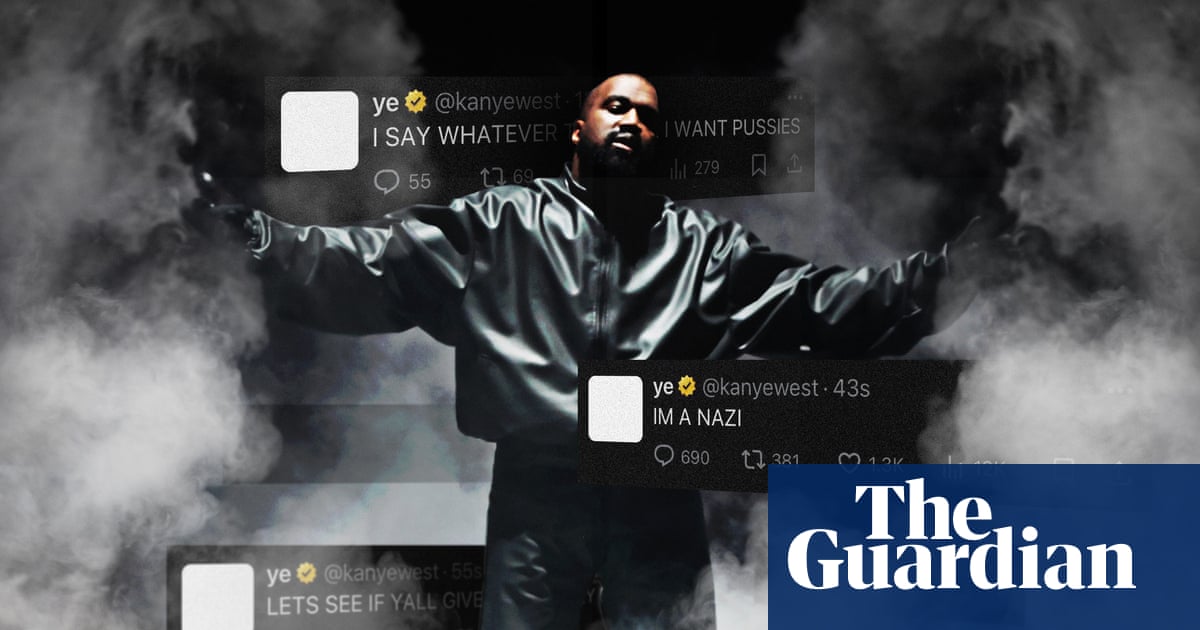

The announcement of Ye, previously known as Kanye West, as the headliner for the 2026 Wireless festival triggered a rapid and significant backlash.
Following the news last Sunday, several key sponsors of the three-day event, such as Pepsi and Diageo, began to withdraw their support due to widespread criticism of Ye’s inflammatory remarks regarding the Jewish community and the Holocaust. Jewish organizations in the UK threatened to stage protests if the festival proceeded as planned. Keir Starmer expressed that the decision to feature an artist who has made deeply offensive comments, including writing a song titled “Heil Hitler,” was “deeply concerning.”
By Tuesday, the festival, which was set to occur from July 10-12 in Finsbury Park, north London, was officially canceled after the UK government intervened, denying Ye entry to the country.
A senior partner at a prominent entertainment law firm, who chose to remain anonymous, remarked, “Once major sponsors begin to pull out, it becomes impossible to replace them in that timeframe. The entire arrangement was precariously built.”
The sudden cancellation of such a significant event in the summer festival lineup has left many in the music industry astonished and questioning why Festival Republic, a subsidiary of Live Nation, decided to engage such a controversial artist.
Tim Jotischky, who leads the reputation management division at PR firm PHA, observed that given the current climate, the booking decision was likely to provoke significant political backlash. While he acknowledged Benn’s commitment to supporting Ye, he found the rationale unconvincing, stating, “Wireless is probably not the ideal venue to assess his mental health.”
Martin Goebbels, who heads the music and touring section at Miller Insurance and has over four decades of experience in music insurance, indicated that this incident places the entire industry in a complex situation. “From a professional perspective, I have never encountered anything like this,” he noted.
The entertainment lawyer believes that the fallout from the Wireless festival will alter how festival bookings are approached in the future, referencing past controversies involving artists like Kneecap, Wiley, and Bob Vylan. “The key takeaway is to never underestimate the power of public sentiment,” he stated. “Promoters and festival organizers may now need to navigate bookings with greater caution. This seems to be the approach Wireless took, but it shouldn’t come as a surprise.”
When Festival Republic assessed the economic impact of the 2022 festival held in Crystal Palace Park, it reported that the event generated £37 million in economic activity and provided jobs for 2,400 individuals over an average of 40 hours each.
With the cancellation of this year’s festival, it remains uncertain who will bear the financial burden of the lost investments—either Festival Republic/Live Nation or Ye. The resolution will likely depend on the specifics of their contractual agreement and the coverage provided by the festival’s insurance policy.
It is unclear whether Ye received any part of his agreed payment in advance, a common practice for headliners to secure funding for elaborate productions. “Live Nation has substantial financial resources, so they should be able to manage this situation,” Goebbels suggested. He also noted Benn’s strong reputation in the industry, emphasizing that he has not been involved in anything of this nature before.
Currently, Wireless stands out as a unique case. Ye’s performances in early April at SoFi Stadium in Los Angeles proceeded as scheduled, as did his two shows in Mexico City in January.
He is also set to perform at the GelreDome Stadium in Arnhem, Netherlands, on June 6 and 8, despite calls from Jewish organizations to cancel the shows. However, Bart van den Brink, the Dutch minister for asylum and migration, has stated that there are no legal grounds to prohibit his performances there.
Additionally, Ye is scheduled to perform at the Riyadh Air Metropolitano in Madrid on July 30. His concert in India, originally planned for March 29 at the Jawaharlal Nehru Stadium in New Delhi, was postponed to May 23, citing “the prevailing geopolitical situation and regional tensions” rather than his controversial remarks. Unlike Wireless, these other performances lack major sponsorship, reducing their financial exposure.
However, Goebbels cautioned that the precedent set by the Wireless cancellation may prompt promoters and insurers to reassess risks more stringently. “An insurer might say, ‘Yes, we’ll take on the risk, but you won’t be covered for visa cancellations,’” he remarked.
According to the music lawyer, while Ye remains insurable as a touring artist, the repercussions of the Wireless incident may lead to significantly higher insurance costs that could consume a substantial portion of his performance fee. “Even the most at-risk performers can secure insurance,” he explained, “but their premiums will be substantial.”