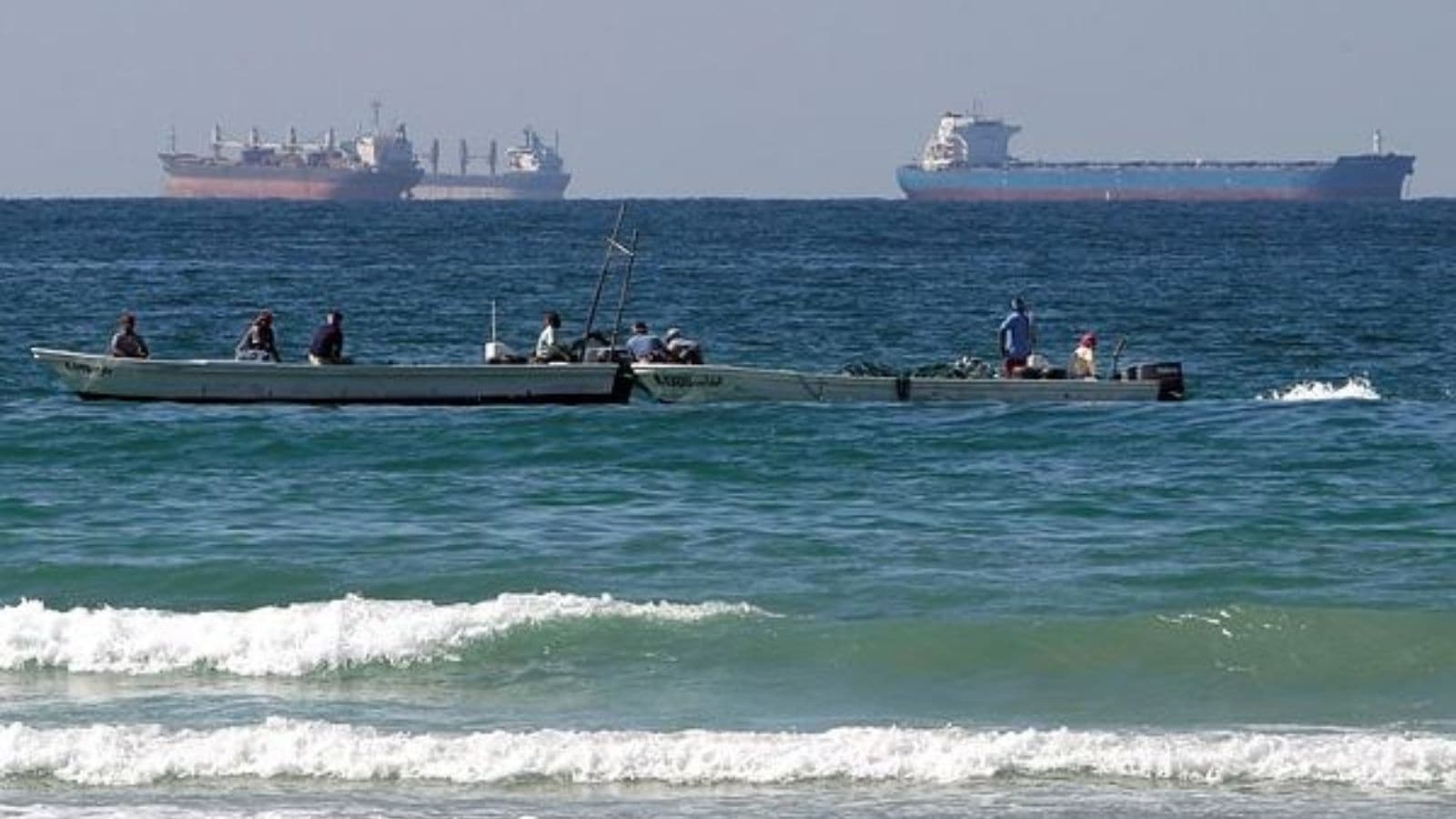

On Saturday, two US Navy destroyers navigated the Strait of Hormuz to initiate mine-clearing operations in this crucial maritime region, as reported by US Central Command (CENTCOM). This move comes amid conflicting narratives from Iranian and regional sources, while ceasefire discussions persist in Islamabad.
The USS Frank E. Peterson (DDG-121) and USS Michael Murphy (DDG-112) have entered the Persian Gulf after crossing the strait as part of a broader US initiative aimed at ensuring the waterway is free from underwater mines, according to a CENTCOM announcement.
CENTCOM indicated that the destroyers are now operating in the Arabian Gulf, with plans to deploy additional US assets, including underwater drones, to assist in mine-clearing efforts over the next few days.
US President Donald Trump confirmed the operation via Truth Social, asserting that the United States is benefiting countries globally by removing mines from the strait. He further claimed that all vessels responsible for laying mines in Iran have been destroyed.
Earlier reports from Axios, citing an unnamed US official, mentioned that the two Navy ships had crossed the strait, marking the first US naval transit since the onset of the conflict six weeks prior. This transit was reportedly not coordinated with Iranian authorities.
However, a regional intelligence official contradicted this account, stating that the Arleigh Burke-class destroyers attempted to pass through the strait but were compelled to turn back due to threats from Iran’s Islamic Revolutionary Guard Corps (IRGC), which had also deployed a drone towards the ships.
Iranian media refuted the US claims. The semi-official Fars news agency reported that Iranian forces monitored a US destroyer departing from Fujairah toward the Strait of Hormuz and issued a warning through Pakistani intermediaries, leading to the vessel’s retreat after Tehran threatened a potential attack.
Further, Iranian state television claimed that its forces provided a 30-minute ultimatum to a US destroyer approaching from Fujairah, demanding it withdraw or face military action. A senior Iranian military figure later denied that any US vessel had successfully crossed into the Strait.
This situation unfolds against the backdrop of a fragile ceasefire established on April 8, mediated by Pakistan. The Strait of Hormuz, a critical route for approximately 20% of the world’s maritime oil trade, remains largely restricted, with Iran reportedly permitting passage only for selected vessels and imposing tolls exceeding $1 million per ship, as noted by The Wall Street Journal.
Shipping activity has significantly declined, with only three supertankers reportedly transiting the strait on Saturday, compared to the pre-conflict daily average of around 135 vessels, according to the Financial Times.
Amid the ongoing ceasefire, Pakistan is facilitating negotiations between Washington and Tehran in Islamabad, as hostilities approach their second month.
The disruption in maritime activities is beginning to alter global oil trade dynamics. Trump remarked on Truth Social that “massive numbers of completely empty oil tankers” are en route to the United States to load domestic crude oil.
As of Friday, US crude was priced at $96.57 per barrel, which is higher than Brent crude, priced at $95.20, reflecting an increased demand for oil sourced outside the Gulf region.
Meanwhile, the high-level talks in Islamabad—the most significant direct engagement between the US and Iran since 1979—have reached an impasse. The American delegation, led by US Vice President JD Vance, included Steve Witkoff and Jared Kushner, while Iran’s 70-member contingent was headed by Parliament Speaker Mohammad Bagher Ghalibaf and Foreign Minister Abbas Araghchi, as reported by Al Jazeera.
The stalled negotiations center around contentious issues, including Iran’s claims of sovereignty over the Strait of Hormuz, the status of frozen Iranian assets, and uranium enrichment. CBS News reported that no agreements had been finalized by Saturday evening.
The ceasefire is set to expire on April 22, raising concerns about a potential resurgence of hostilities if the negotiations fail to yield results.
With contributions from various agencies.