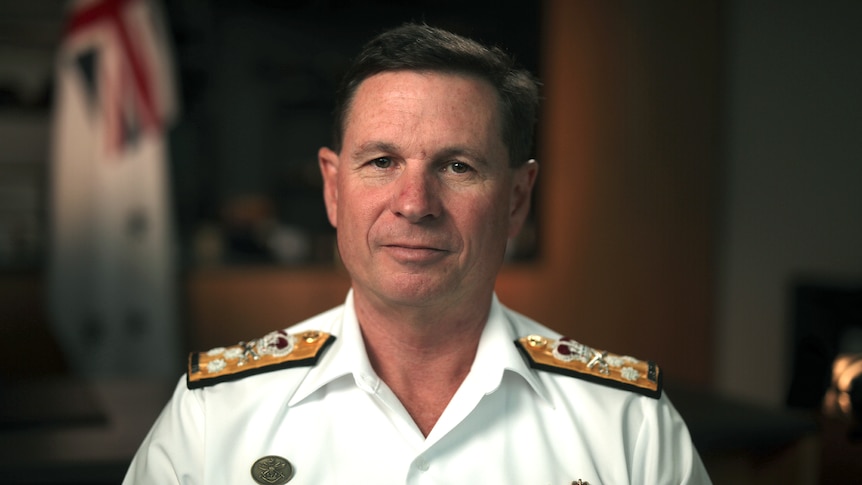

Vice Admiral Mark Hammond has been appointed as the new Chief of the Australian Defence Force, while Lieutenant General Susan Coyle has made history as the first woman to lead a military service in Australia. This announcement was made by Defence Minister Richard Marles, who highlighted Vice Admiral Hammond’s extensive experience in the navy as a key factor for his new role.
Vice Admiral Hammond, who has dedicated 40 years to naval service, including a role as a submarine commander, will succeed David Johnston, the current defence force chief, upon his retirement in July. Known for his collaborative relationship with Prime Minister Anthony Albanese and Defence Minister Richard Marles, Vice Admiral Hammond played a crucial role in the government’s ambitious plans to acquire nuclear-powered submarines through the AUKUS partnership.
Marles commended Hammond’s leadership within the navy, noting that his long tenure has equipped him well for this senior military position. “He has literally gone from scrubbing decks to, in July, becoming the chief of the defence force,” Marles stated.
Lieutenant General Coyle, who currently oversees joint capabilities, will take over as Chief of Army, succeeding Simon Stuart, who is also retiring. Her appointment marks a significant milestone as she becomes the first woman to head one of the three branches of the Australian Defence Force: the army, navy, and air force. Marles emphasized the historic nature of her achievement, underscoring its importance for women currently serving and those aspiring to join the Defence Force in the future.
In his first remarks following the announcement, Vice Admiral Hammond described his new role as the “most humbling moment” of his career. He expressed a commitment to focusing on recruitment, aiming to position the Defence Force as an “employer of choice.” He noted that the attrition rate within the ADF is currently at “near record lows.”
“The biggest opportunity for the Australian Defence Force moving forward is to be recognized as an employer that values every member of the team, creating an environment where our personnel are motivated to serve because of the significant work we undertake,” he stated.
When asked about Australia’s potential involvement in a US blockade of the Strait of Hormuz, Vice Admiral Hammond defended the capabilities of the Australian navy. He pointed out that the navy currently has 10 surface combatants, with eight deployed at sea. “The navy is as ready as it has ever been,” he affirmed, adding that these vessels are equipped with some of the most advanced radar and missile systems available.
Although he did not discuss AUKUS during the press conference, Vice Admiral Hammond has been a strong proponent of the nuclear submarine initiative, defending it against critics and encouraging Australians to trust in the nation’s ability to build and operate such complex systems. He has previously warned that disruptions to the established rules-based order represent “existential” threats to Australia, asserting the need to take proactive measures to ensure future security.
“We cannot assume that things will go well for the future. We must take steps to ensure it,” he stated. He emphasized the importance of optimizing the navy’s capabilities within the constraints of available resources to enhance fleet size and effectiveness.
Rear Admiral Matthew Buckley, another former submarine commander, will step in as the new Chief of Navy, while the government has yet to announce a successor for the outgoing Secretary of the Defence Department, Greg Moriarty, who is set to become the next Australian ambassador to the United States.