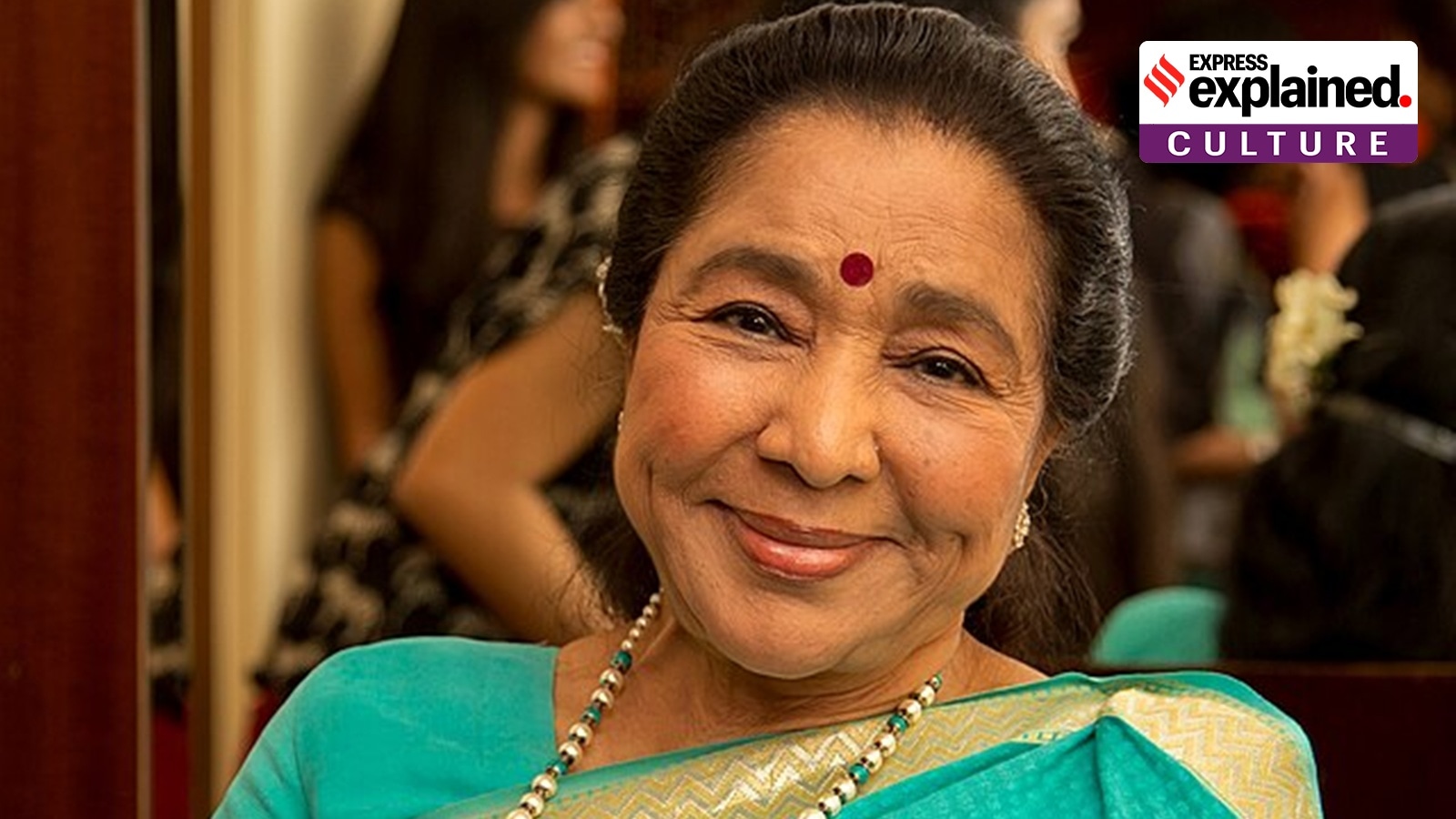

The Hindi film industry has suffered a significant loss with the passing of Asha Bhosle, one of its most talented and prolific vocalists. Bhosle’s extensive repertoire of songs has touched the hearts of numerous generations, cementing her legacy in Indian music.
Although Bhosle showcased her talents across various musical genres, she primarily made her mark as a playback singer. This unique art form, intrinsic to Indian cinema, allows singers to convey the emotional weight of a film’s soundtrack without ever appearing on screen.
In contrast to many global film industries where the performer is recognized as the singer of a song, Hindi cinema has long maintained a division between the visual and vocal components of a performance, a phenomenon created through playback singing. Like many artists from her era, Asha Bhosle navigated this environment skillfully, carving out a distinctive niche for herself.
Playback singing involves trained vocalists recording songs that actors later lip-sync to on screen, often accompanied by dance. While this practice is a standard element of Indian films, it is relatively uncommon in the rest of the world. Various factors contributed to its establishment as a central component of Hindi cinema.
In an article published in the Lincoln Center journal Film Comment in 2002, UK-based writer Nasreen Munni Kabir noted that during the early sound era, songs were performed with synchronized audio, captured using two microphones—one directed at the vocalist and the other focused on a limited number of off-screen musicians, typically a sarangi and a tabla player. These early musical sequences resembled classical music concerts, but the introduction of magnetic tape recorders in the 1940s allowed for pre-recorded songs, leading to the regular employment of playback singers as vocal doubles for screen actors.
This innovation granted actors greater freedom to move and perform to the songs recorded by others. The tradition of song-and-dance in Hindi cinema draws from both theatrical and folk traditions. After World War II, as the financial stakes in filmmaking increased, there was a growing demand for skilled and marketable performers.
Pavitra Sundar, an Associate Professor at Hamilton College, highlighted in her 2008 study “Meri Awaaz Suno: Women, Vocality, and Nation in Hindi Cinema,” that the mass migrations and civil strife associated with the Partition of India played a crucial role in the evolution of playback singing. Many talented artists relocated to Bombay in search of opportunities, transforming the city into a hub for the film industry.
Asha Bhosle and her sister, the late Lata Mangeshkar, flourished professionally in this vibrant environment.
Playback singing also played a role in defining the on-screen persona of women. While the act of performing in public was considered a breach of societal norms, it was essential for these women to be likable and appealing. This dichotomy led to the emergence of two distinct character types: the pure and virtuous heroine versus the bold and sensual vamp. This division was reinforced not only through the visual presentation of the actors but also through the specific qualities of the playback singers’ voices. Lata Mangeshkar’s melodious and pure vocal style often characterized the innocence of the heroines.
Asha, on the other hand, developed a unique style that distinguished her from her sister, often embodying the voice of the seductress, the cabaret dancer, or the bar girl.
Over the years, particularly through her collaborations with her husband, R.D. Burman, Asha Bhosle evolved into a symbol of a more playful and vibrant identity, often perceived as more aligned with Western influences.
Sundar remarked that Bhosle skillfully navigated the complexities of her era, showcasing her remarkable versatility as a singer while earning the respect of the leading musicians of her time. As the primary vocalist for R.D. Burman, Asha Bhosle represented India’s careful balancing act between modernity and Western cultural influences.
Yashee, a Senior Assistant Editor at The Indian Express, leads the Explained Desk and brings over 12 years of extensive experience in mainstream journalism. She focuses on translating complex geopolitical dynamics, legal structures, and historical contexts into accessible narratives. After beginning her career at Hindustan Times and contributing to India Today (DailyO), Yashee offers a seasoned perspective on contemporary issues. She holds a Bachelor’s degree in English Literature from the esteemed Presidency College, Kolkata, and a postgraduate diploma from the Asian College of Journalism (ACJ), Chennai, equipping her work with the depth necessary to help readers understand a complicated world.
… Read More