
By a business correspondent
The Australian Securities Exchange (ASX) experienced a slight increase of 0.8% to reach 9,056 points, following a modest decline of 0.1% to 8,961 points the previous Friday. The Australian dollar also saw a dip of 0.9%, trading at 69.96 US cents. In the United States, major indices exhibited mixed results: the S&P 500 decreased by 0.1%, the Dow Jones Industrial Average fell by 0.6%, while the Nasdaq Composite gained 0.4%. European markets remained relatively stable, with the DAX and FTSE finishing flat, while the Eurostoxx recorded a 0.4% increase.
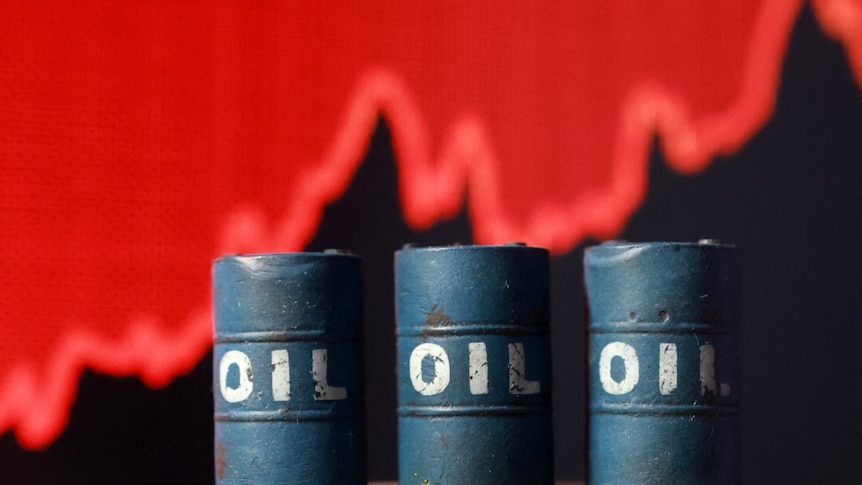
In commodities, gold prices declined by 0.3%, settling at $4,747 per ounce. Oil futures saw a drop, with Brent crude falling by 0.8% to $95.20 per barrel and West Texas Intermediate (WTI) crude down by 1.3% to $96.57 per barrel. Meanwhile, iron ore prices rose by 0.5% to $103.60 per tonne, while LME copper prices decreased by 0.1%, reaching $12,696 per tonne. These figures reflect the market status as of approximately 7:00 AM AEST.
Earlier reports indicated that when ASX futures closed on Saturday morning, discussions regarding US-Iran relations were still ongoing in Islamabad, and market participants were hopeful for a favorable resolution. However, with the recent failure of these negotiations, there is a growing sentiment of pessimism among investors, leading to concerns about market performance.
The ASX is poised to serve as a barometer for market sentiment, being one of the first exchanges to open today. The previously projected 0.8% increase in futures now appears overly optimistic, according to IG analyst Tony Sycamore. In a statement made after the breakdown of the peace talks, Sycamore suggested that oil prices would likely exceed $100 per barrel at the market’s open, reflecting a more than 4% surge, while US equity futures could decline by 1.5% to 2.5% in response.
Sycamore’s analysis indicated that the market had harbored significant hopes for the peace discussions, which aimed to bring the conflicting parties closer to a sustainable agreement. However, these expectations were dashed when the talks concluded without a resolution, primarily due to Iran’s unwillingness to cease its nuclear weapons program, coupled with its ongoing control over the Strait of Hormuz.
Adding to market tensions, President Trump hinted through social media that a blockade of the Strait might be a forthcoming strategy, which could severely restrict Iranian oil exports. This potential action could compel Iran’s trading partners to exert pressure to reopen the vital waterway, potentially achieving significant objectives without direct military involvement.
As the market prepares to open, the ramifications of the weekend’s events suggest that WTI crude oil prices may begin above $100, while US equity futures are likely to face declines of 1.5% to 2.5% upon reopening.
In a statement, US Central Command announced plans to initiate a blockade of maritime traffic to and from Iranian ports starting April 13 at 10 AM ET. This blockade, according to CENTCOM, will apply to vessels of all nations and will not obstruct the navigation of ships passing through the Strait of Hormuz to non-Iranian ports.
On Wall Street, a brief relief rally came to a halt on Friday ahead of the US-Iran discussions, despite key US indices achieving their best weekly performance since November. While the S&P 500 experienced a modest decline on the final trading day, it managed to gain 3.6% over the week. European markets also performed well, with a 0.4% increase in the pan-European index, despite mixed results from Germany’s market.
Australian and Chinese stocks recorded even stronger performances, rising by 4.4%, although they were outpaced by Japan’s impressive gain of over 7%. The ASX futures closed early Saturday, signaling a potential 0.8% increase, prior to the disappointing news from Pakistan.
Mark Haefele, Chief Investment Officer at UBS Global Wealth Management, noted that investor sentiment remains volatile due to ongoing uncertainties regarding the sustainability of the two-week ceasefire in the Middle East. While immediate fluctuations in the market are expected, Haefele emphasized the importance of focusing on long-term structural trends for equity performance.
Oil prices in the futures markets experienced declines but remain high in physical spot markets. Analysts have pointed out that the primary concern for the oil sector is whether maritime traffic through the Strait of Hormuz will resume. Currently, traffic remains significantly below normal levels, as Iran has warned vessels to avoid its territorial waters, with most recent ship movements being linked to Iranian interests.
In other financial indicators, a report showing a 0.9% increase in the Consumer Price Index (CPI) for March led to a slight uptick in US Treasury yields, while the US dollar saw a decrease, marking its most challenging week since January. The Australian dollar, sensitive to risk, fell nearly 1% to trade below 70 US cents in early trading this morning.
The failure of the peace talks has also led to heightened anxiety in global markets, as reflected by the swift decline of cryptocurrencies, which fell by approximately 3% to just above $71,000. Overall, the market remains in a state of flux as it grapples with the implications of these geopolitical developments.