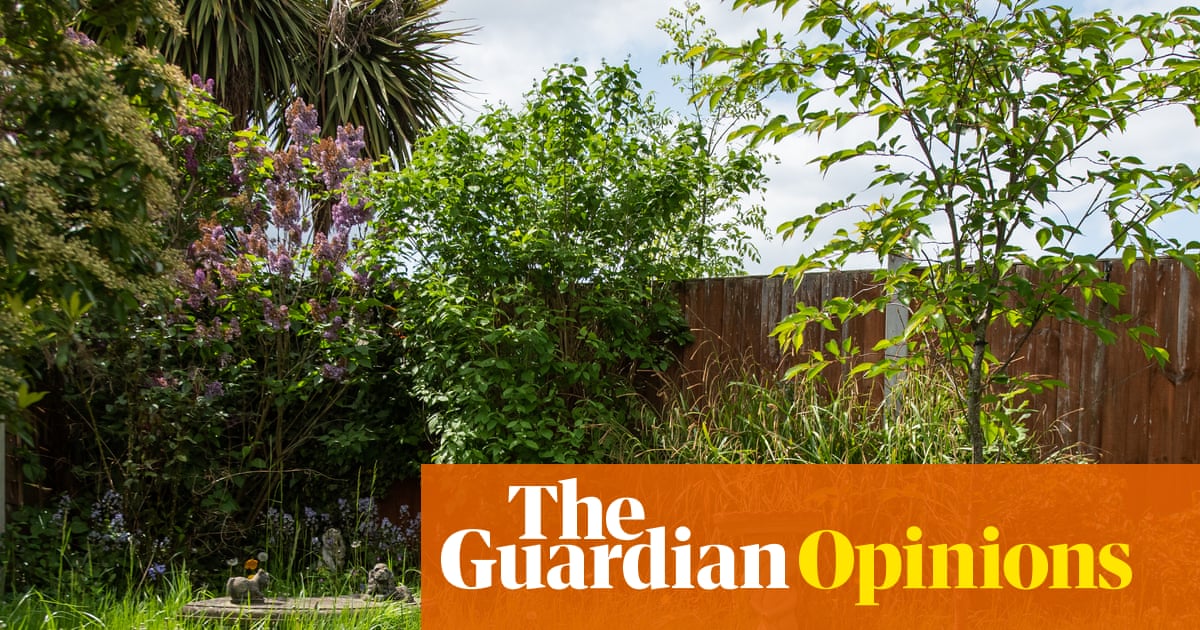

The outside environment is bustling with activity. After a winter of silence, the garden comes alive with the urgent sounds of mating, territorial disputes, and the responsibilities of raising young. Sparrows are vocally asserting themselves, while titmice engage in skirmishes over territory, and competing wood pigeons coo in an attempt to attract Susan, a wedding dove that has taken up residence on my roof. As I enjoyed the warm sun yesterday, the persistent hum of bees collecting the last remnants of cherry blossoms was as loud as a lawnmower, punctuated by the protective calls of blackbirds nesting in the ivy.
However, there was another sound present: the heavy machinery of a mini-digger demolishing a neighboring garden. Initially, it seemed they were only removing the hedge—something that has become quite common in the area, with two recent instances fresh in my mind. One garden owner proudly pointed out their newly cleared space, while I had only seen the aftermath of the second, which left behind a row of jagged stumps where thriving greenery once stood. As the digger continued its work, it became clear they had larger ambitions. After removing the hedge, they proceeded to uproot shrubs, plants, and trees, leaving behind nothing but a barren trench of soil and a dumpster filled with severed branches and tangled ivy. In just one beautiful April day, a garden had been transformed into a desolate patch of earth.
Isn’t Britain known for its love of gardens? It seems not, as each year, several front gardens in my neighborhood are paved over. Neat wooden fences replace overgrown privet, and driveways are laid over what was once mossy, neglected grass, now choked with thistles and dandelions. This trend appears to be widespread; a recent audit by the Royal Horticultural Society (RHS) reported that nearly half of the country’s garden space has been paved. While people have their reasons—none of which I should judge—I find myself emotionally affected each time I witness this transformation. I often mutter to myself about the implications of such changes: “Heaven forbid anything should grow” and “What will your grandchildren think when they see no butterflies?” My sadness occasionally leads me to be overly dramatic.
In recent interviews with conservationists, I have been struck by their deep admiration for gardens—small sanctuaries that contribute significantly to biodiversity. According to the RHS, these spaces support over 50% of the nation’s butterflies, amphibians, and reptiles, as well as more than 40% of bird and mammal species. This concept is explored in David Attenborough’s latest series, “Secret Garden,” where he refers to gardens as “magical places,” some nearly as diverse as tropical rainforests. I watched the episode featuring a charming urban garden in Bristol, home to hedgehogs, frogs, blue tits, and 50 bee species. It felt ironic, even disheartening, to be watching such an homage to garden life while witnessing another garden’s destruction.
While some may view this as an idyllic fantasy, the reality is that one in eight households lacks a garden, with marginalized communities often facing greater challenges in accessing green spaces. Even those fortunate enough to have gardens frequently struggle to find the time or resources to maintain them, let alone cultivate rich, biodiverse environments. Many people find gardening daunting or burdensome.
Nevertheless, for anyone with even a small outdoor space, doing nothing can be the most beneficial choice. Allowing wildflowers such as dandelions and thistles to thrive provides essential nectar and pollen; unkempt grass serves as sustenance for caterpillars; mining bees utilize bare patches for nesting; and birds use moss for nesting material. Overgrown areas and piles of leaves create habitats and food sources. The key is to shift one’s mindset—to appreciate the untidy beauty of nature and resist societal pressures to maintain a pristine appearance.
Despite his age nearing a century, I wonder if we could persuade Sir David Attenborough to feature a bonus episode showcasing the vibrancy and beauty of neglected gardens filled with brambles, nettles, and overgrown hedges. Our country and its wildlife would greatly benefit from his insights.
Emma Beddington is a columnist for The Guardian.
If you wish to share your thoughts on the topics discussed in this article, please consider sending a response of up to 300 words via email for potential publication in our letters section.