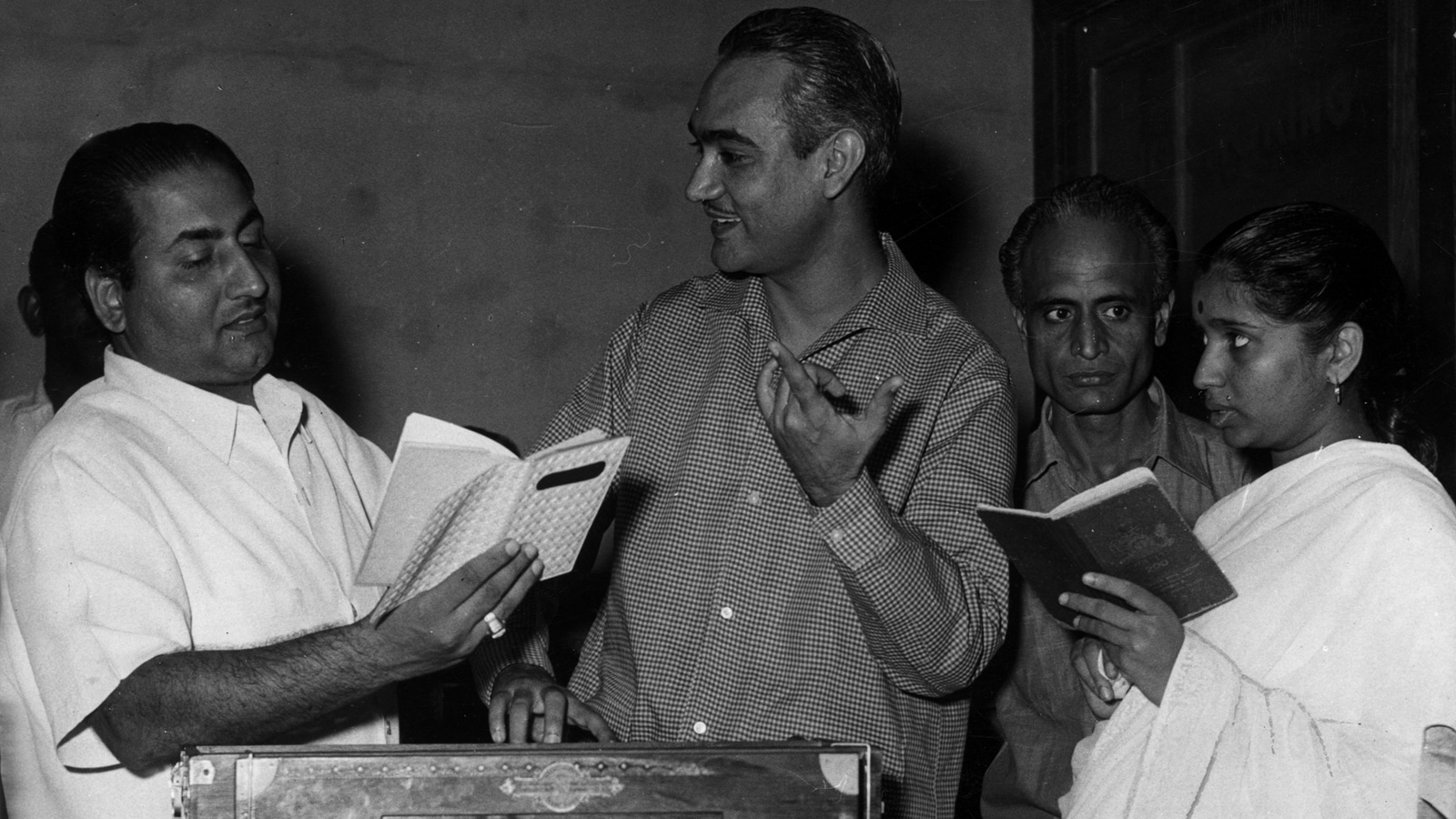

Maang ke saath tumhara (Naya Daur, 1957): This iconic song, characterized by a rhythm that mimics the trot of a horse, was composed by OP Nayyar and featured Asha Bhosle singing for the film’s lead actor. The lively track played a pivotal role in propelling her to fame.
Aayiye meherbaan (Howrah Bridge, 1958): This seductive invitation from a nightclub scene, also crafted by Nayyar and performed by Madhubala, showcased Bhosle’s smooth vocals, transforming it into an enduring classic.
Jaayiye aap kahaan jayenge (Mere Sanam, 1965): This light and airy composition from Nayyar, which effortlessly shifts through various musical scales, is beautifully supported by Bhosle’s voice.
Piya tu ab toh aaja (Caravan, 1971): This song is infused with bold sensuality and features breathy vocals and theatrical delivery. Picturized on Helen, it stands out as one of Bhosle’s most memorable cabaret performances.
Chura liya hai tumne (Yaadon Ki Baraat, 1973): The song begins with the sound of clinking bottles followed by sparkling guitar melodies, allowing Bhosle to gracefully enter and remain in this captivating number.
Chaen se humko kabhi (Pran Jaaye Par Vachan Na Jaaye, 1974): This poignant track is one of Bhosle’s most remarkable pieces and marks her final collaboration with Nayyar, showcasing a refined sense of nuance.
In aankhon ki masti ke (Umrao Jaan, 1981): Here, Bhosle beautifully conveys the poetic elegance of Sheheryar’s lyrics and Khayyam’s exquisite composition, celebrating the legacy of one of Awadh’s last courtesans. It highlights Bhosle’s evolution from sensual performer to classical artist.
Ye kya jagah hai doston (Umrao Jaan, 1981): This haunting melody, performed by Bhosle, expresses the lament of a courtesan returning home and serves as a masterclass in emotional expression for Rekha on screen.
Mera kuch samaan (Ijaazat, 1988): This RD Burman composition unfolds without a fixed rhythm, resembling a heartfelt conversation. It is celebrated as one of the most impactful expressions of heartbreak in Hindi cinema.
Jhoothe naina bole (Lekin, 1991): Composed by Bhosle’s brother Hridayanath Mangeshkar, this evocative piece shines in its classical form, portraying a woman’s confrontation with her lover’s betrayal.
Suanshu Khurana is an acclaimed journalist and music critic, currently holding the position of Senior Assistant Editor at The Indian Express. She is recognized for her insightful writings on Indian culture, particularly in the realms of classical music, cinema, and the arts.
Expertise & Focus Areas: Khurana specializes in exploring the intersections of culture and society, with a focus on:
- Indian Classical Music: She is a prominent voice in documenting the traditions and evolution of Hindustani classical music.
- Cinema & Theatre: Her critiques delve beyond mere reviews, examining socio-political narratives within Indian cinema and theater.
- Cultural Heritage: Khurana often profiles iconic artists and uncovers stories related to India’s rich cultural heritage.
Professional Experience: At The Indian Express, Khurana is responsible for curating and composing features for the Arts and Culture sections. Her long-form journalism presents intimate portraits of artists alongside thorough analyses of cultural trends, highlighting both established and emerging talents in mainstream media.
For more stories by Suanshu Khurana, click here.
Click here to follow Screen Digital on YouTube for the latest updates from the cinema world.