
In the realm of physics, resistance refers to the force that impedes the movement of charged electrons as they navigate their path. Rather than halting the flow of electricity, resistance transforms energy into heat. This concept can be analogously applied to political resistance, where it slows down governmental operations, creating political tension and further hindering progress.
This phenomenon is currently evident in the mass deportation initiatives led by former President Trump. The campaign began with the arrests of international students protesting against the Gaza conflict by Immigration and Customs Enforcement (ICE) agents. Subsequently, ICE operatives began targeting migrants in courthouse hallways during regular check-ins and legal proceedings. Observers, including immigrant rights advocates and legal representatives, mobilized to monitor and assist those affected.
ICE and border patrol agents soon expanded their operations to urban areas such as Washington D.C., Chicago, Los Angeles, and Portland, Oregon, indiscriminately detaining individuals of color and non-English speakers, often forcibly entering homes without warrants and escalating conflicts with protesters.
In reaction to these aggressive tactics, small groups of immigrant rights advocates evolved into a larger movement dedicated to defending immigrant rights. Collaborating with community organizations and progressive groups, they formed rapid response teams, set up hotlines, created encrypted chat groups, developed software to track ICE activities, printed multilingual know-your-rights cards, and distributed whistles while training individuals on protest signals and documentation of government misconduct.
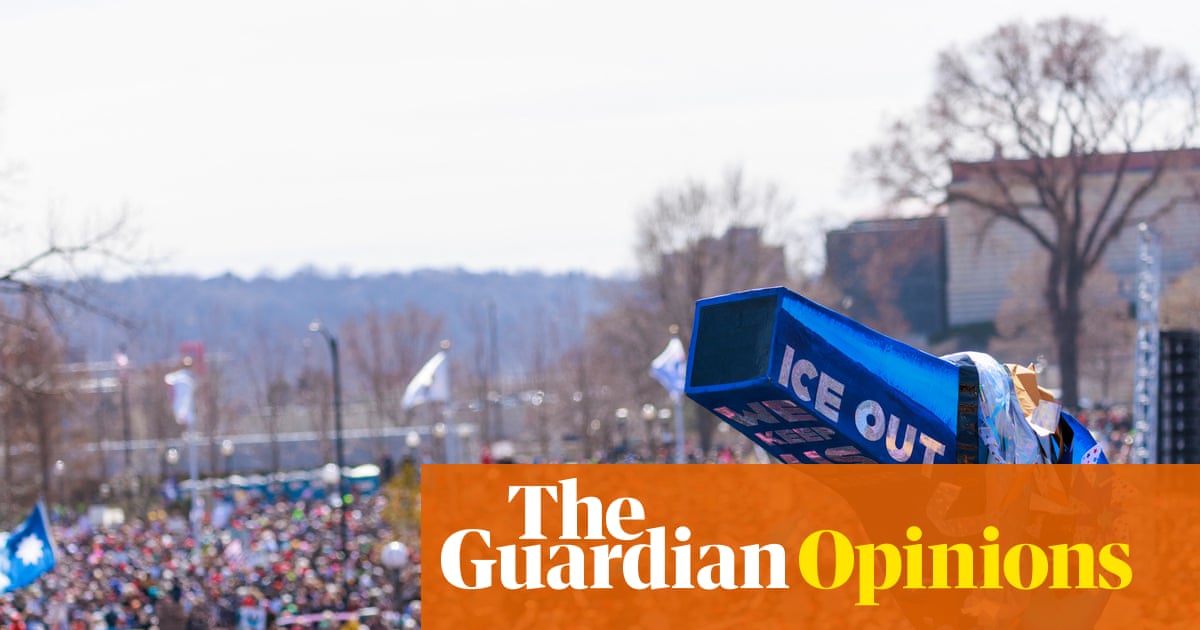
When “Operation Metro Surge” reached Minneapolis-St. Paul, the local community was ready to respond. People of diverse backgrounds actively followed ICE agents from their homes, businesses, and on bicycles. Protesters donned inflatable animal costumes, protective gear, and heavy winter clothing to withstand the frigid temperatures. They resisted tear gas, police batons, and arrests. Following the fatal shootings of two U.S. citizens by ICE agents in January, bystanders captured the events on video and shared them widely on social media.
Public sentiment shifted dramatically against Trump, along with then-Secretary of Homeland Security Kristi Noem and “commander at large” Greg Bovino, forcing the government to reconsider its approach. Bovino was retired prematurely and succeeded by Tom Homan, who was less visibly aggressive. Trump announced a cessation of federal troop deployments to counter anti-ICE protests, suggesting that local officials would soon seek his assistance. However, he did not back off until Minnesota’s attorney general and the mayors of the Twin Cities filed a lawsuit over ICE’s unconstitutional actions during the operation.
Noem was soon removed from her position. During confirmation hearings, the new Secretary of Homeland Security, Markwayne Mullin, assured that judicial warrants would be necessary for ICE to enter private properties. On February 14, Democrats withheld funding for immigration enforcement under the Department of Homeland Security unless Republicans agreed to significant reforms to curb ICE’s actions, leading to a partial government shutdown. After six weeks, the Democrats departed without securing reforms, while Republicans failed to fund ICE and continued negotiations. Chuck Schumer, the Democratic Senate minority leader, claimed victory but did not end the shutdown, suggesting that without increasing public pressure, he might have conceded.
On March 24, the Justice Department acknowledged in a letter to a federal judge in New York that it had mistakenly relied on an ICE directive that allowed the apprehension of numerous unsuspecting immigrants attending court. The letter clarified that the directive was not applicable to civil immigration enforcement near immigration courts and implied that ICE had misled them. Despite this, Homeland Security indicated to NPR that no policy changes would be made, although their legal justification appears compromised.
Internally, Trump is reportedly advising his close associates to lower the intensity of immigration enforcement efforts and to avoid using the term “mass deportation.”
However, the resistance has yet to achieve a decisive victory. Since September, when the Supreme Court permitted racial profiling of suspected undocumented immigrants in Los Angeles, the practice has reportedly continued unabated, according to the ACLU.
Meanwhile, the Justice Department is intensifying its focus on immigration prosecutions. A recent investigation by ProPublica revealed that former Attorney General Pam Bondi dismissed 23,000 pending criminal cases in order to allocate resources toward mass deportation efforts.
Children born abroad are now targets for the Department of Homeland Security (DHS). White House adviser Stephen Miller has traveled to Texas to push for legislation that would deny public education funding to undocumented children. This concern extends even to children with legal status; of the 500,000 children adopted from foreign countries since the 1940s, around 200,000 remain without legal naturalization due to a convoluted system. While the DHS continues to pursue these children, a bipartisan bill to automatically grant citizenship to all foreign adoptees remains stalled in committee.
Furthermore, the Supreme Court appears inclined to allow the Trump administration to deny asylum seekers and refugees at the Mexican border, compelling them to remain in camps characterized by scarcity of food and sanitation and high levels of violence.
Additionally, Trump’s executive order aimed at discontinuing birthright citizenship for children of undocumented immigrants has faced numerous legal challenges, with various federal courts affirming that the Fourth Amendment clearly defines citizenship as extending to all individuals born or naturalized in the United States.