
The Tisza party of Hungary, led by Péter Magyar, has emerged victorious in the recent elections, effectively ending Viktor Orbán’s lengthy 16-year rule. This outcome is anticipated to have significant implications for the United States and alter Hungary’s dynamics with the European Union.
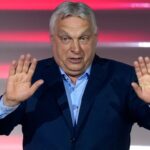
Shortly after the polls closed on Sunday, Orbán acknowledged his defeat, describing the election results as “painful but clear.”
“I have extended my congratulations to the winning party,” the right-wing populist stated to his supporters in Budapest. “We will continue to serve the Hungarian nation and our homeland, even from the opposition.”
With 98.74% of the votes counted, Magyar’s Tisza party is projected to secure 138 out of 199 seats in Hungary’s parliament, granting them a super-majority that allows for constitutional amendments and changes to critical legislation. This indicates a potential reversal of several policies enacted by Orbán and the Fidesz party, along with the possibility of accessing EU funds.
Fidesz managed to capture 55 seats, while the far-right Mi Hazánk party obtained six seats.
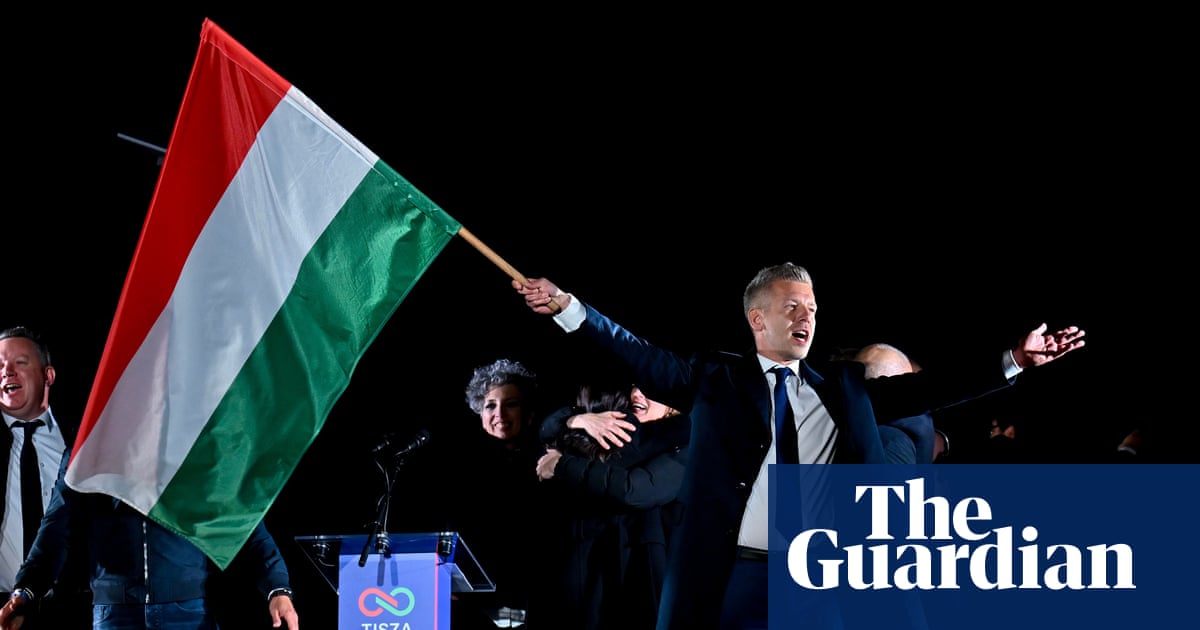
Magyar, who aims to mend Hungary’s fraught relationship with the EU, combat corruption, and direct resources towards long-neglected public sectors, remarked that the Tisza party’s supporters have rewritten a chapter in Hungarian history.
“My fellow Hungarians, we have succeeded!” he declared to the crowds of jubilant supporters gathered along the Danube River for the celebrations.
“This evening, truth has triumphed over falsehood,” the 45-year-old Magyar continued. “Today we have succeeded because Hungarians did not ask what their country could do for them, but rather what they could do for their country. You found the answer, and you acted upon it.”
This election has garnered global attention as a measure of the strength of the far-right movements, with many viewing Orbán as a model to emulate.
In the days leading up to the election, JD Vance visited Budapest, where the U.S. Vice President expressed his intention to “assist” Orbán. Donald Trump has also consistently supported Orbán, most recently reiterating his backing on Friday, promising to leverage U.S. economic power should Orbán secure another term.
U.S. House Minority Leader Hakeem Jeffries remarked that the Hungarian election results may not bode well for the Trump administration. “Far-right authoritarian Viktor Orbán has lost the election,” he shared on social media. “Trump loyalists and MAGA extremists in Congress are next in line for November. Winter is coming.”
In recent months, Orbán, aged 62, received endorsements from various right-wing leaders, including Marine Le Pen of France, Giorgia Meloni of Italy, and Israel’s Benjamin Netanyahu.
Meloni congratulated Magyar on Sunday night, assuring him of Italy’s continued collaboration and wishing him success. She expressed gratitude to Orbán for their strong partnership over the years, stating that he would continue to serve his nation, even from the opposition.
The election result was met with enthusiasm from leaders across Europe, with Keir Starmer labeling it a “historic moment, not only for Hungary but for European democracy” on social media.
Recently, tensions between Orbán’s government and the EU escalated, particularly after Orbán opposed additional EU sanctions on Russia and a €90 billion loan for Ukraine. Relations soured further when allegations emerged that Orbán’s administration had shared sensitive EU information with Russia.
The news of the government transition sparked a wave of reactions throughout the EU. “Europe’s heart beats stronger in Hungary tonight,” proclaimed Ursula von der Leyen, President of the European Commission. “A nation reclaims its European path. The Union grows stronger.”
Donald Tusk, the Prime Minister of Poland, welcomed Magyar with a playful jab at Orbán. “Back together! Glorious victory, dear friends!” he posted, adding in Hungarian, “Russians, go home!”
French President Emmanuel Macron conveyed his congratulations to Magyar in a phone conversation, while German Chancellor Friedrich Merz expressed eagerness to collaborate with him.
Ukraine’s Volodymyr Zelenskyy stated that the country is ready to enhance cooperation with Hungary, even though Magyar has indicated he would maintain Orbán’s stance against sending arms to Ukraine and expedite EU membership for Kyiv. “We are prepared for meetings and constructive joint efforts for the benefit of both nations, along with peace, security, and stability in Europe,” he stated.
Throughout the campaign, Magyar engaged with voters actively, conducting up to six rallies daily. Meanwhile, Orbán consistently lagged in polling, indicating that his tenure aimed at transforming Hungary into a “petri dish for illiberalism” was nearing its conclusion.
During his time in office, Orbán’s right-wing populist administration progressively dismantled checks and balances, altering electoral laws to benefit his party, placing loyalists in control of approximately 80% of the nation’s media, and reforming the judiciary.
In the lead-up to the election, as the government intensified its crackdown on dissent, public resistance surged, culminating in massive protests in Budapest where hundreds of thousands rallied against the government’s attempts to ban Pride events.
The election on Sunday witnessed a record turnout of nearly 80%, according to the National Election Office. This high participation rate was likely influenced by a significant mobilization of younger voters opposing Orbán. Surveys indicated that approximately 65% of voters aged under 30, many of whom had grown up amid declining press freedoms and rising corruption—leading to characterizations of Hungary as an “electoral autocracy”—planned to vote against Orbán.